Why It Happens Here
La Presa sits about 10 miles from San Diego, and the housing here clusters tightly around 1975 - right in the middle of the broader 1967-1992 range we see across the areas we cover. That matters for panel work because doors from the mid-1970s were built to sizing and gauge standards that shifted more than once before 1992, so a panel pulled from a slightly newer or older house on the same street won't necessarily interchange. Add in San Diego's mild, dry climate - no deep freeze-thaw, no hail load - and you get panels that rust from the bottom track edge and fatigue from UV rather than crack from weather stress. That's a slower failure than what colder-climate doors see, but it still ends with a bowed or bottom-corroded panel that needs matching hardware, not a generic replacement off a shelf.
How We Fix It
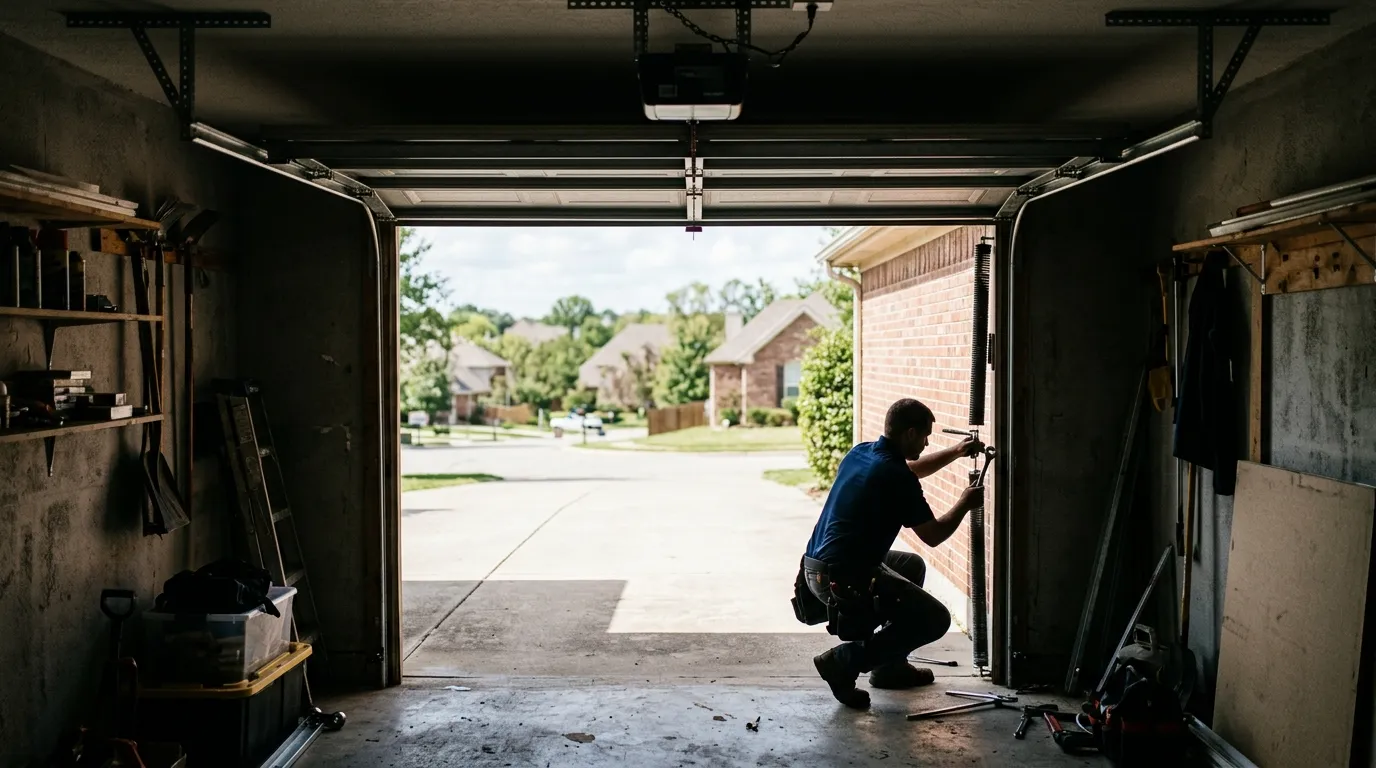
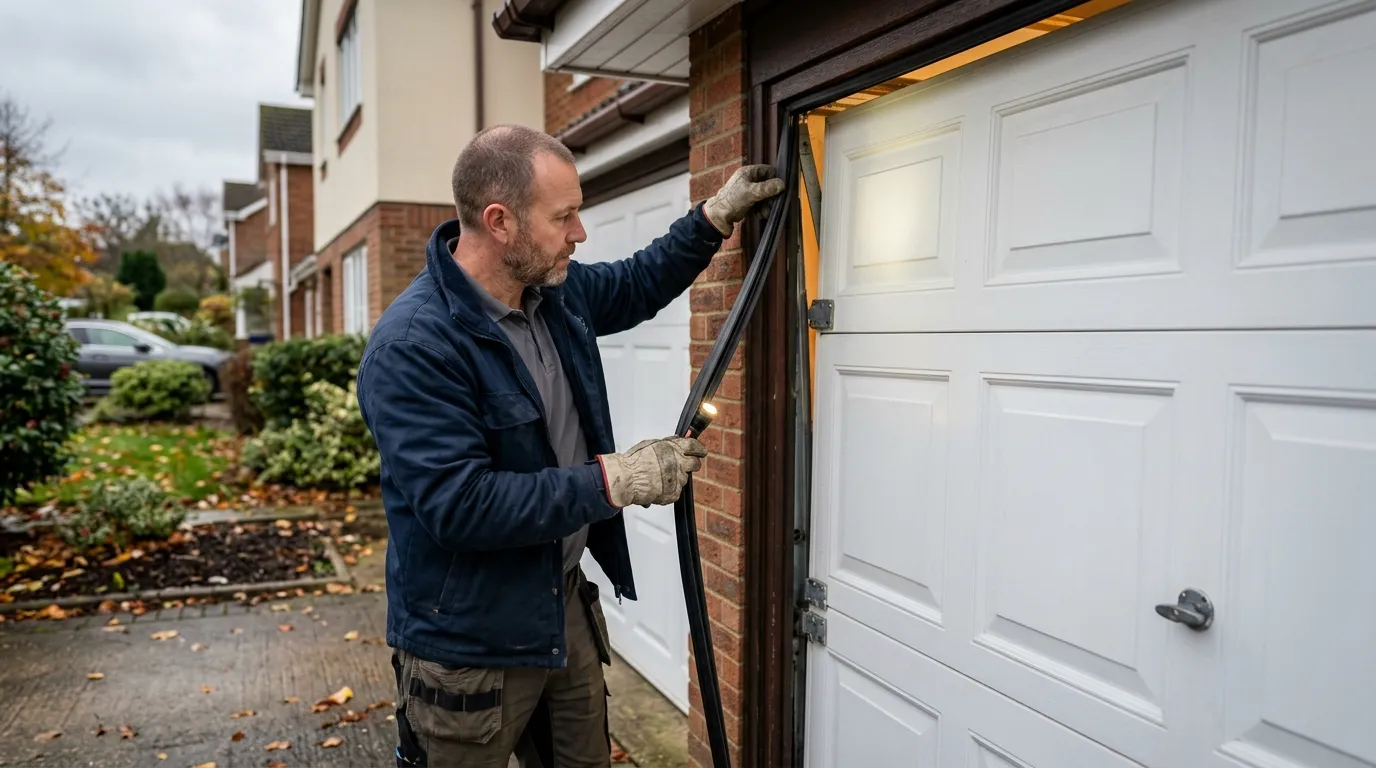
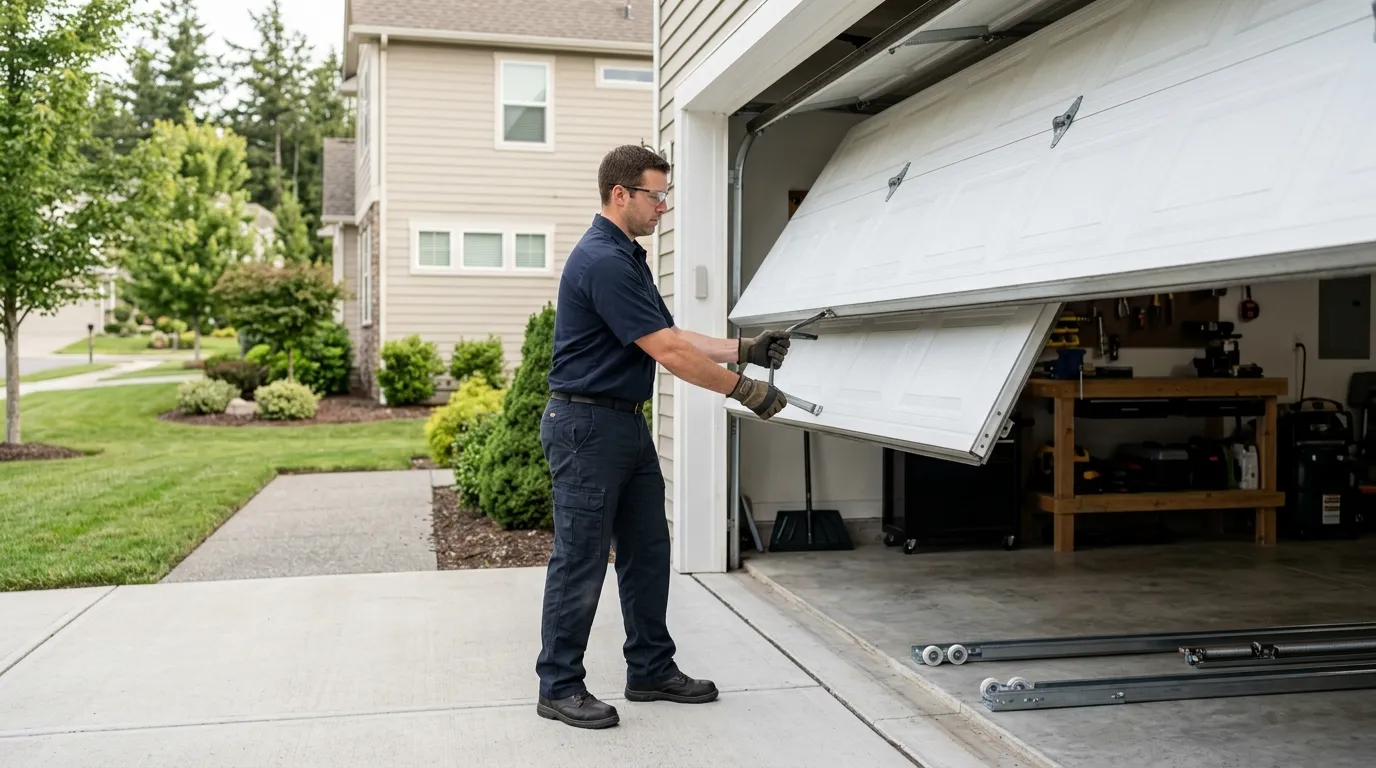
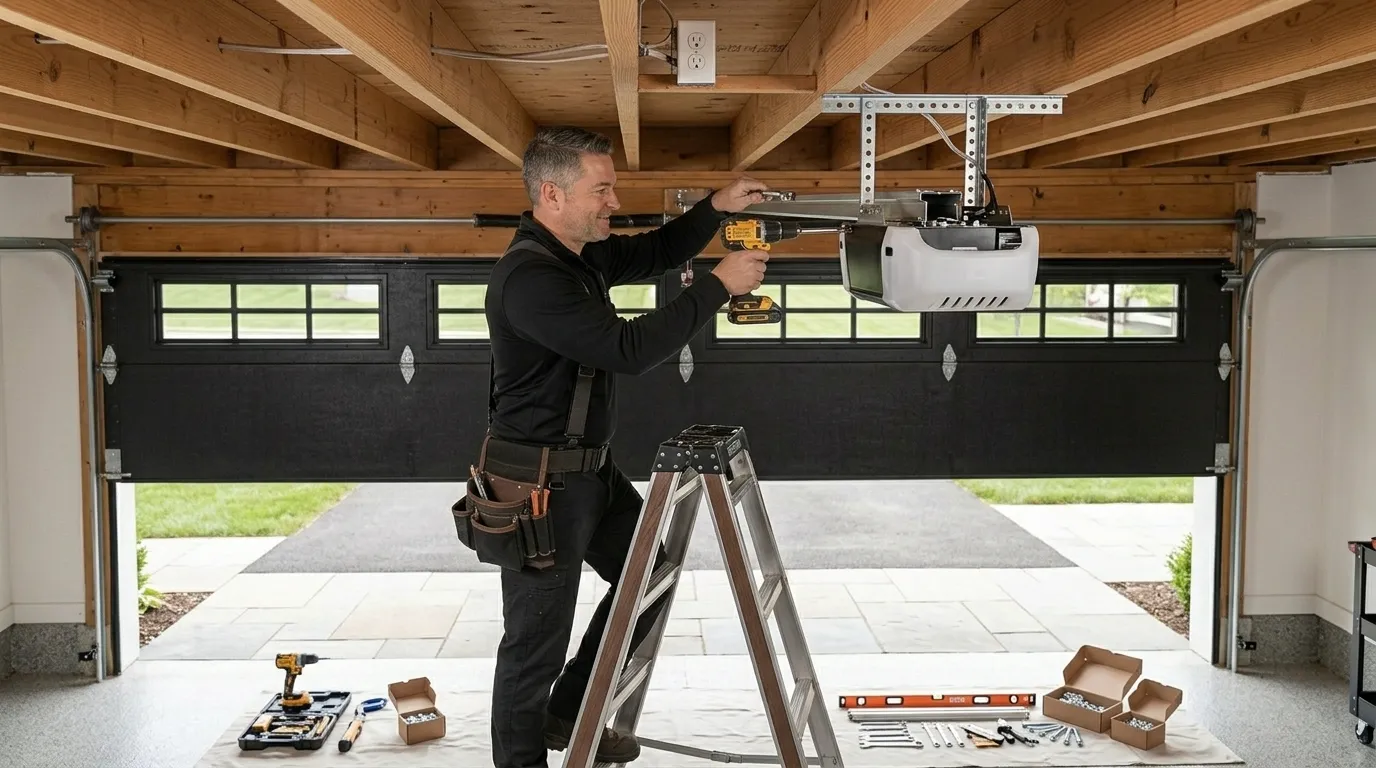
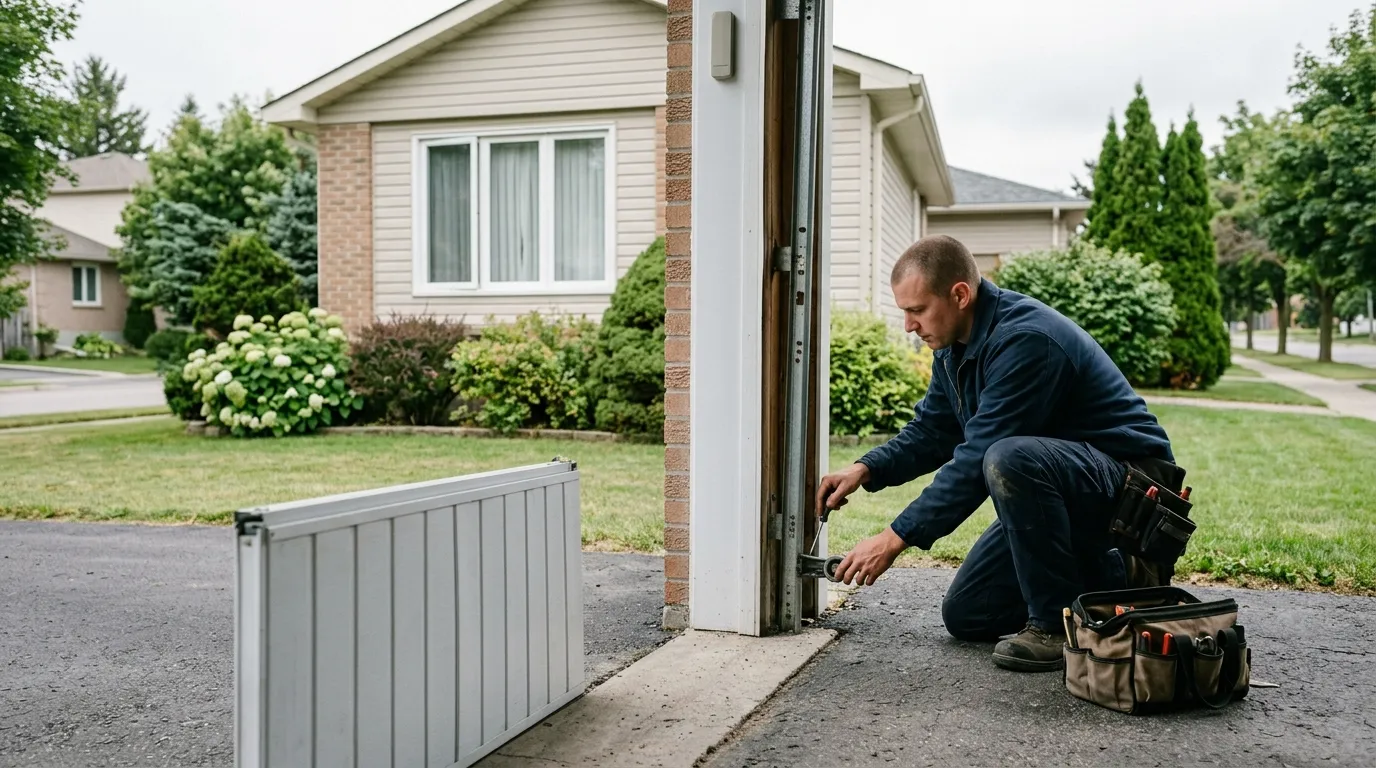
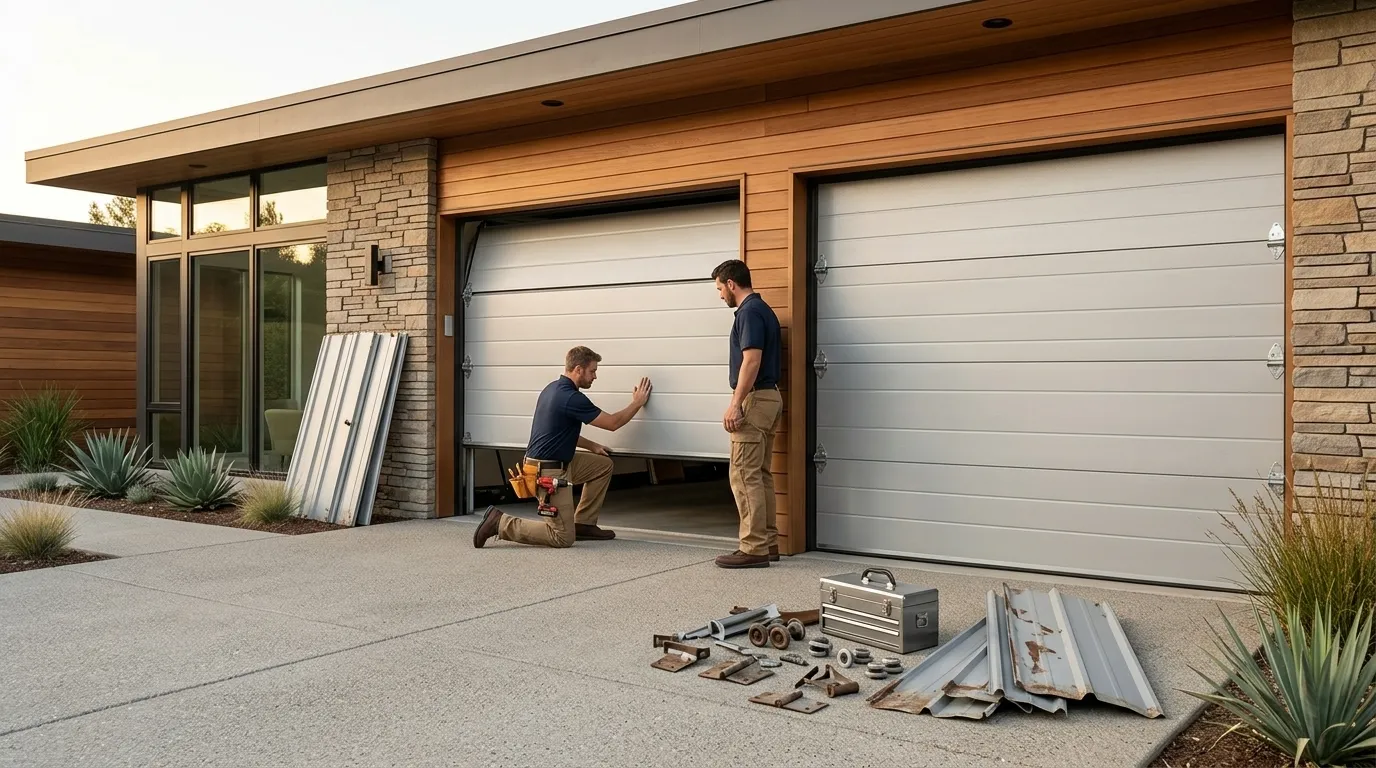
We start by identifying the section height and hinge spacing on your existing door before we quote a panel, because guessing wrong on a 1970s-era door means a second trip. If the run is still available in a compatible profile, we replace just the damaged section and reset the hinges and rollers around it so the door tracks true. When the match isn't close enough - which happens more with doors this age than with newer construction - we'll say so and lay out what a full panel-set replacement costs against a single mismatched patch. We travel out from San Diego for this work, so we don't carry a standing stock of every discontinued panel profile; some jobs need us to order ahead, and we'll tell you that timeline before we start rather than after.
How It Shows Up
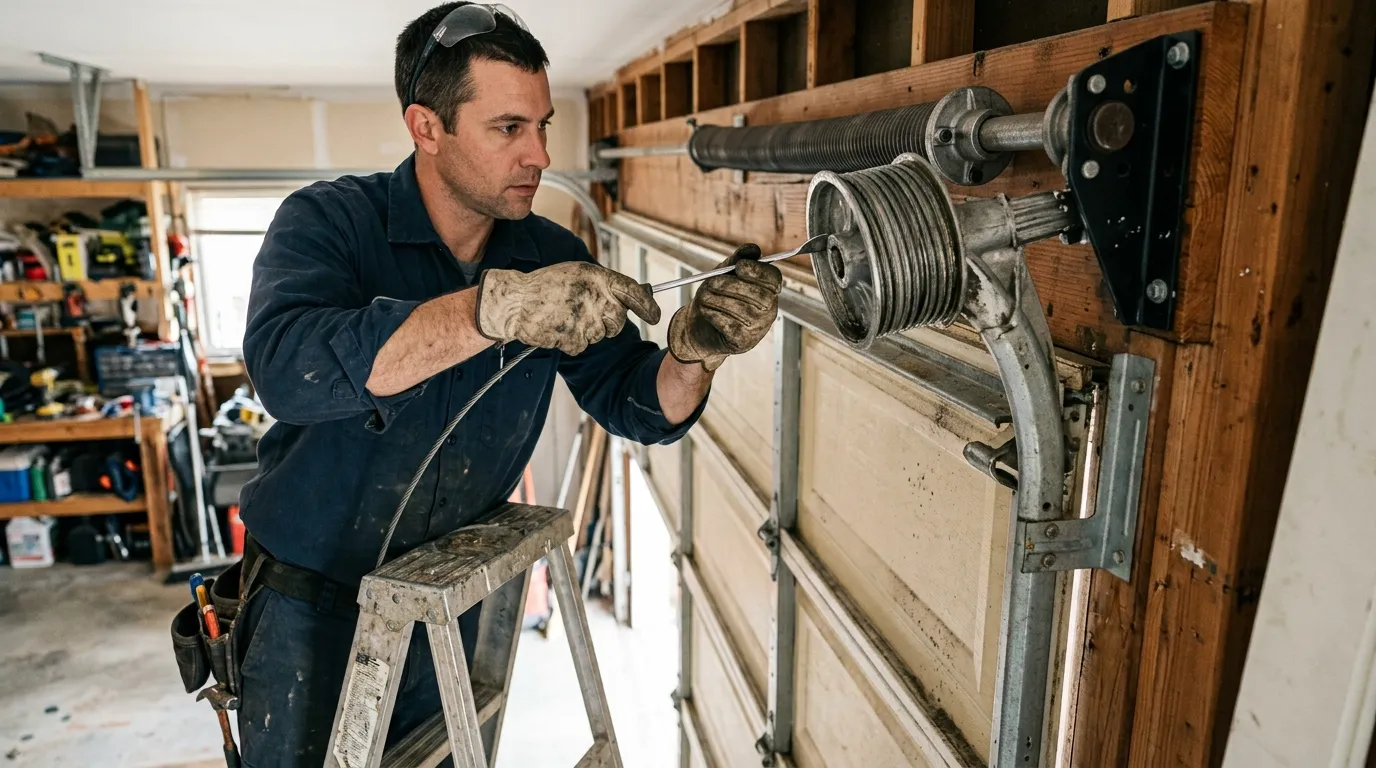
On a house built around 1975, panel failure usually starts low - the bottom section closest to the driveway takes the water runoff and road grit, and even in a mild climate that wears a steel panel thin over five decades. You'll see it as a rust bloom along the bottom edge, a slight outward bow when the door's down, or a section that no longer sits flush with its neighbors after the door's been up and down a few thousand times. Sometimes it's blunter than that - a car bumper or a dropped ladder puts a dent straight through one section. Either way, on a door this old the panel rarely fails alone; check the rollers and hinges on either side of the damaged section, since hardware from the same install date is usually just as tired as the panel itself.