Why It Happens Here
La Presa sits about 10 miles out from San Diego, and the commercial buildings here were mostly put up around the same period as the surrounding housing stock - median year built 1975 across this part of the service area. A lot of the small commercial and light-industrial doors from that era are steel sectional units on standard torsion hardware that was common through the 1970s and 80s but has since been replaced by different spring and drum sizing on newer models. That means a spring or cable failure here often calls for a part that doesn't match what a supplier keeps on the shelf for current commercial doors. The mild temperate climate in this part of San Diego County is kind to the door itself - no deep freeze, no heavy salt air this far inland - so most of what fails is wear on original-era hardware that's simply logged forty-plus years of open-close cycles, not weather damage.
How We Fix It
We run diagnosis first: track alignment, spring balance, cable condition, and whether the opener is straining to compensate for hardware that's already failing elsewhere. On a commercial door from La Presa's building era, that often means confirming the torsion spring size and drum diameter before we quote, since original 1970s-spec parts aren't always a straight swap for what's sold today. If the door and track are sound, we replace the failed part on-site. If the whole assembly is at the point where sourcing period-correct hardware costs more than a new commercial door, we'll say so rather than patch something that'll fail again in a year. That's the honest tradeoff on doors this age - repair keeps a working business running today, but a full sectional swap is sometimes the cheaper call over five years.
How It Shows Up
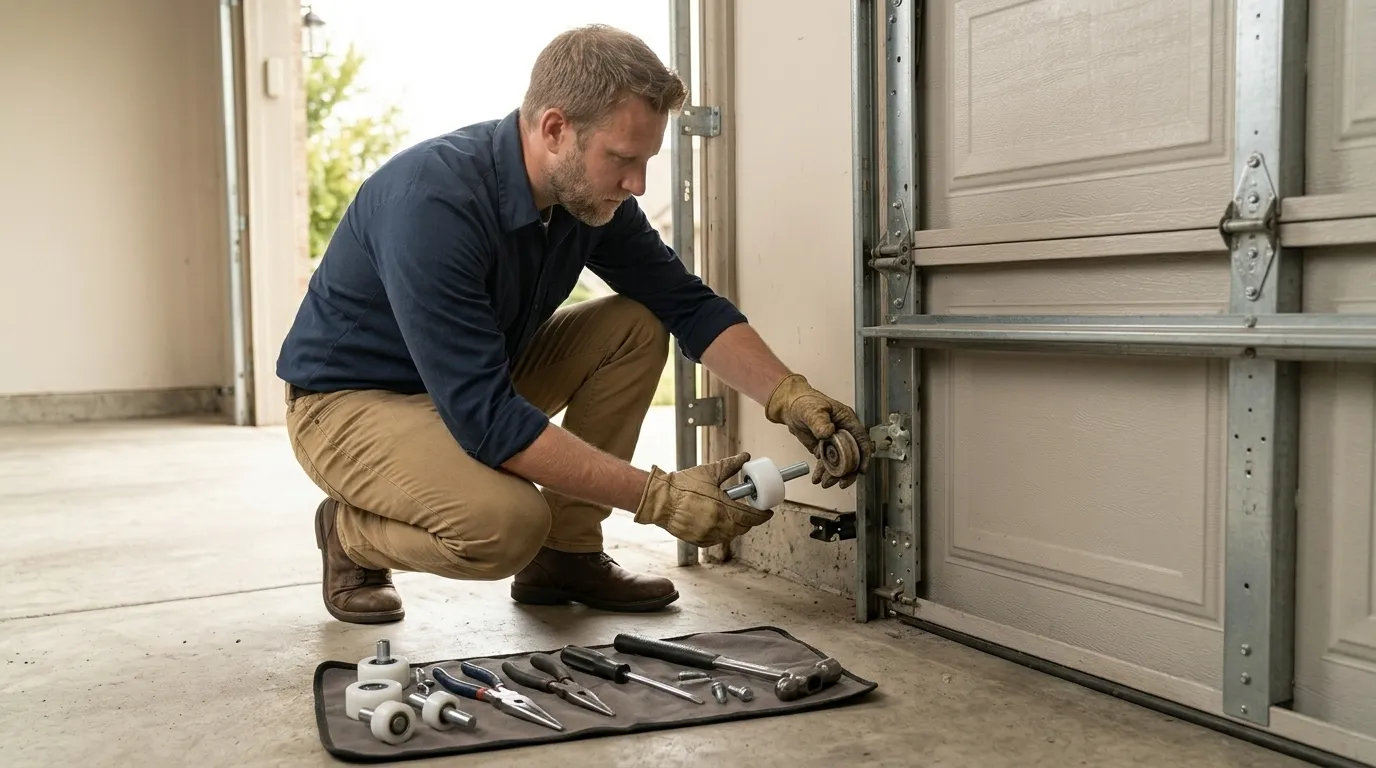
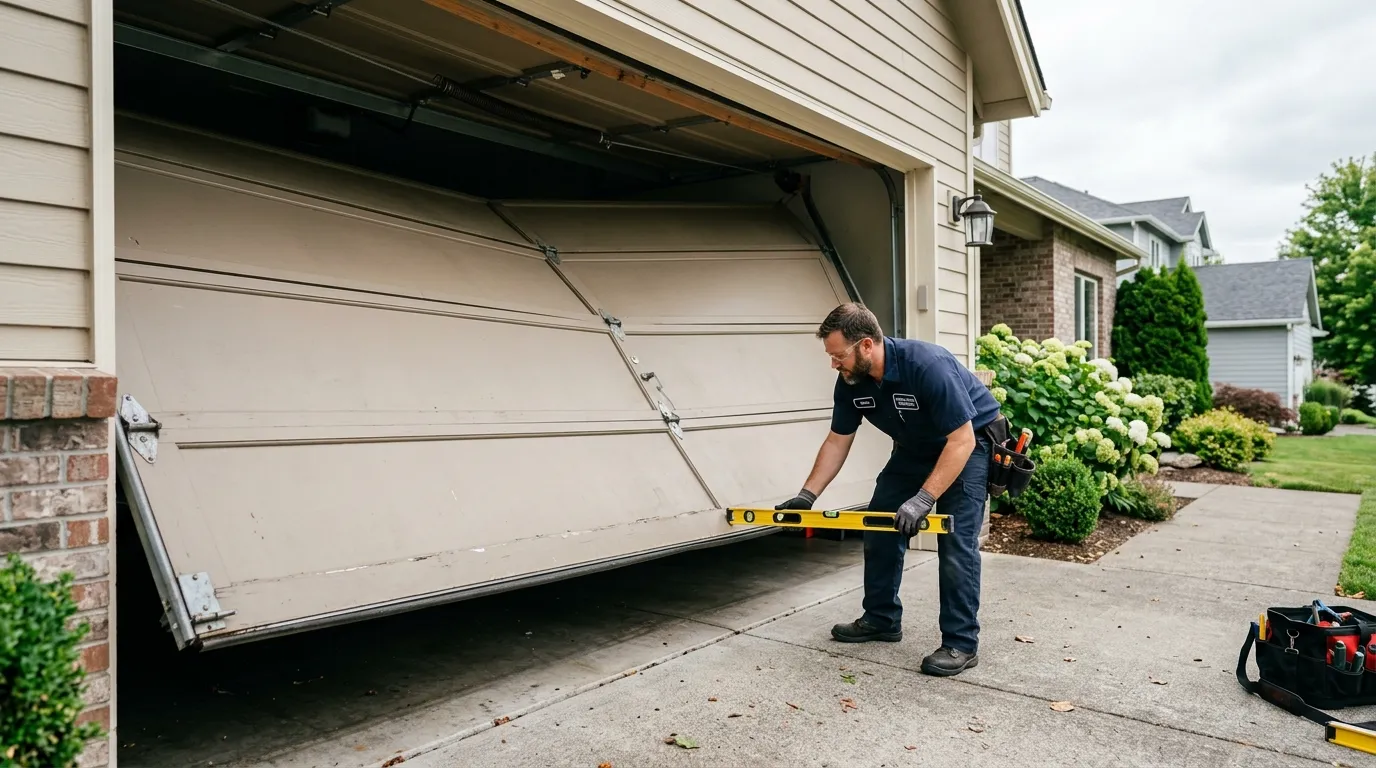
On a commercial building from La Presa's construction era, the most common call is a door that's gone heavy on one side - a sign the torsion spring has lost tension or snapped, which on a wide commercial opening usually means the door won't lift under opener power at all. Next most common is a cable that's frayed or jumped the drum, which shows up as the door racking sideways as it moves. Because area household income here runs lower than the wider San Diego service area (about $88,479 against $118,431), we hear more requests to repair rather than replace, and on a door where the track and frame are still square, that's often the right call. Noise on opening - a grinding or a hard clunk partway up - usually points to a roller or bearing that's worn through, which is a cheaper fix if it's caught before it takes the track with it.