Why It Happens Here
The median year built across La Presa lines up with the service area's own housing era - 1975, per the census figures we work from. Doors and track hardware from that period were built to a different tolerance than what goes in today, and forty-plus years of use wears the roller stems and the galvanized track finish down in ways that show up as a door walking sideways in its channel.
Mild coastal-influenced temperate weather means we're not chasing storm damage or frozen track channels here the way a crew in a harsher climate would. What we chase instead is slow mechanical wear - a bent track from a bumped car, roller bearings that seized years ago and started grinding a groove into the track wall, or a bottom bracket that's worked loose from age.
La Presa's median household income, at $88,479, runs well under the $118,431 median across the wider service area. That gap tends to show up as deferred maintenance - a door that's been dragging for months before anyone calls, which means by the time we get there the track wear is worse than a same-age door somewhere the repair got made sooner.
How We Fix It
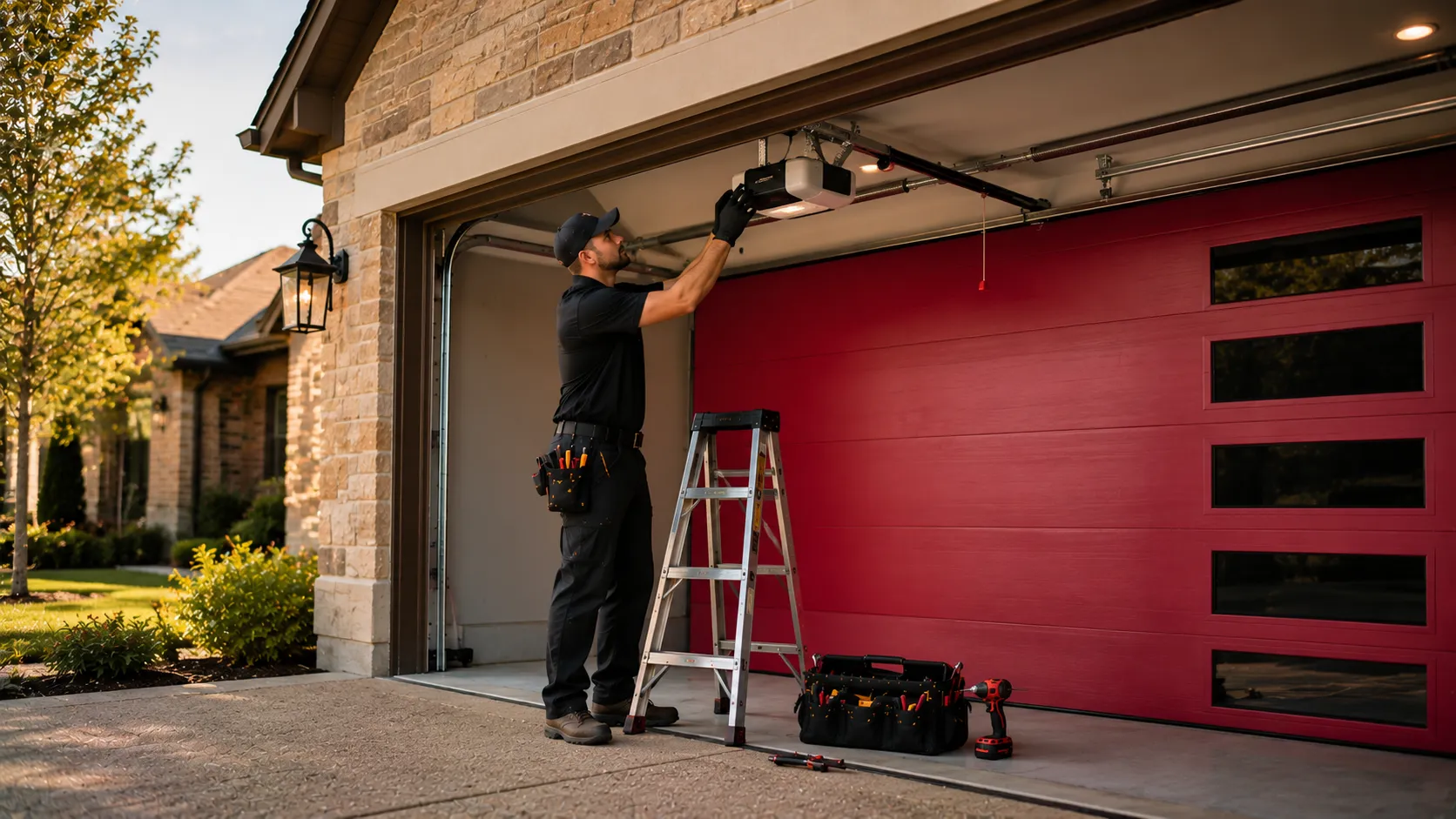
The truck comes from San Diego, a 10-mile drive each way, so an off-track call here isn't a same-block job the way it might be for a company based in La Presa itself. Once we're on site, the fix depends on what's actually wrong, not a standard script.
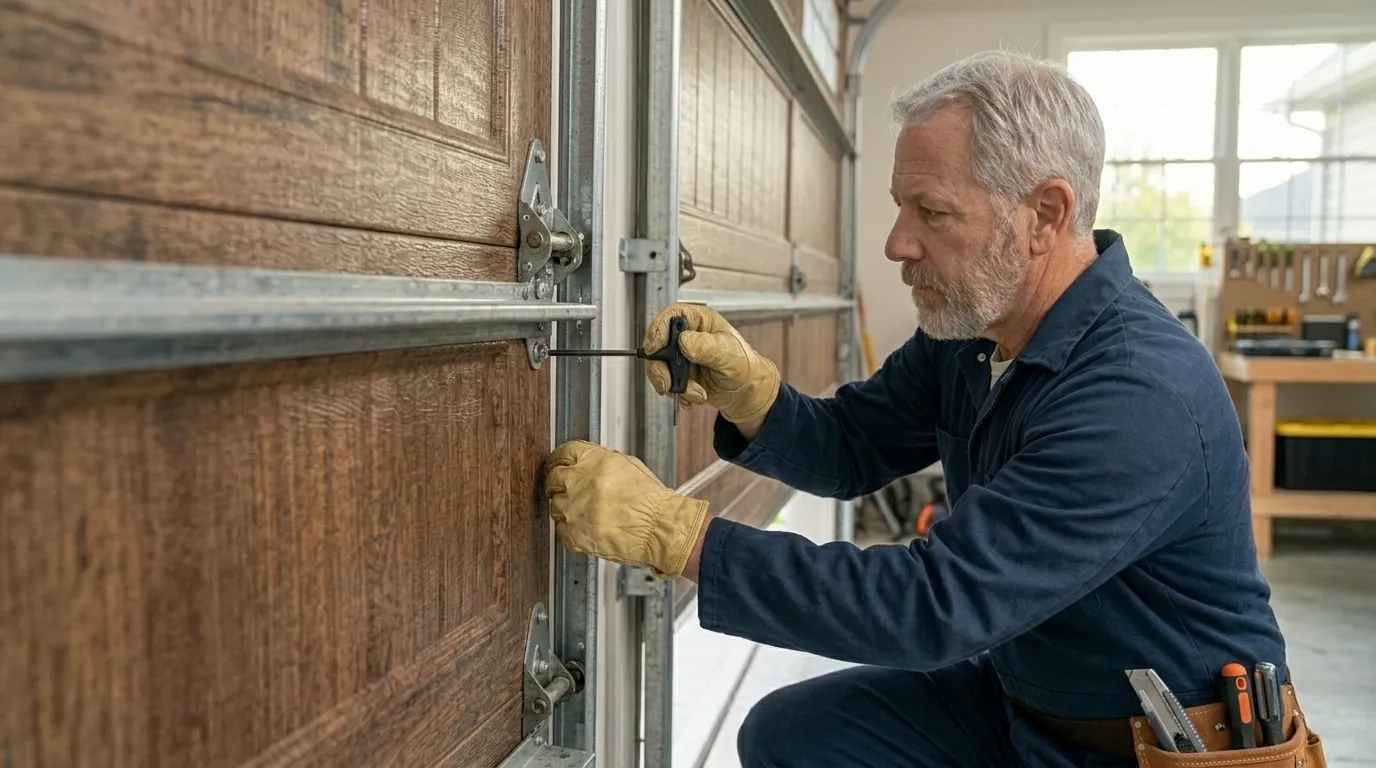
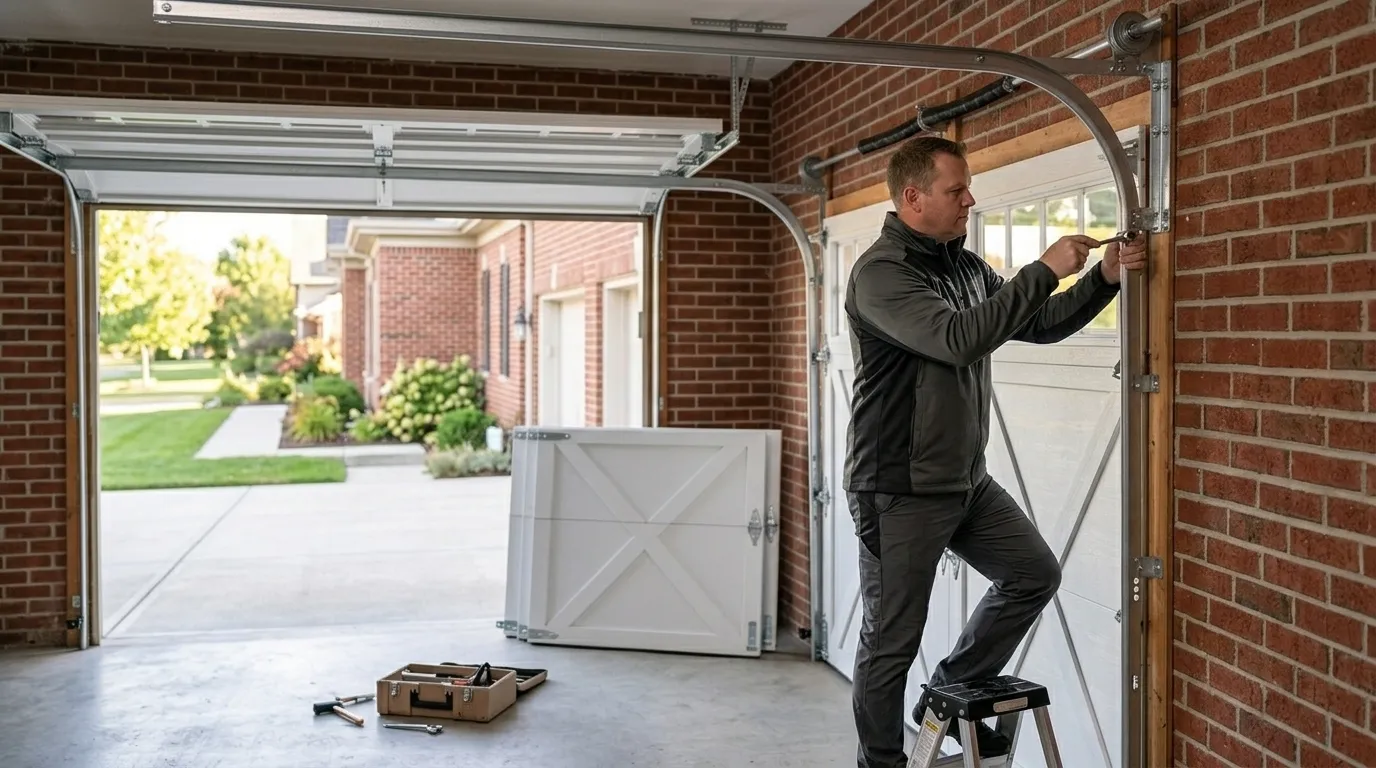
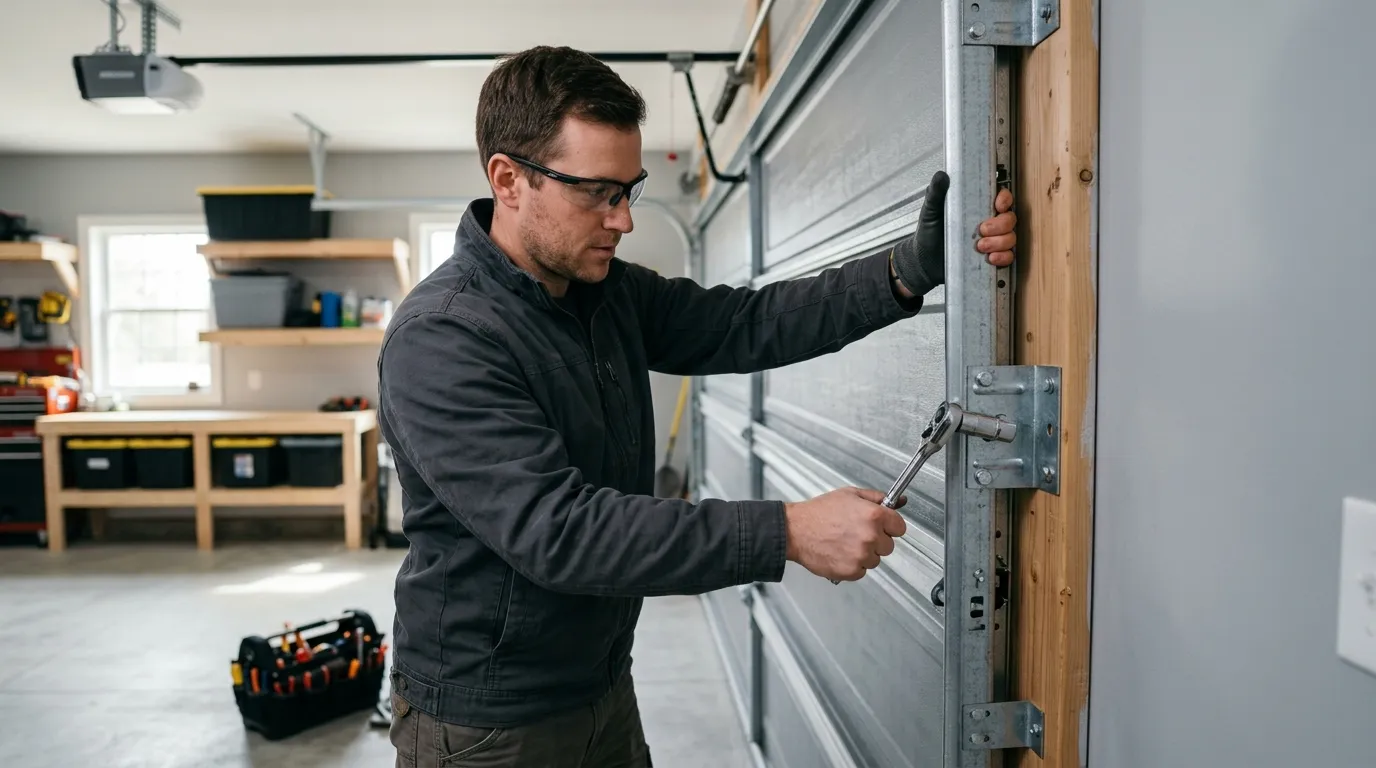
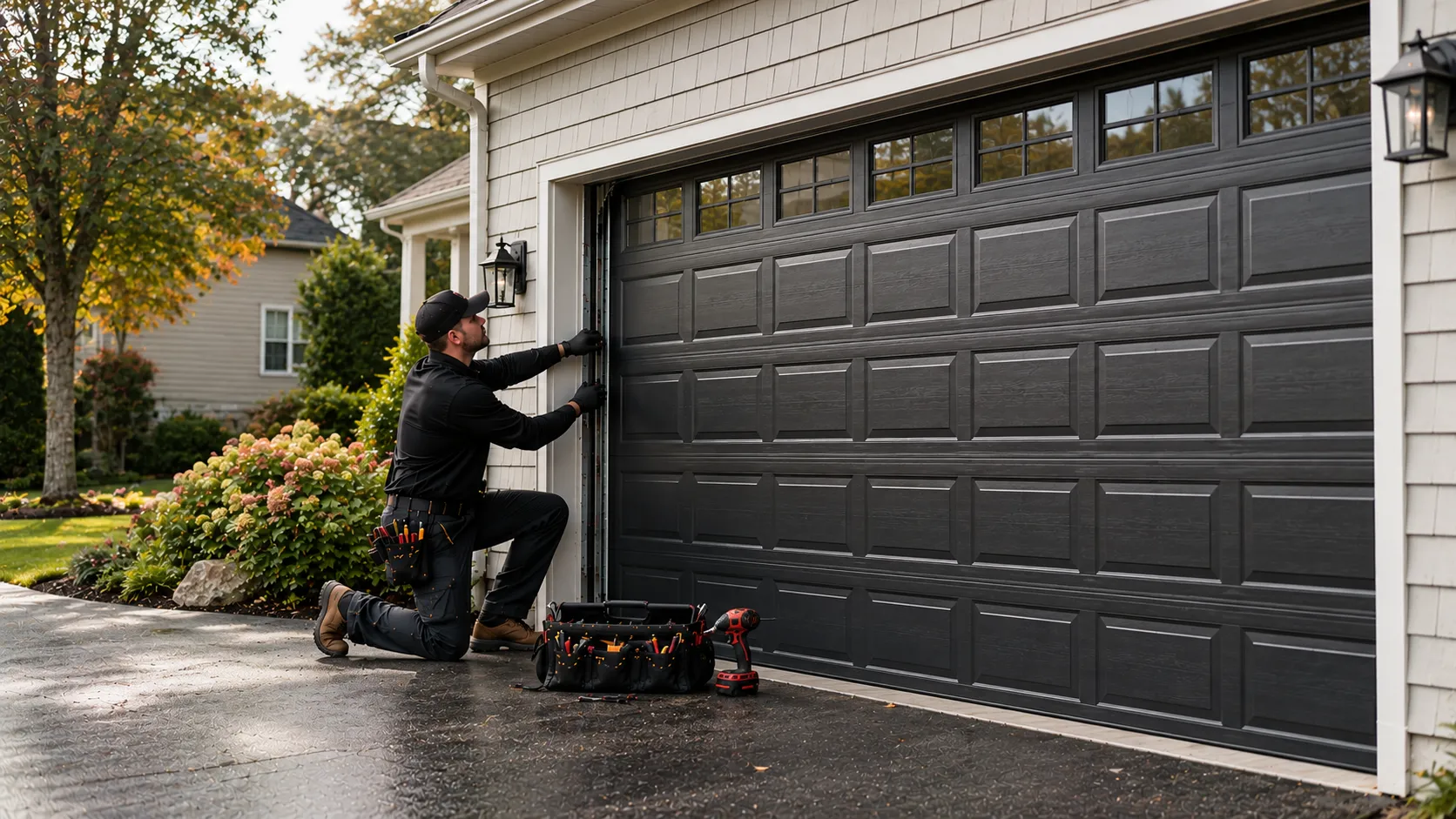
If the track is bent but the rollers are sound, we straighten or replace the bent section and re-seat the door in the channel. If the rollers themselves are worn - flat spots, cracked nylon, a bearing that's rusted solid - we swap them out and check the whole run of track for wear that matches. A bracket that's pulled loose from the jamb gets re-anchored into solid wood or masonry, not just re-screwed into the same stripped hole.
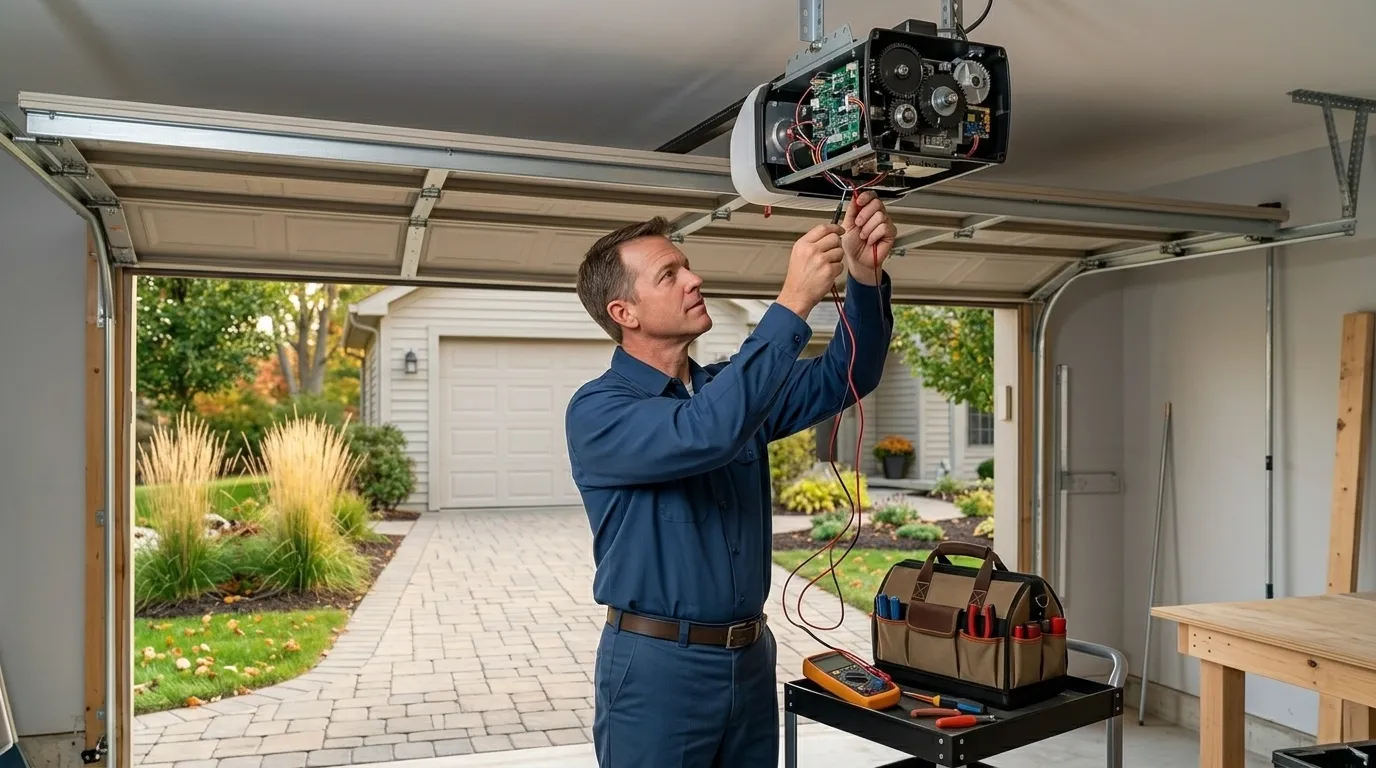
We also check the cables and the bottom brackets while we're in there, because a door that's gone off track once from a bent section often has a second issue building - a fraying cable or a spring that's lost tension - that didn't cause this call but will cause the next one. We'll tell you if we see it rather than pretend the job's done when it isn't.
How It Shows Up
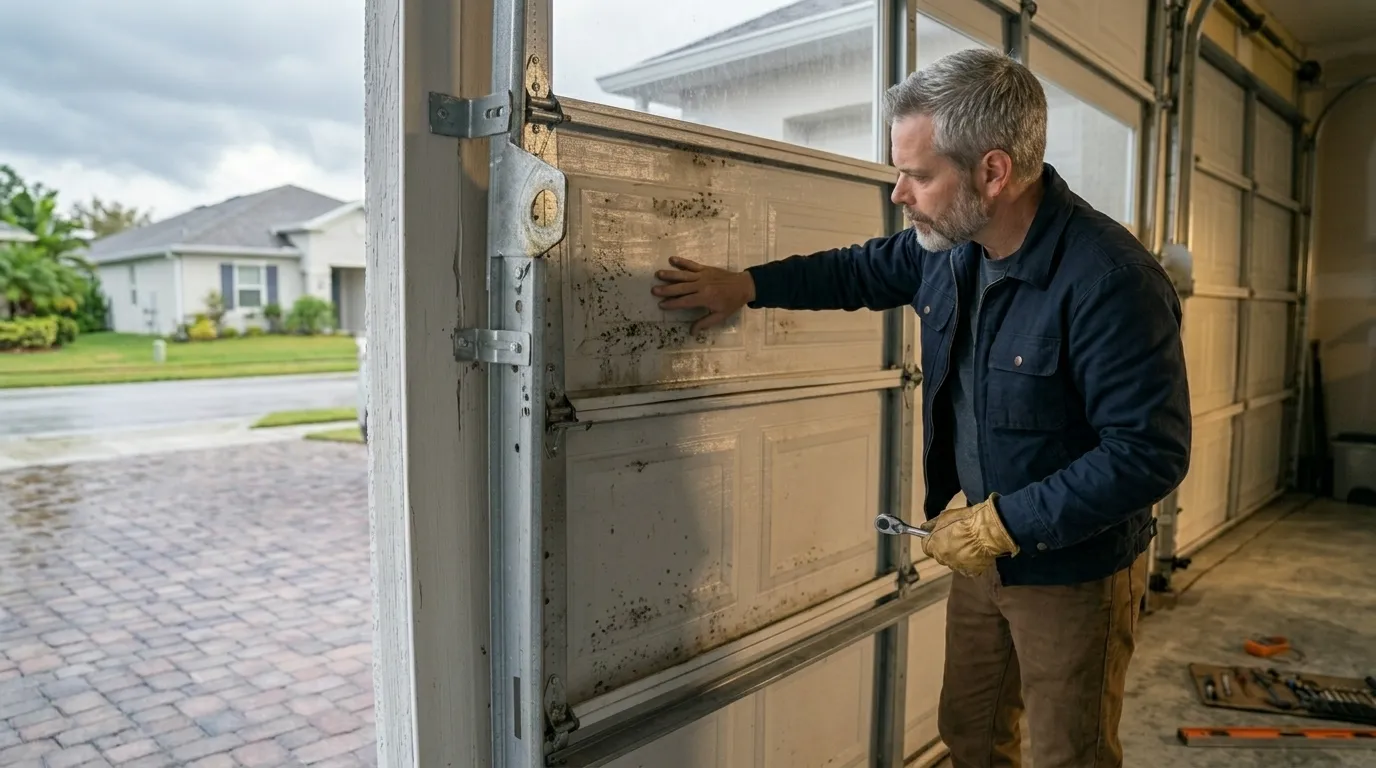
The most common version we see: the door looks fine when it's fully down, but as it rises one side lags or catches, and you can see the bottom corner drift away from the track wall. Sometimes it's subtle enough that the door still runs, just louder and rougher than it used to, with a scrape you can hear from inside the house.
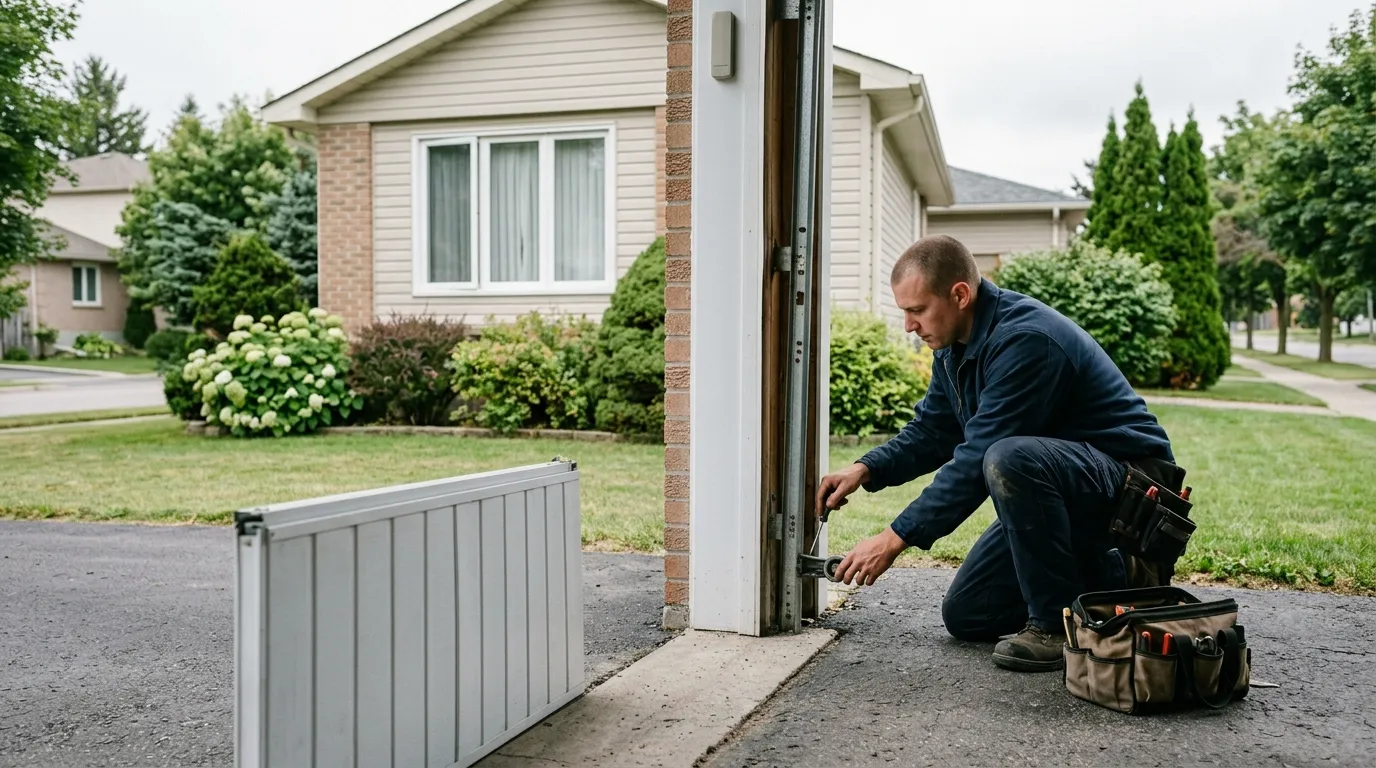
The more obvious version is a roller that's fully jumped the track - the door stops moving altogether, usually partway up, and there's a visible gap where the roller sits outside the channel instead of inside it. On older track from houses built in the mid-1970s, this often comes with a bent section of track itself, not just a displaced roller, because the metal's had decades to fatigue.
A third pattern: the door runs fine but leans a few degrees out of square when it's closed, which usually means one bottom bracket has worked loose rather than the track being damaged. That one's easy to miss until someone notices the gap at the bottom corner letting in outside light.