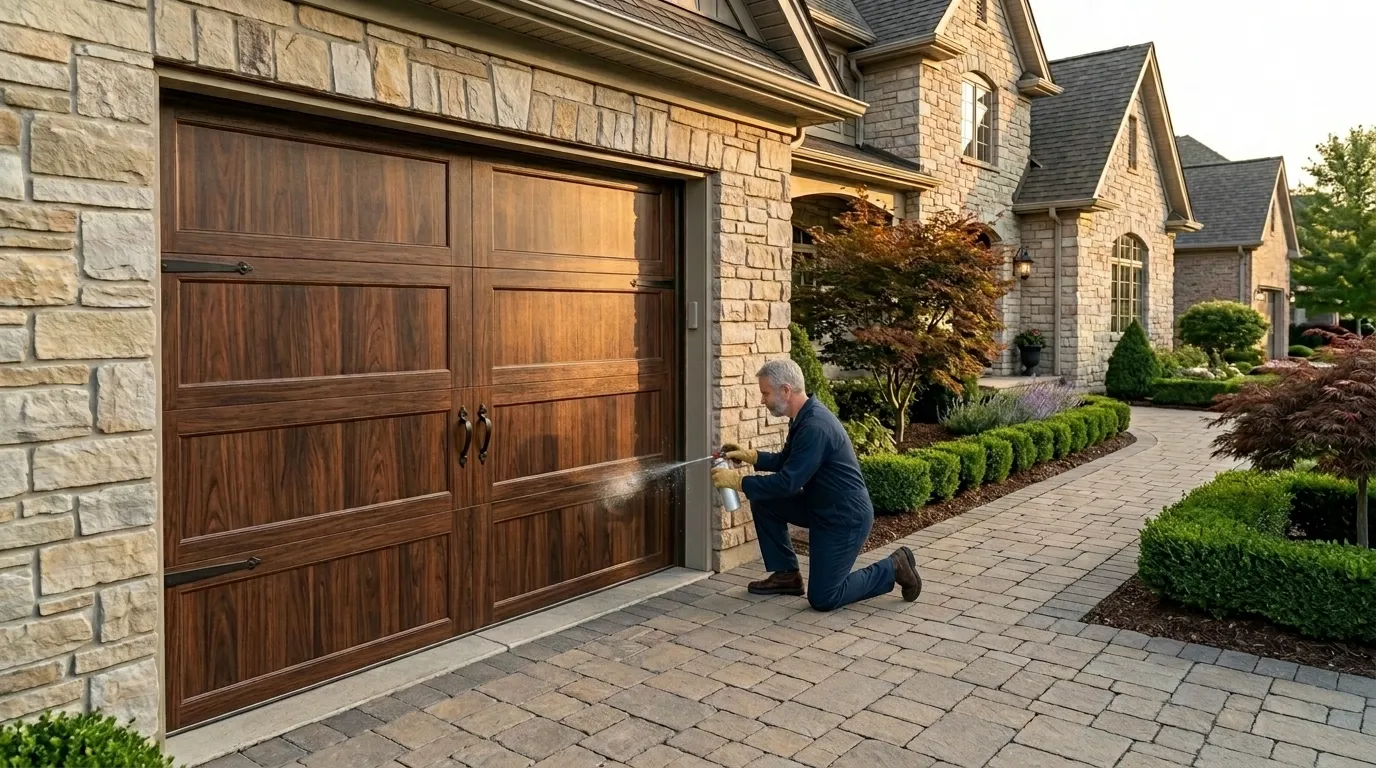
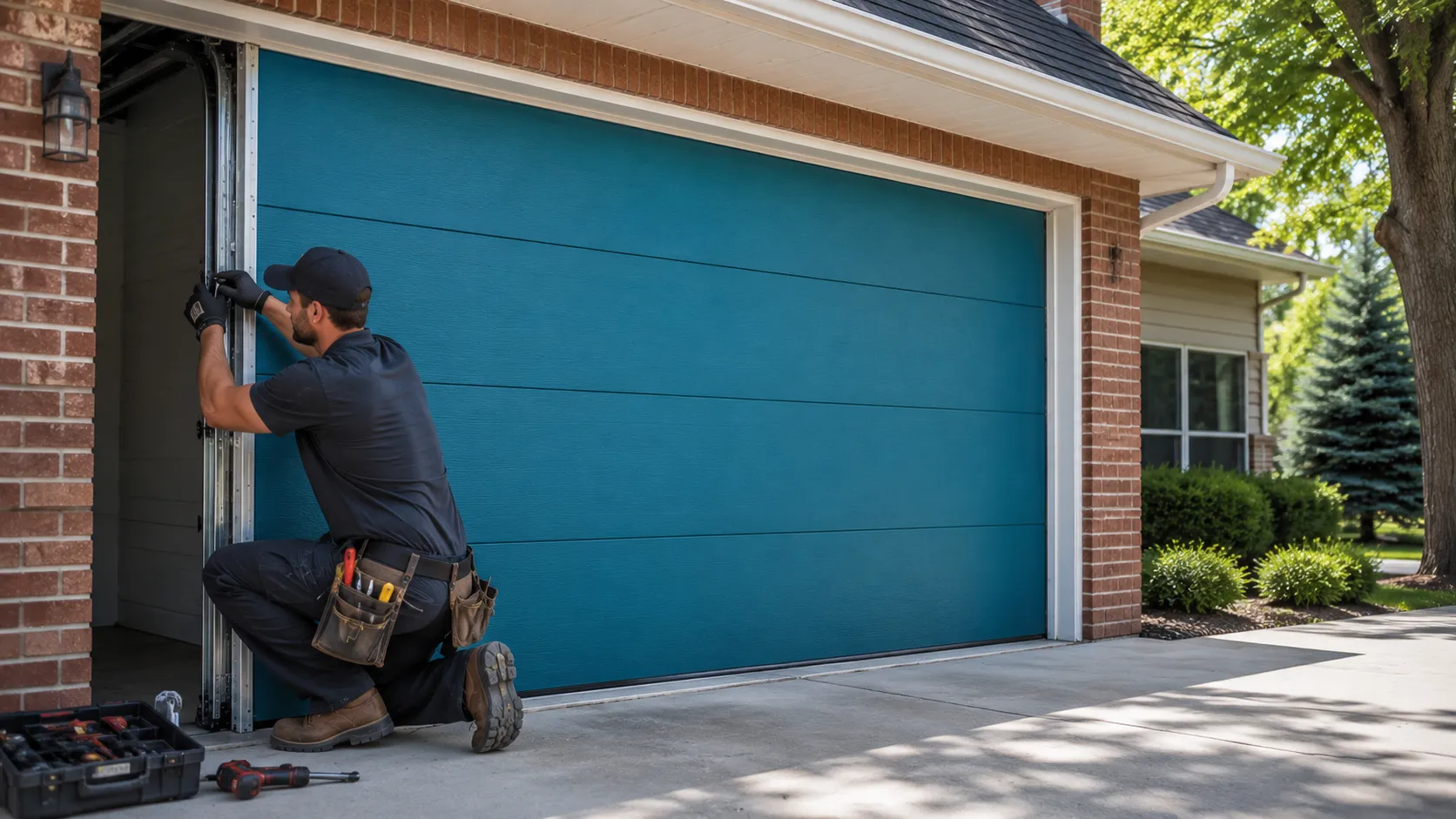
Commercial garage door repair for San Diego businesses: broken springs, worn tracks, and opener failures common in buildings from the 1960s-90s building boom.
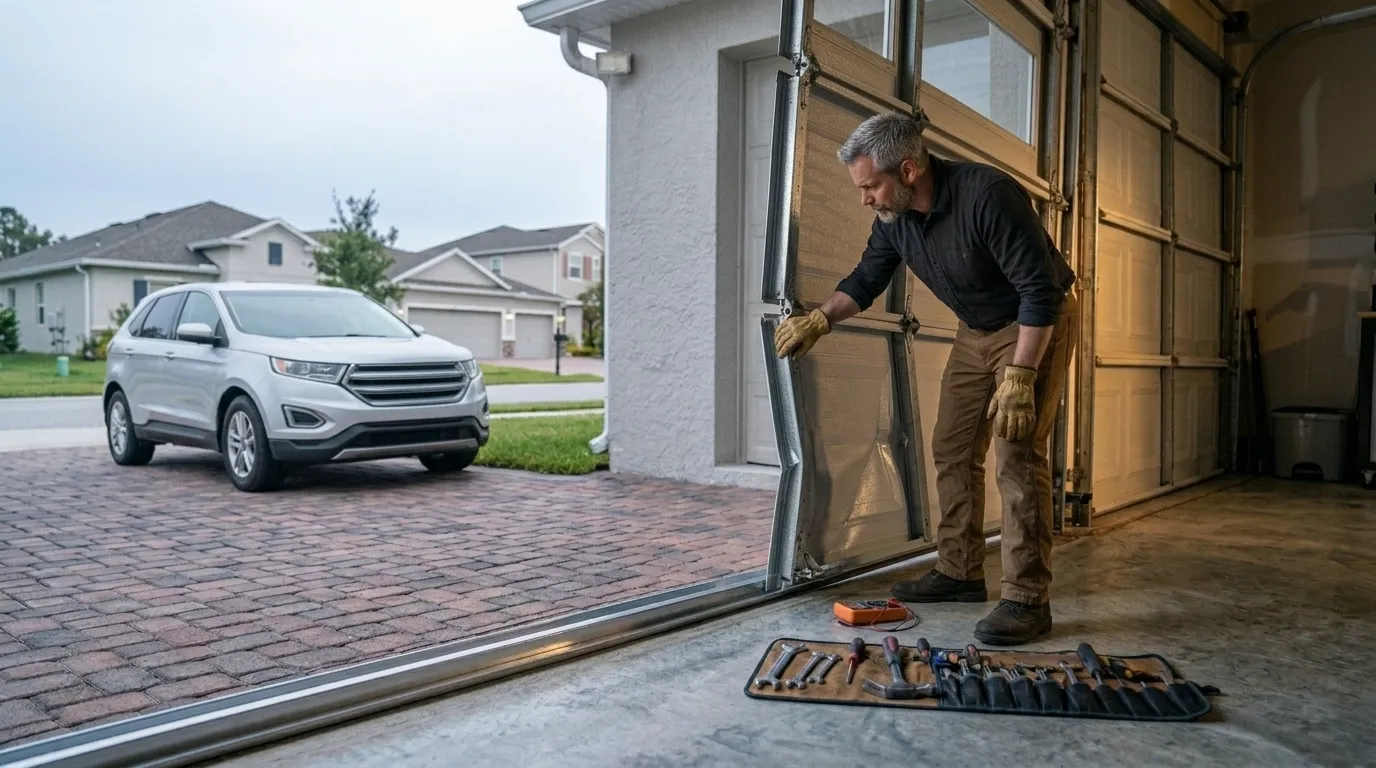
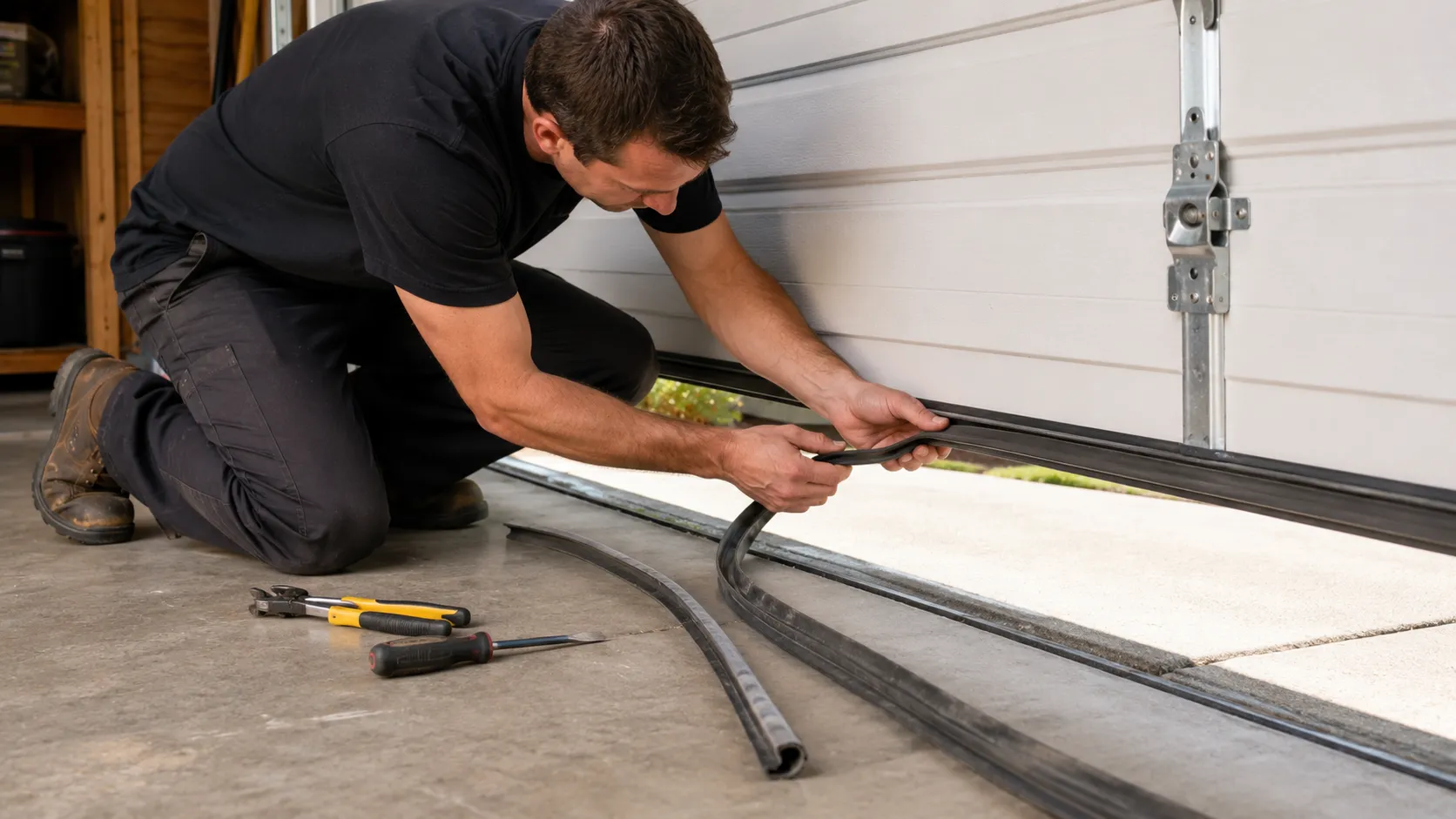
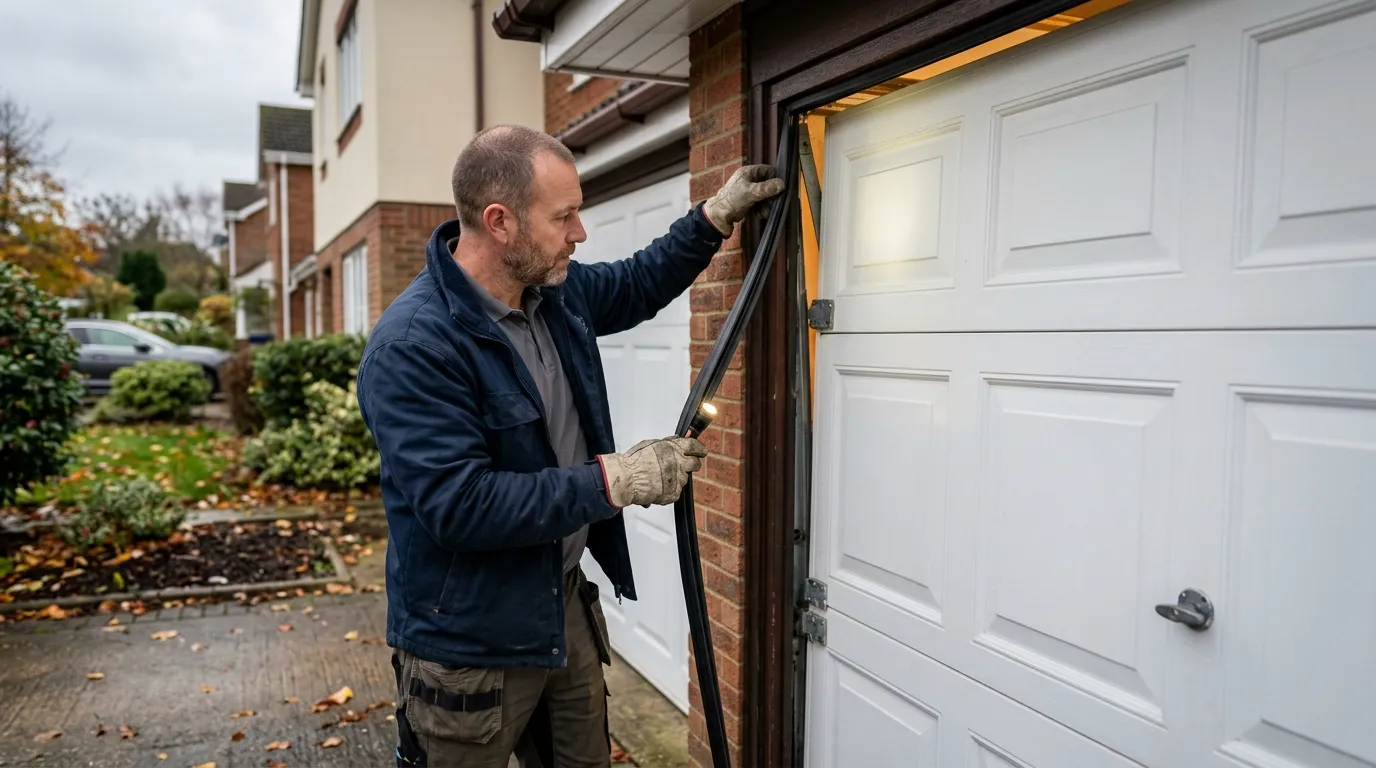
Commercial doors take a beating that residential doors never see: forklifts clipping a bottom panel, delivery trucks backing into a track, a chain-drive opener running three or four cycles an hour instead of two a day. The failures we see most on the commercial side are broken torsion springs sized for heavier sectional doors, bent or racked tracks from impact, worn rollers that jump the rail, frayed lift cables on wider doors, and photo-eye sensors knocked out of alignment by a pallet jack. Weatherstripping along the bottom seal also fails faster on buildings that sit open for loading most of the day. None of this is exotic - it's wear and impact, compounded by cycle count. A door that a homeowner opens twice daily might see the same wear in a month that a warehouse door sees in a week. We don't do custom architectural storefront glass doors, and if your building has one of those specialty systems, we'll tell you that up front rather than take the job and improvise.
How We Fix It
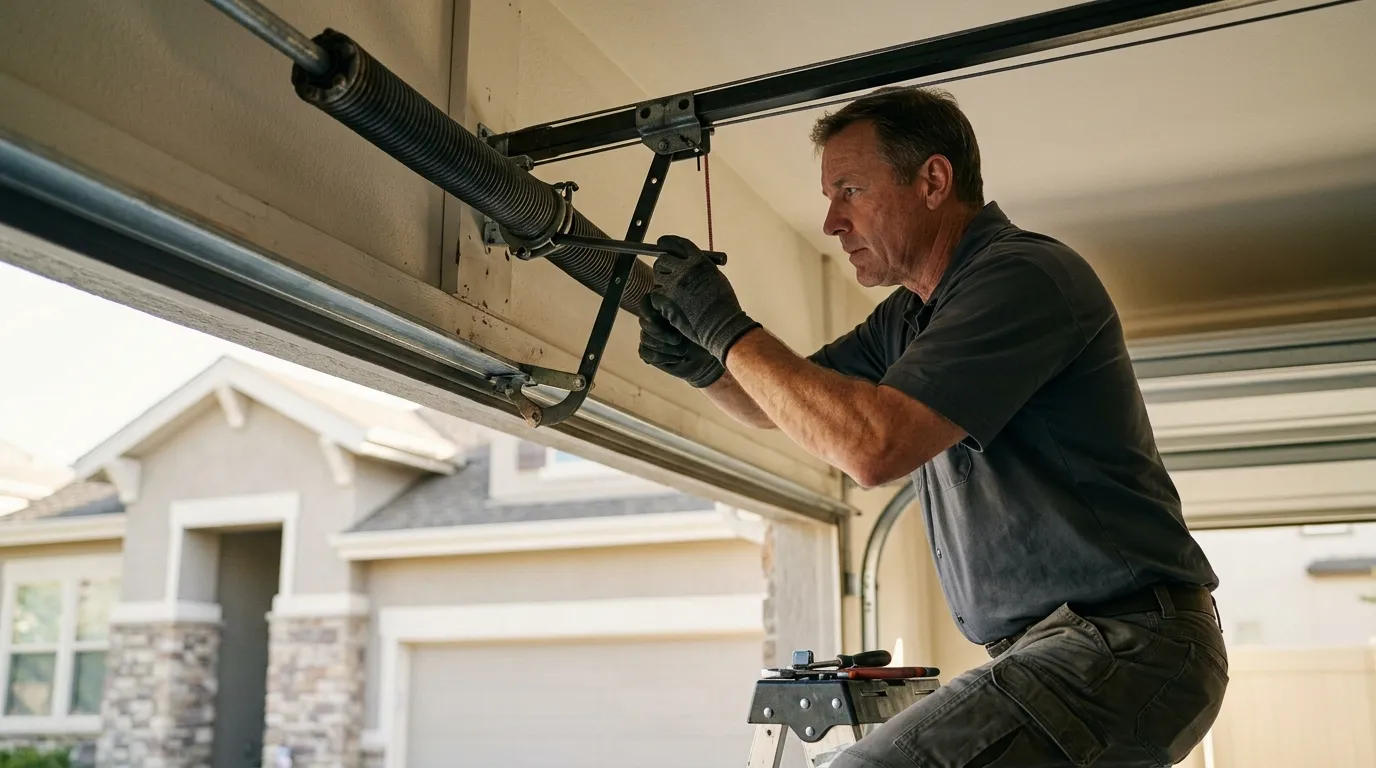
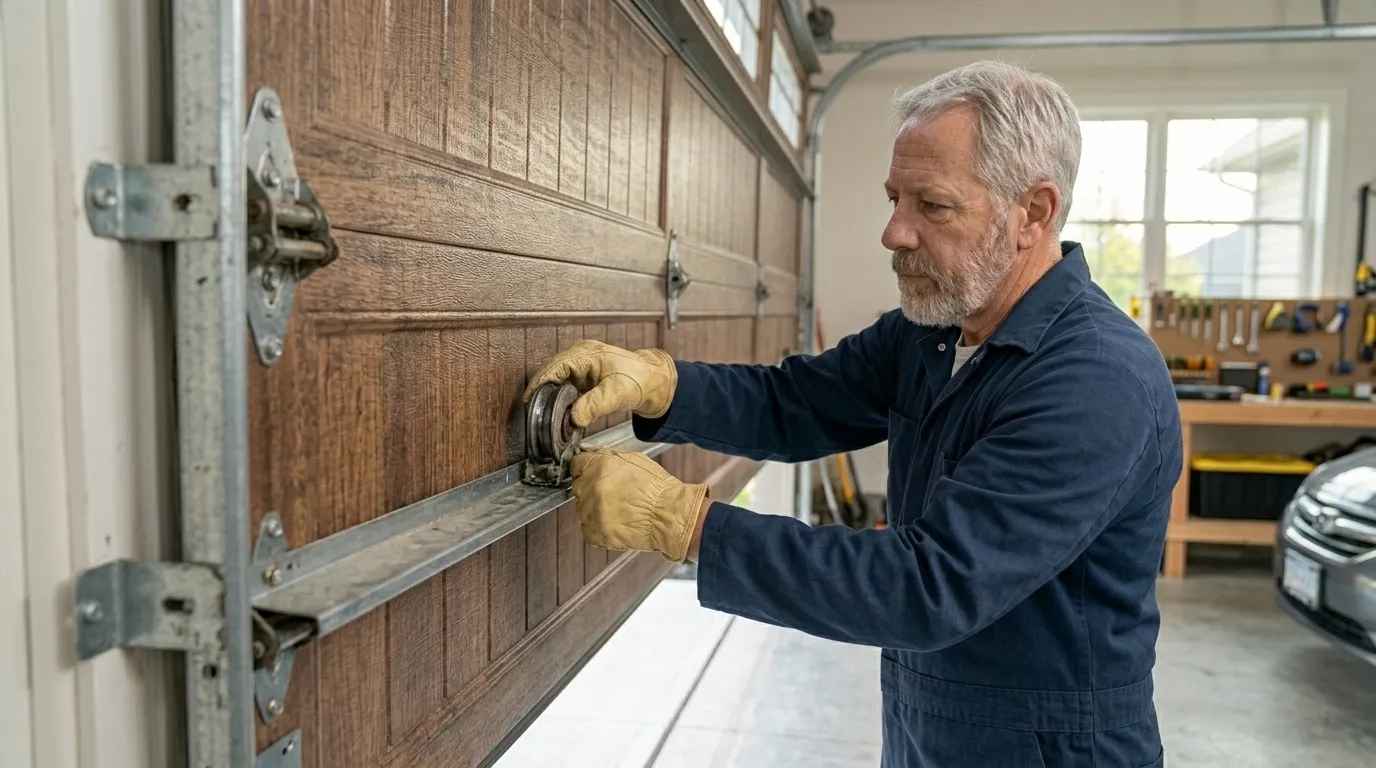
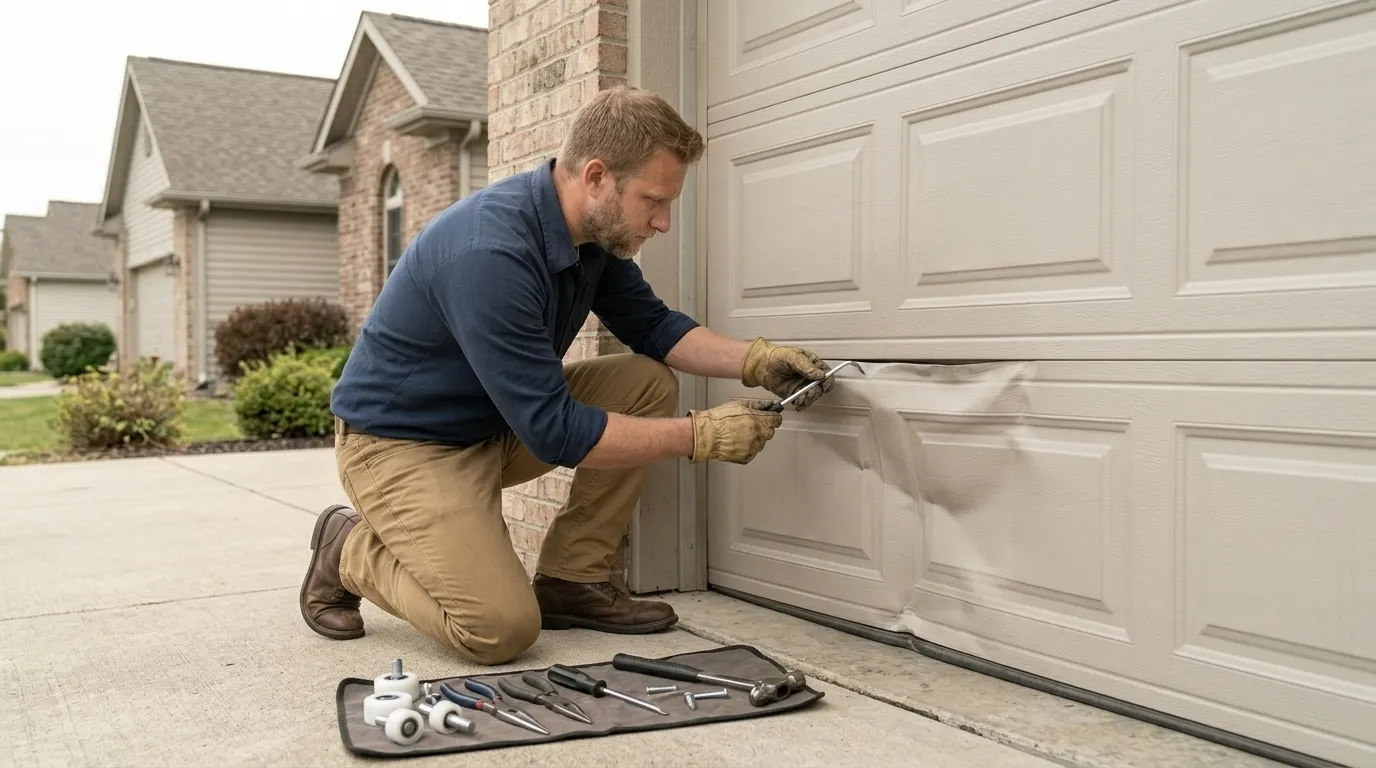
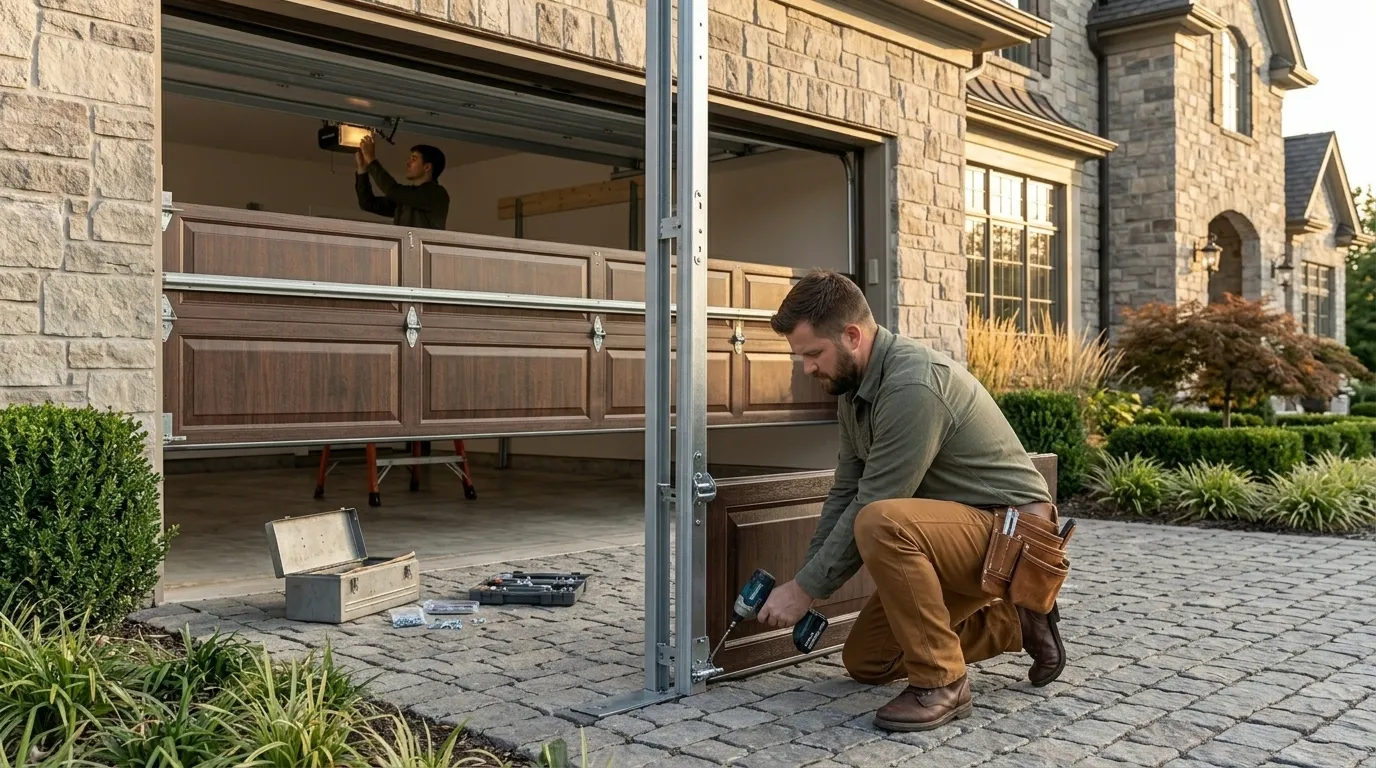
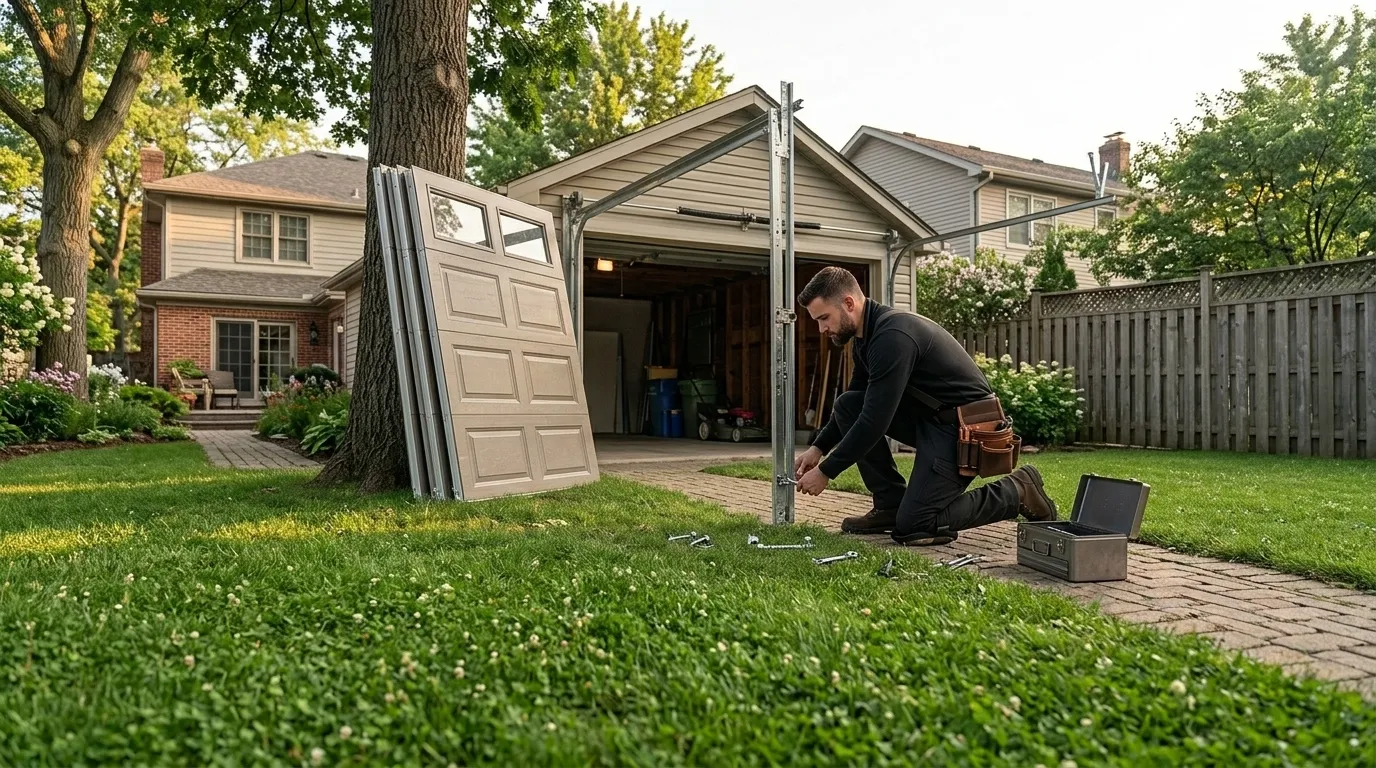
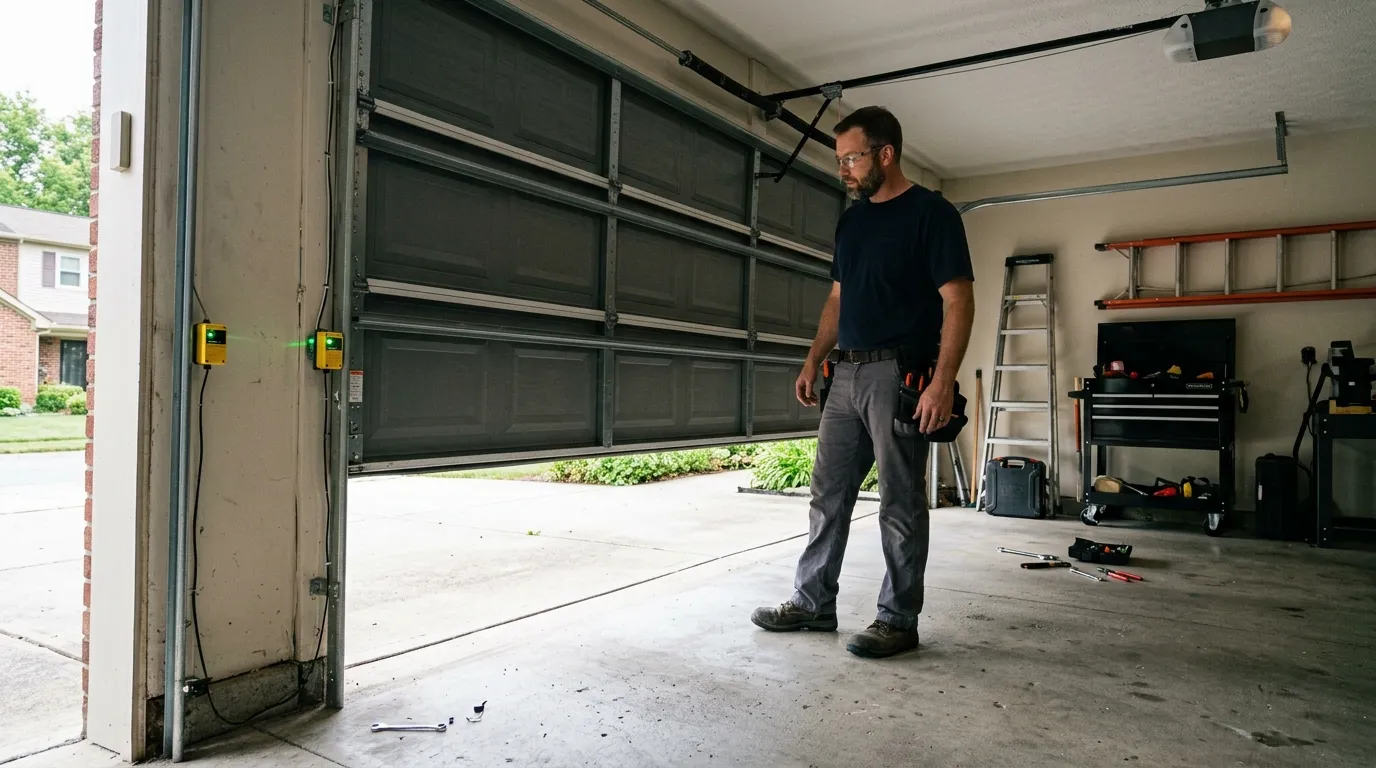
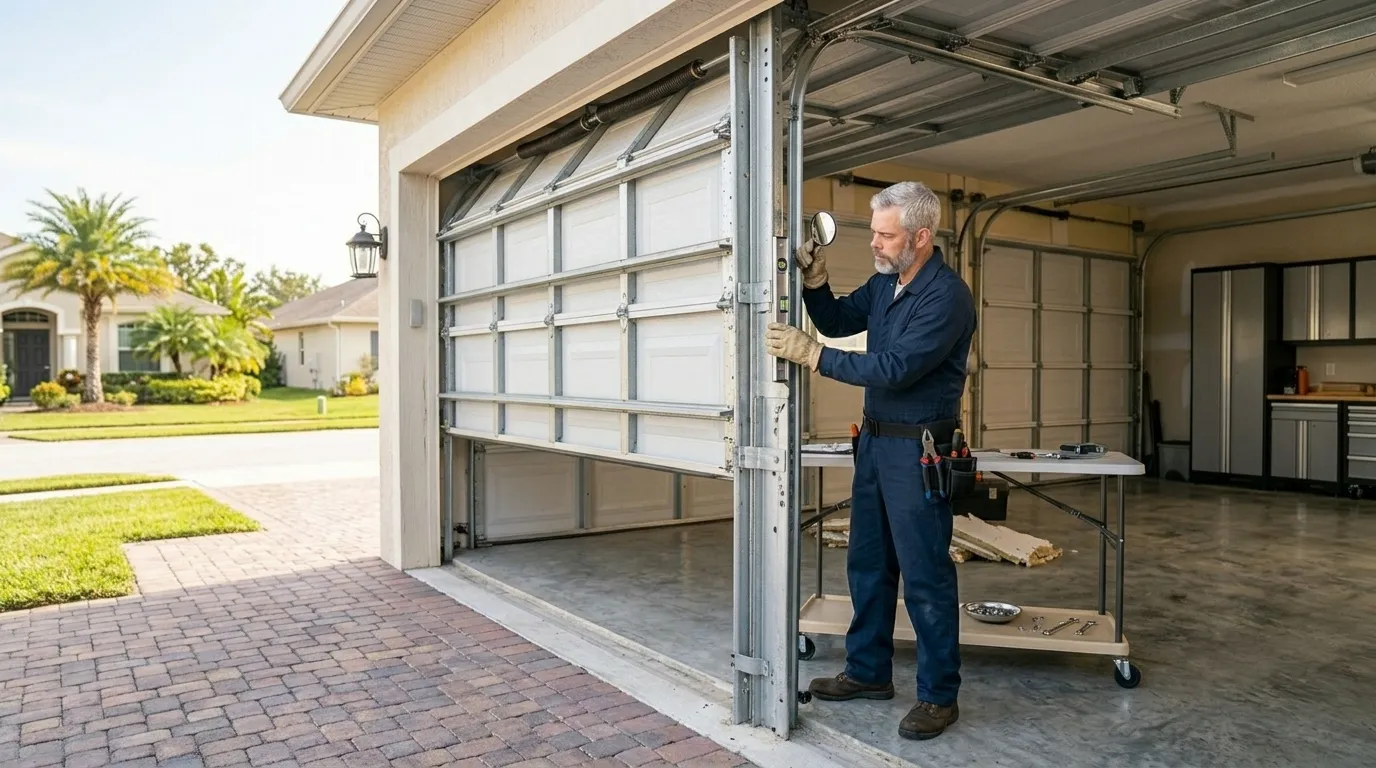
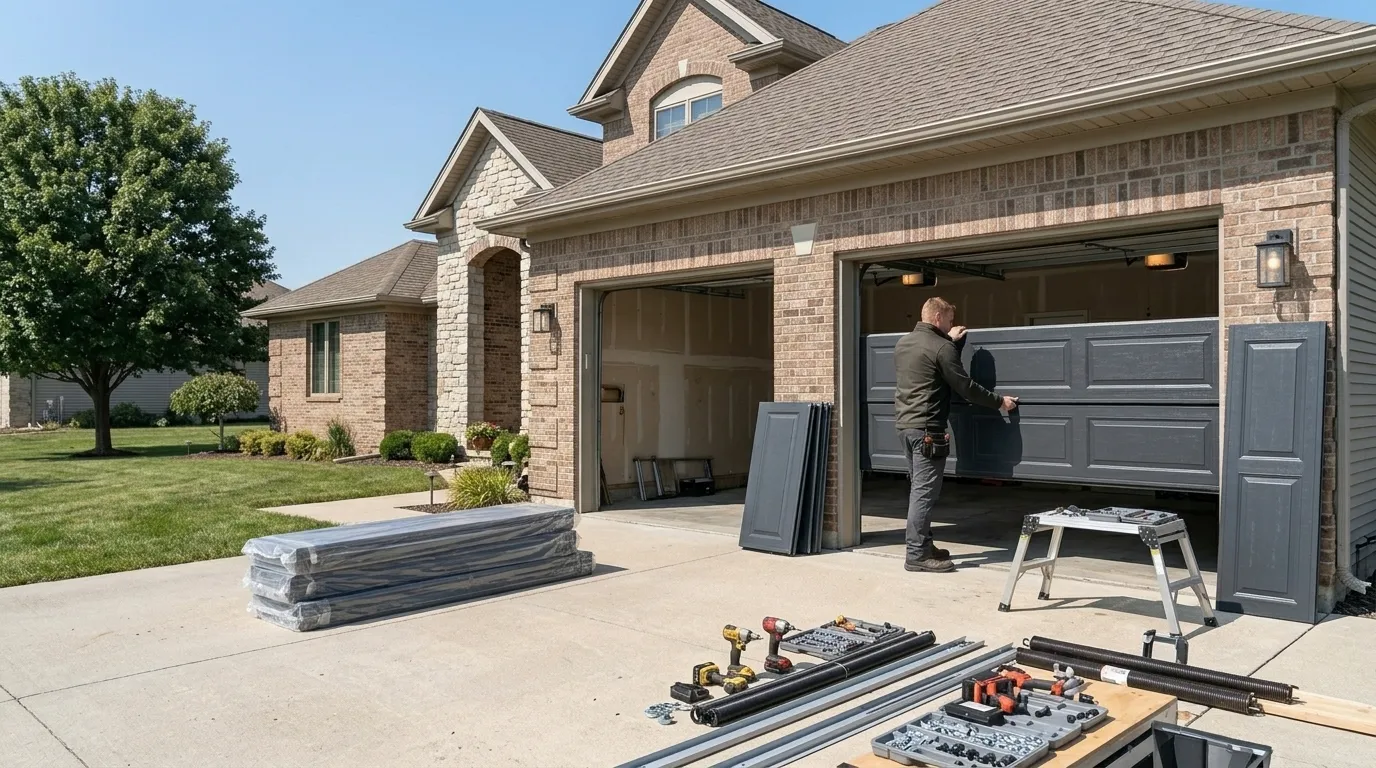
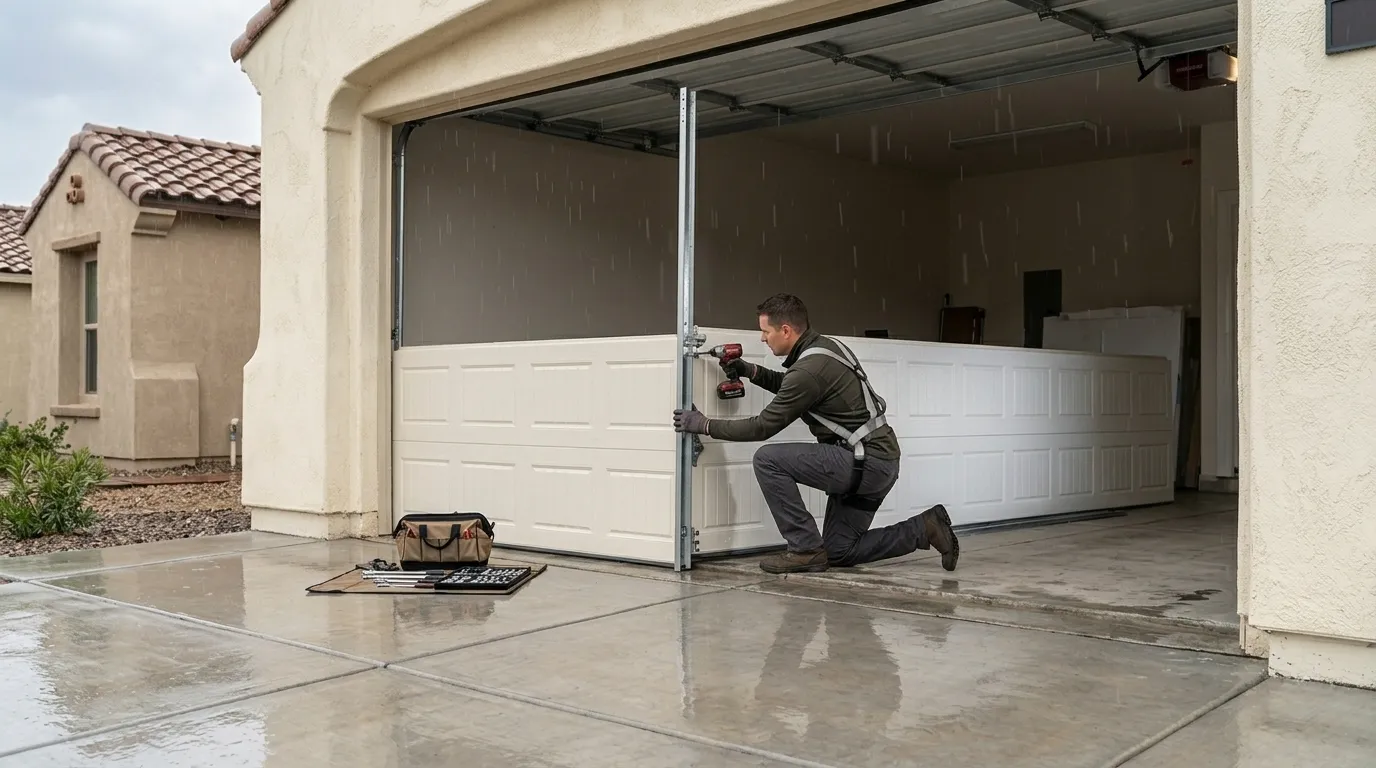
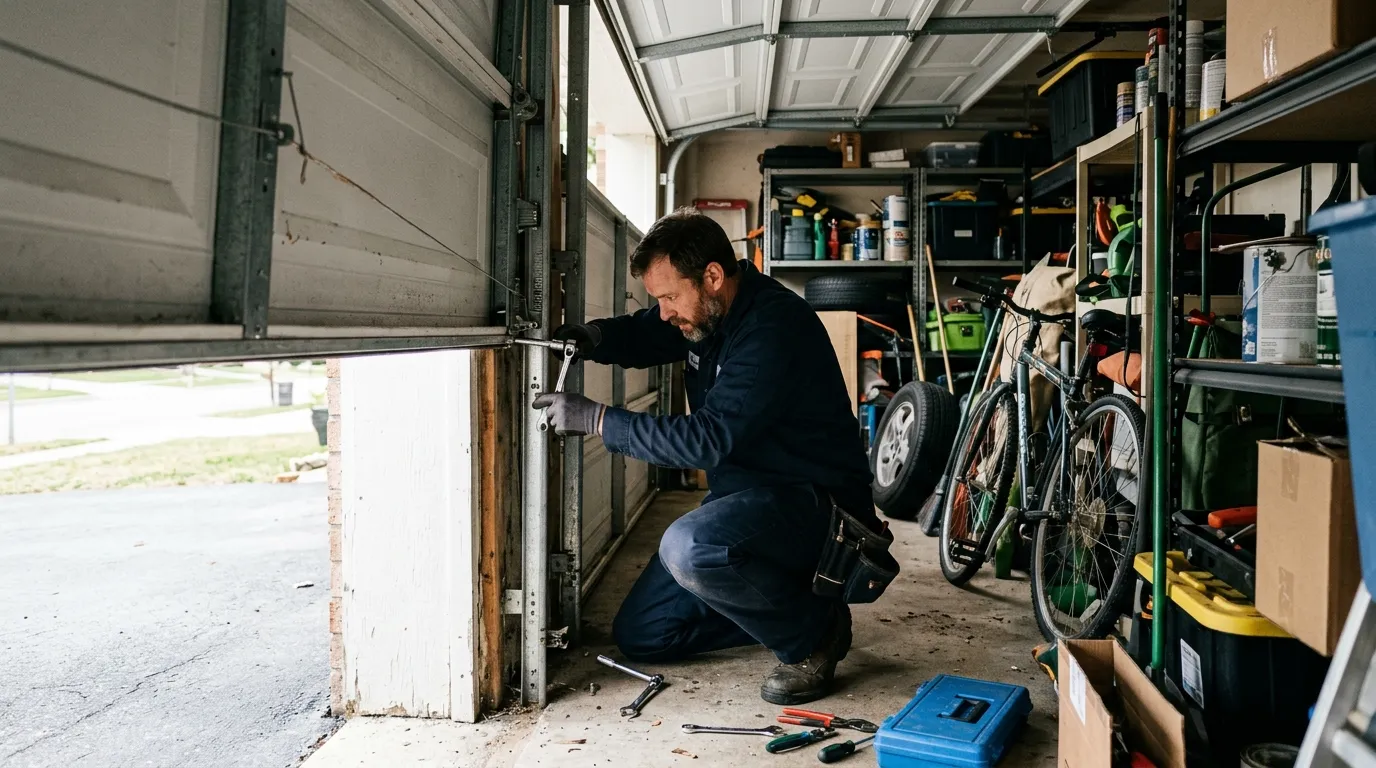
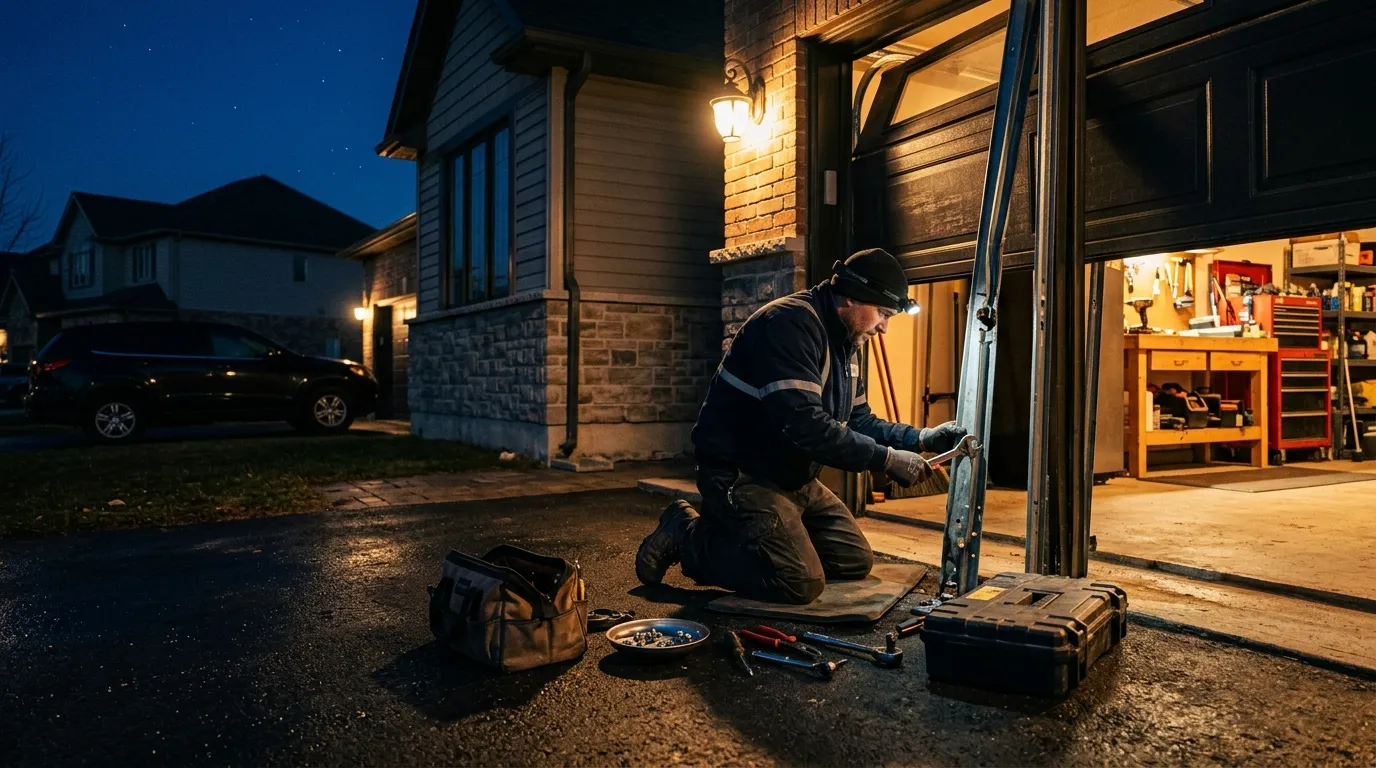
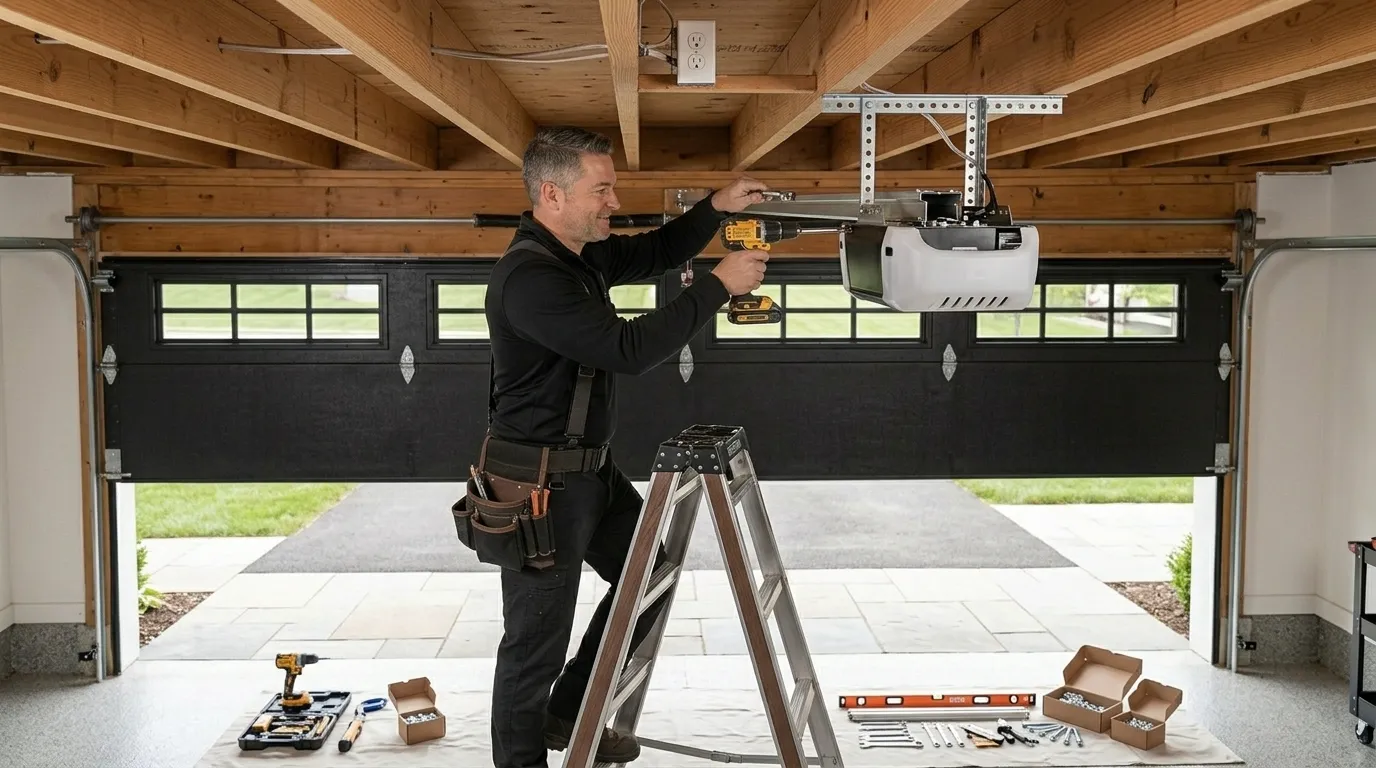
For commercial accounts we replace springs rated for the door's actual cycle count and weight, not a residential-grade spring that will fail again in six months under heavier use. Bent track gets straightened or swapped section by section rather than replaced whole where the damage is localized, which keeps the job faster and the door out of service for less time. Opener repair on commercial jobs is mostly chain-drive and jackshaft systems - we adjust travel limits, replace worn sprockets, and reset photo-eye alignment so the door doesn't fail a safety stop mid-cycle. Cable and roller replacement is straightforward on standard widths; wider or oversized commercial doors sometimes need parts ordered in, and we'll give you a real lead time rather than a guess. One limitation worth saying plainly: if a door has been impact-damaged badly enough that the frame itself has racked, patching it is a short-term fix, and we'll say so instead of billing you twice for the same problem.
How It Shows Up
Most commercial calls start the same way - a manager notices the door is running slower than it used to, or an employee mentions it's making a grinding or popping sound partway through the cycle. Sometimes it's more sudden: the door stops mid-close and won't reverse, which is usually a photo-eye or limit switch issue rather than anything structural. A door that drifts open a few inches after it's supposedly shut usually points to a spring that's lost tension gradually rather than snapped outright. On buildings near the coast, staff often describe a door that used to close flush now leaving a visible gap at the bottom corner - that's the track or the panel edge starting to rust and pull slightly out of true. None of these are emergencies on day one, but every one of them gets worse with continued cycling, and a door left running rough eventually strands itself shut or open at the worst possible time - usually during a delivery window.
Why It Happens Here
A lot of the commercial and light-industrial buildings scattered through this service area went up during the same stretch that shaped the surrounding neighborhoods - mostly the 1960s and 70s stock described across the 21 areas we cover, with housing broadly dating 1967 to 1992. Buildings from that era were fitted with steel sectional doors and chain-drive openers that were standard for the time, and a lot of that original hardware is still in service decades later, past the point where springs and track were designed to hold up. San Diego's mild temperate climate band means we don't deal with the freeze-thaw cycling that cracks concrete and seizes hardware elsewhere in the country, but the marine layer's steady humidity does its own slow damage - corroding torsion springs, pitting steel track, and rusting bottom brackets on doors that never dry out fully overnight. The result is a failure pattern that's less about sudden weather events and more about steady, quiet wear on hardware that's older than the businesses running it.
How it works
From “it’s stuck” to “it’s fixed”
1
Tell us what’s wrong
Describe the symptom - won’t open, loud bang, opener runs but the door won’t move.
2
On-site diagnosis
A technician tests the door under power and by hand and finds what actually failed.
3
Clear, up-front plan
You get the fix that’s needed and what drives the cost - before any work starts.
4
Repaired & tested
The repair is done, the door is set true and tested, and the work area left clean.
Serving San Diego, CA - tell us what your door’s doing and we’ll take it from there.
Do you work on chain-drive and jackshaft openers, not just residential openers?
Yes. Most of the commercial calls we take involve chain-drive or jackshaft systems rather than the belt-drive openers common on houses. We adjust travel limits, replace sprockets and chains, and reset safety sensors on those systems regularly.
How fast can you get parts for a wide commercial door?
Standard commercial widths are usually stocked or available quickly. Oversized or custom doors sometimes require ordering parts in, and we'll tell you the real lead time before you commit to the repair rather than after.
Is it normal for a commercial door built decades ago to still be running?
It's common. A lot of buildings in this service area carry doors and openers from the 1960s-90s construction era. They can keep running for years past their design life, but springs and track on hardware that old are past the point of reliable service.
Why is my door rusting even though it never freezes here?
San Diego's climate is mild, but the marine layer keeps humidity steady overnight. That slow, constant moisture corrodes torsion springs and pits steel track over years, even without hard weather events.
Ready to get your garage door sorted?
Tell us what it’s doing and where you are in San Diego - we’ll take it from there.