San Diego Garage Door Co repairs and tunes garage doors across San Diego, from Serra Mesa to Clairemont Mesa, on homes mostly built between 1967 and 1992.
Most of the doors we open in San Diego came with houses built between 1967 and 1992, with the bulk going up around 1975. That means a lot of original torsion springs, original rollers, and original cable drums still doing the daily lift-and-lower on a door that's now pushing fifty years old. Springs are rated in cycles, not years, and a spring that's been quietly wearing down since the Ford administration doesn't give much warning before it snaps.
We also see galvanized cables fraying at the drum, nylon rollers that have gone brittle and cracked, and center bearing plates worn oval from decades of the same shaft spinning through them. On double doors from this era, the steel is often thinner gauge than what's sold today, so a bent track or a dented panel from a bumper tap does more damage than it would on a newer door. None of this is dramatic. It's just metal and plastic doing what metal and plastic do after fifty years of two-a-day cycles.
How We Fix It
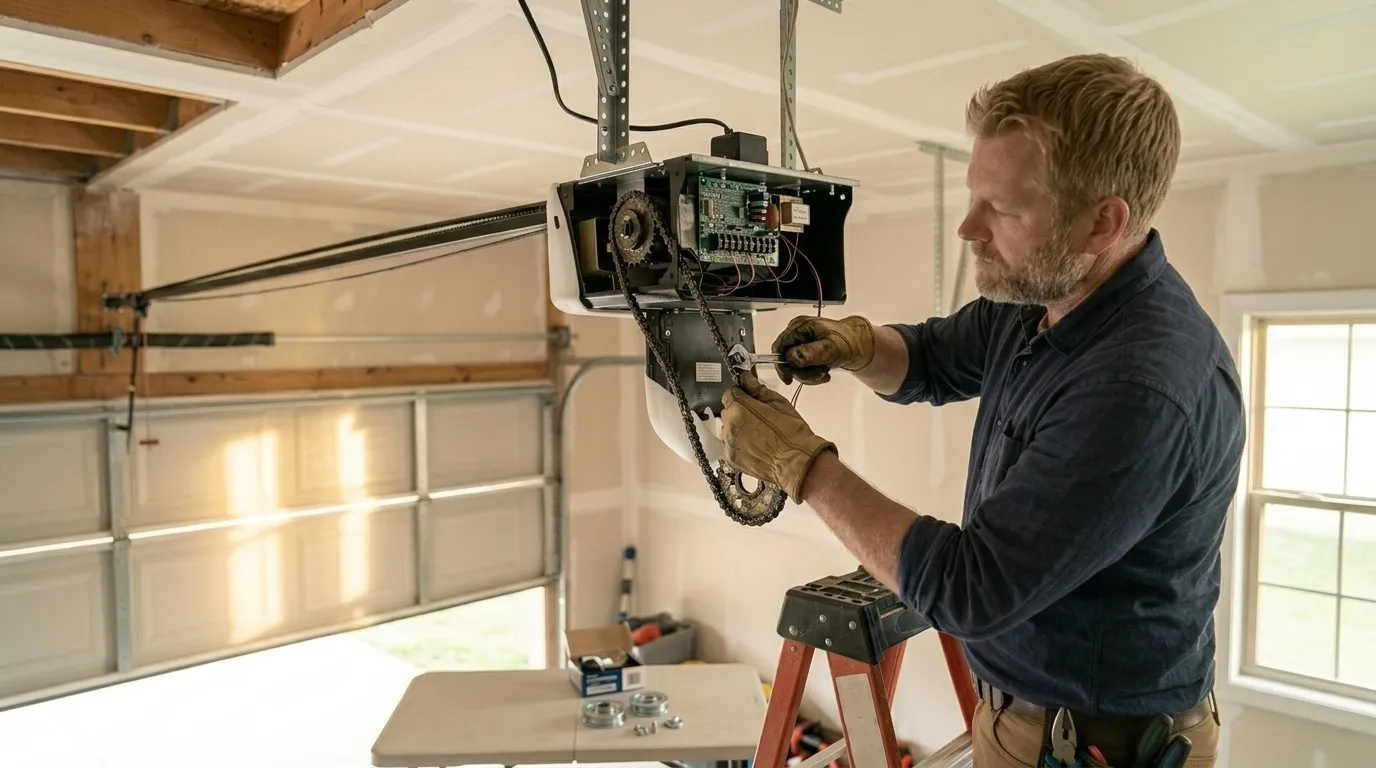
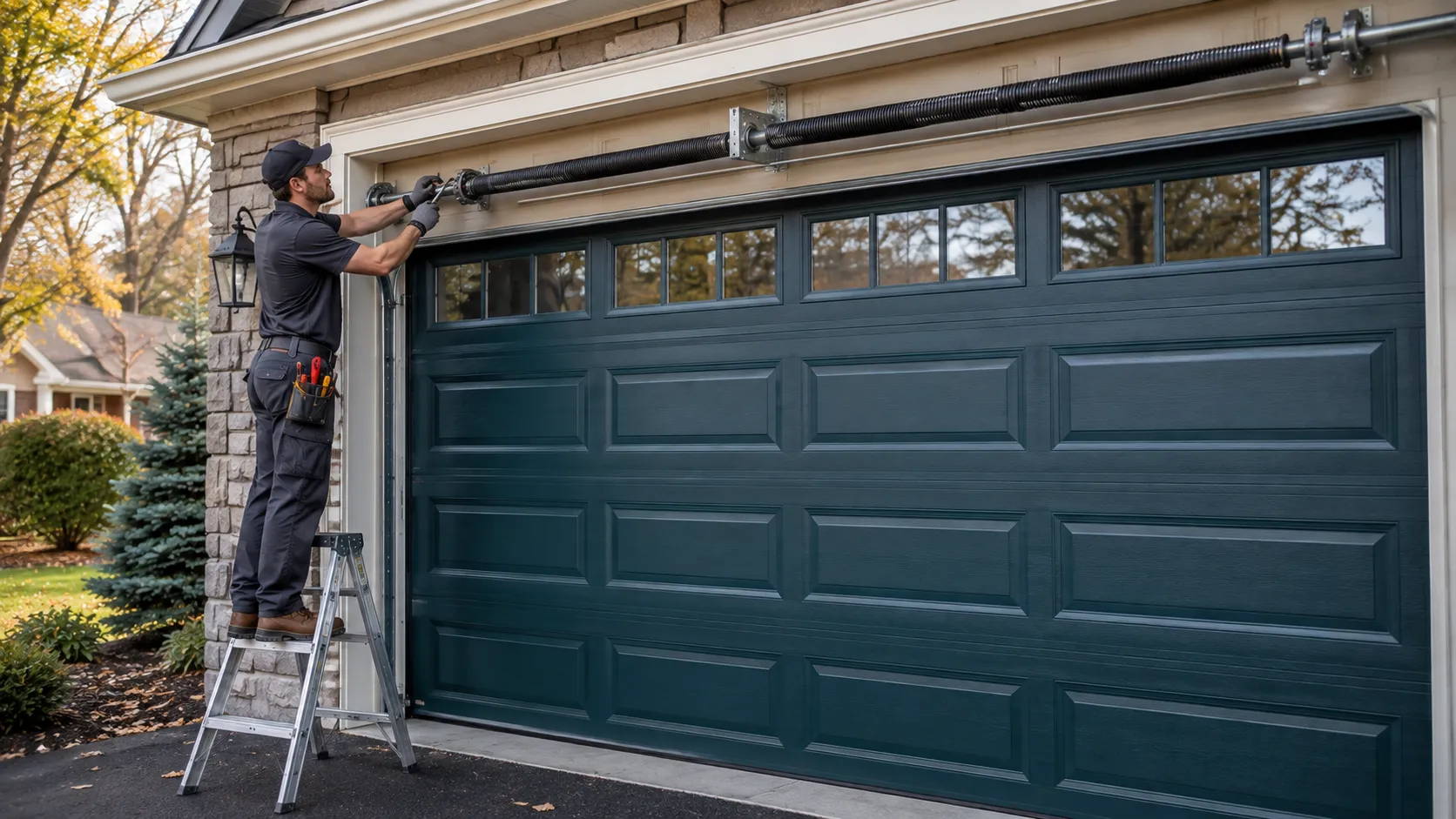
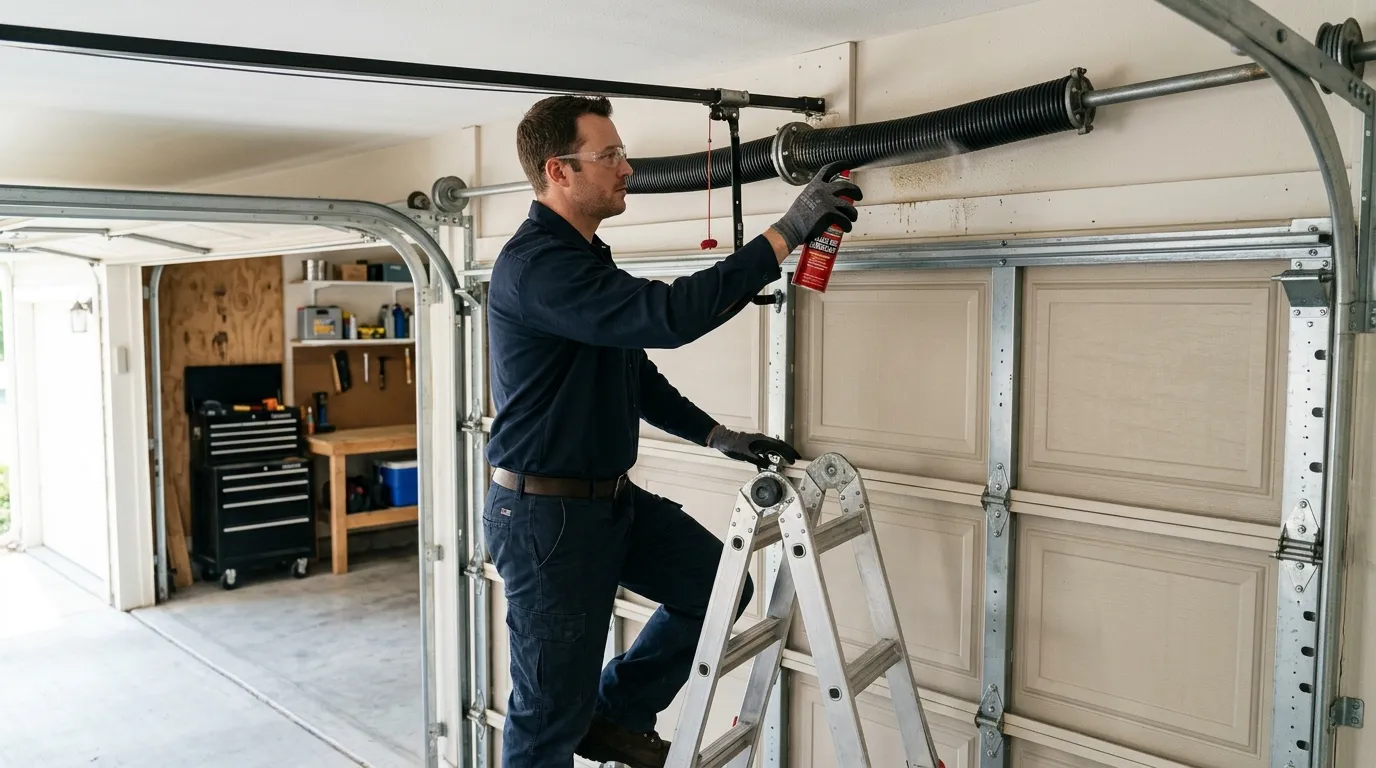
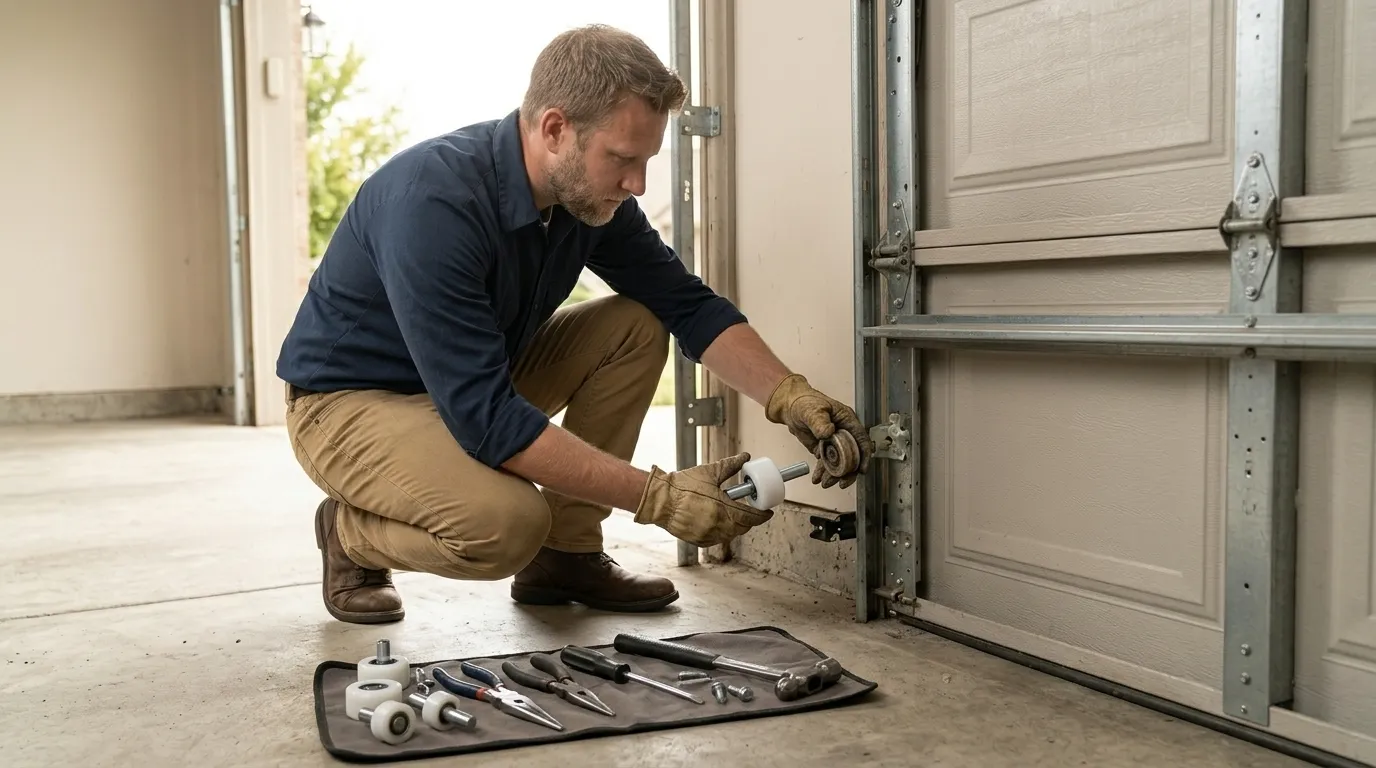
For a torsion spring, we match the replacement to the door's actual weight and wind cycle, not just swap in whatever's closest - a common shortcut that leaves the opener straining within a year. Rollers get swapped from steel or brittle nylon to sealed nylon rollers that don't need the periodic oiling the originals did. Cable and drum wear get inspected together, since a stretched cable often means the drum grooves are worn too, and replacing one without the other just moves the failure a few months down the road.
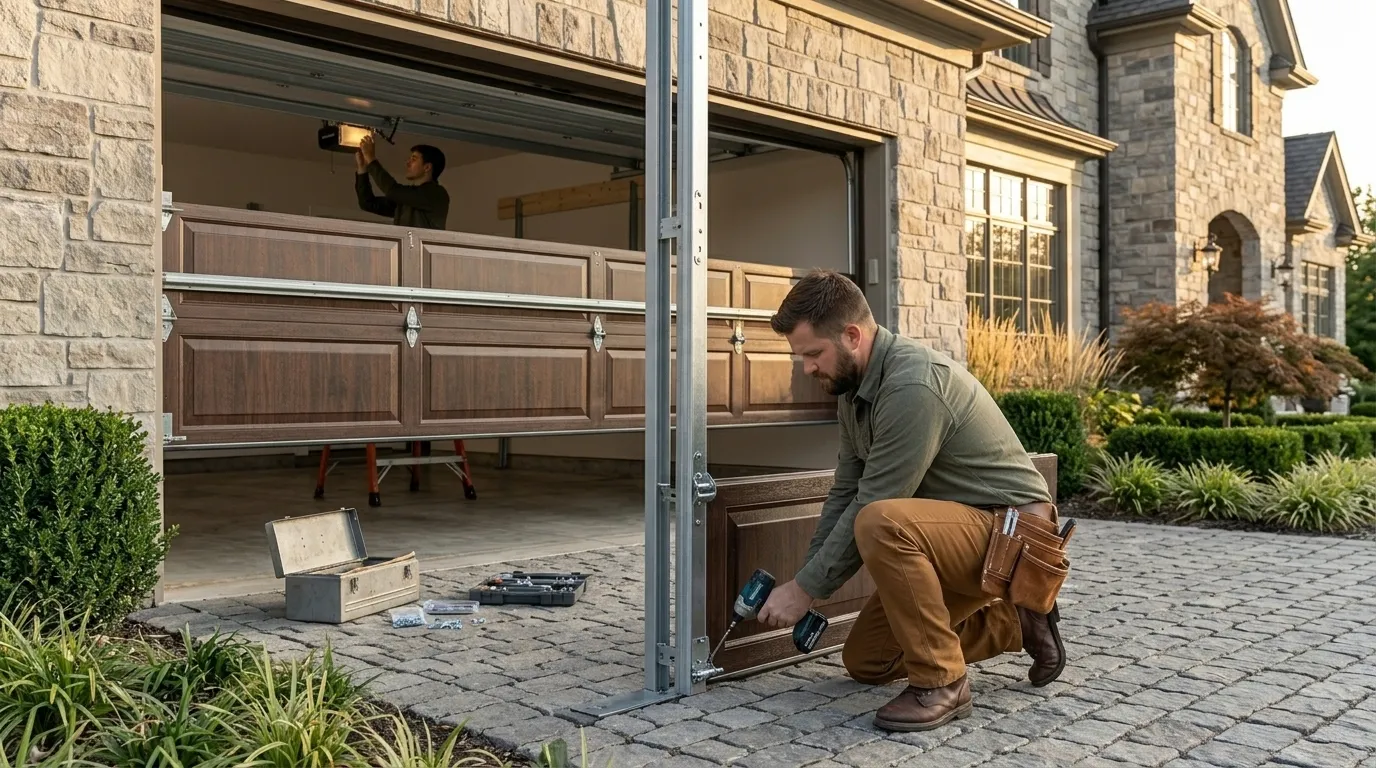
Here's the honest limit: on a door from the 1975 median era, some track widths and panel profiles are no longer made. If one section is dented and the rest of the door is sound, we'll say so - but if the panel style is obsolete, patching one section can mean a mismatched door, and full replacement is usually the better call than chasing an exact match that doesn't exist anymore. We won't sell a repair that just delays the real fix.
How It Shows Up
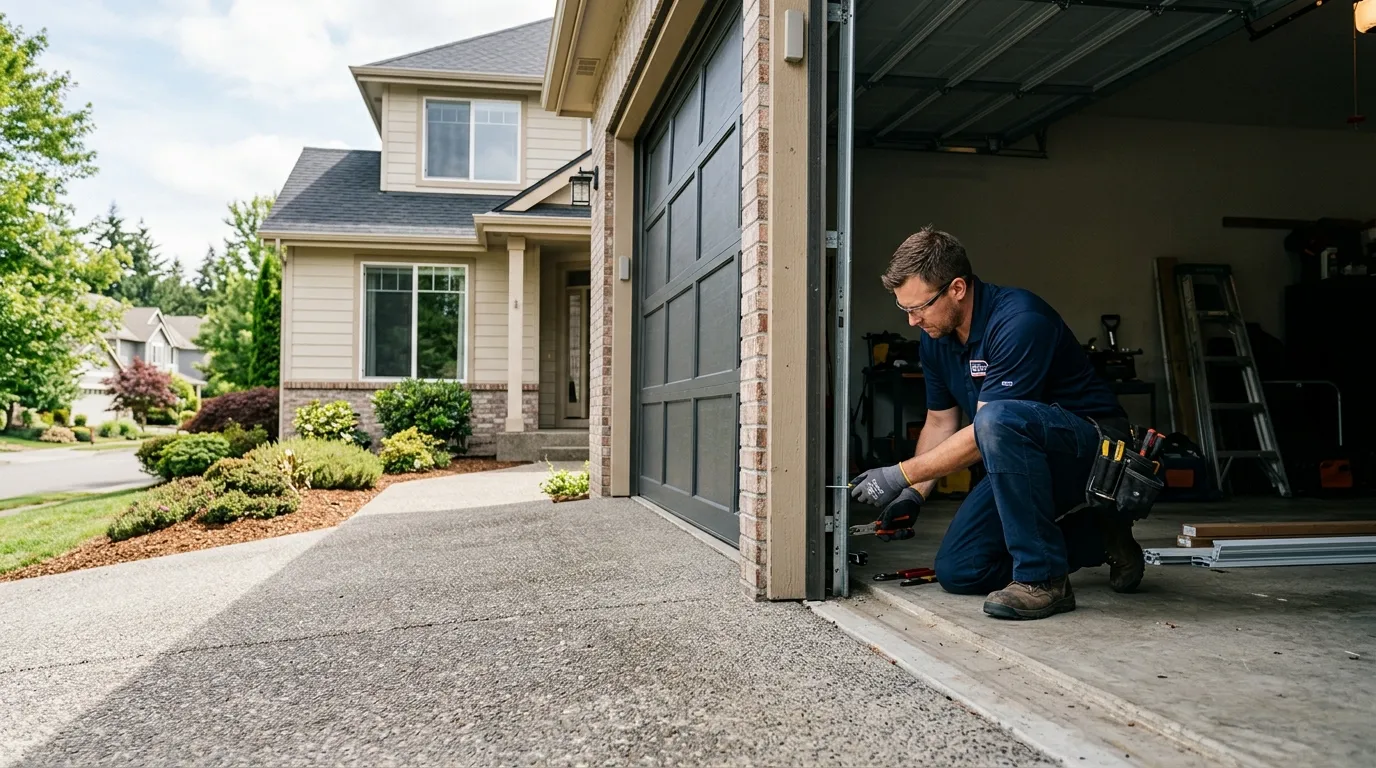
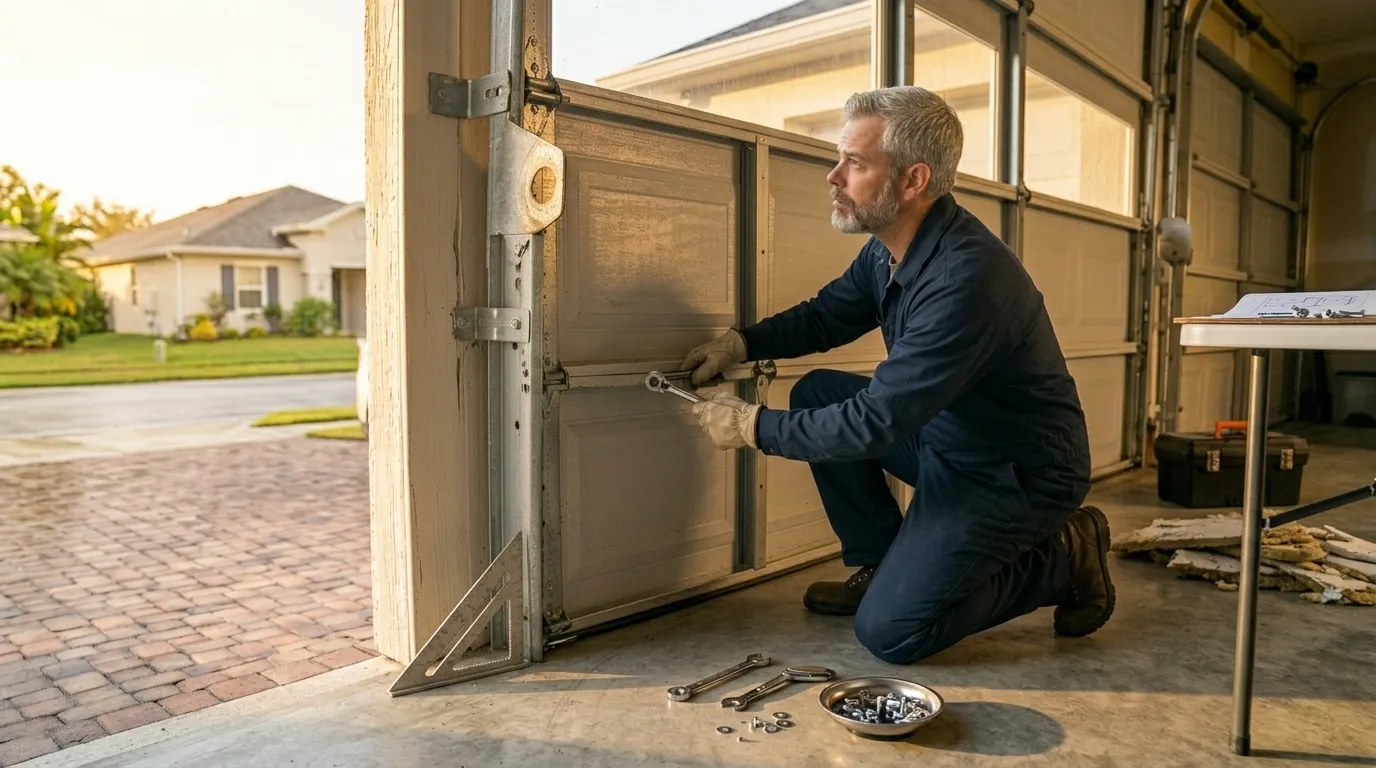
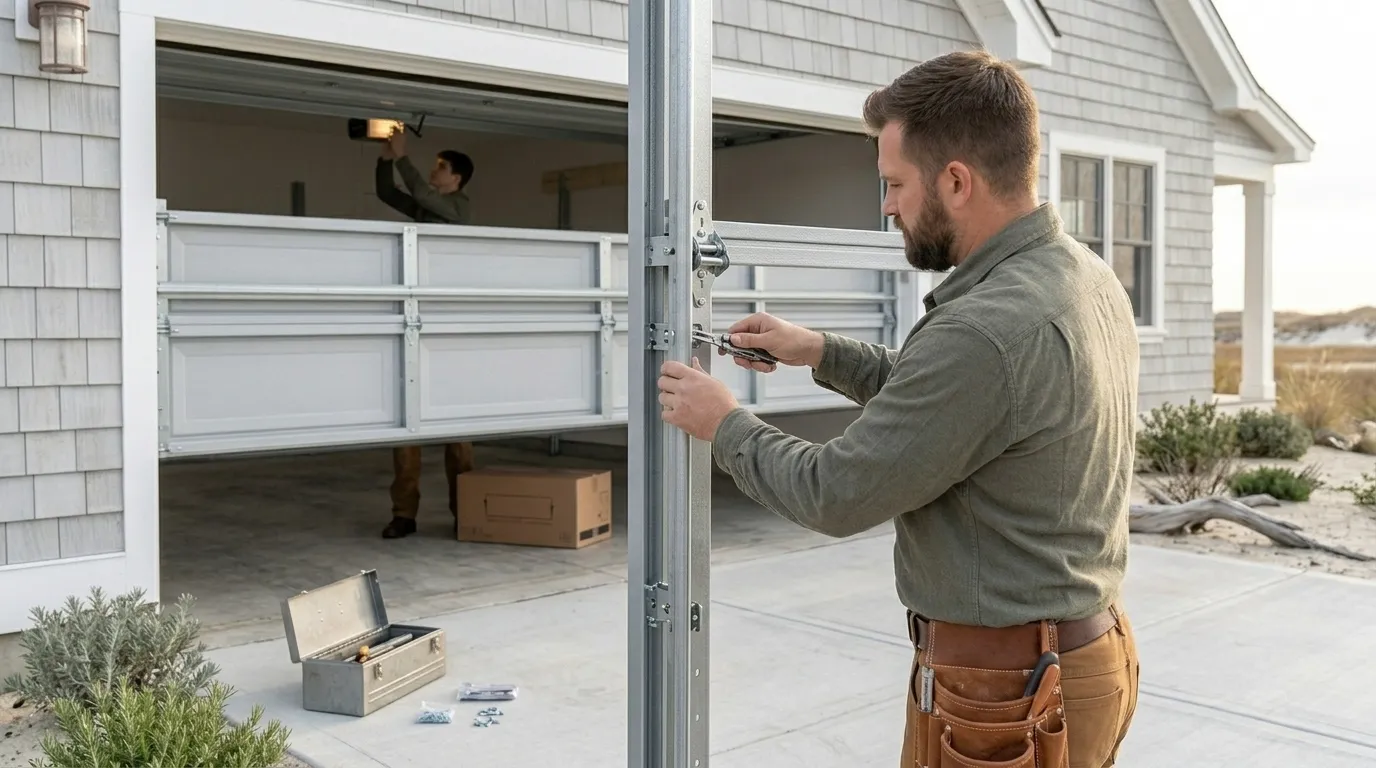
The calls we get from Serra Mesa, Kearny Mesa, and Clairemont Mesa East usually start the same way: the door slams the last foot instead of settling, or the opener strains and groans partway up. That's a spring that's lost tension, not an opener problem, even though the opener is what people notice first. From Tierrasanta and Linda Vista we hear about doors going off track on one side, which usually traces back to a bent roller bracket or a cable that's slipped off the drum.
In Clairemont Mesa West and North Clairemont, where a lot of the tract housing from the same building wave still stands, we see doors that open fine but won't stay down - a sign the down-limit or the spring balance has drifted with age. None of these are emergencies the first day. They're a door telling you a fifty-year-old part is done, before it fails the rest of the way.
Why It Happens Here
San Diego's mild temperate climate is part of why these old doors are still standing at all. There's no freeze-thaw cycling the steel, no salt-heavy road treatment eating the springs, and none of the rust-through that ends a door's life early in harsher regions. The tradeoff is that homeowners here keep original hardware in service well past its rated cycle count, because it still looks fine on the outside. The failure mode shifts from corrosion to plain fatigue - a spring that's simply been wound and unwound too many times.
Across the 136,422 households and 48,883 owner-occupied houses in the areas we serve, most of the housing stock across our 21 neighborhoods dates from that same 1960s-70s wave. With a median household income of $118,431, most of the calls we get end in a proper spring or hardware replacement rather than a stopgap fix, since the budget for doing it right is usually there. That's a different pattern than in an area where the housing is newer or the climate is doing more of the damage.
How it works
From “it’s stuck” to “it’s fixed”
1
Tell us what’s wrong
Describe the symptom - won’t open, loud bang, opener runs but the door won’t move.
2
On-site diagnosis
A technician tests the door under power and by hand and finds what actually failed.
3
Clear, up-front plan
You get the fix that’s needed and what drives the cost - before any work starts.
4
Repaired & tested
The repair is done, the door is set true and tested, and the work area left clean.
Serving San Diego, CA - tell us what your door’s doing and we’ll take it from there.
If the door slams down the last foot, or the opener strains and reverses partway up, that's almost always a spring that's lost tension, not the opener itself. Openers are built to move a balanced door, not lift a dead-weight one. If your door is original to a 1960s-70s build, the spring has likely just reached the end of its cycle life.
Can you match the panel on my older door?
Sometimes, but not always. A lot of the doors from San Diego's 1967-1992 building wave use track widths and panel profiles that aren't made anymore. If we can't get a true match, patching one section usually means a mismatched door, and we'll tell you straight when full replacement makes more sense than a partial fix.
Why did my original hardware last this long?
San Diego's mild climate doesn't put much stress on galvanized steel - no freeze-thaw, no heavy salt exposure. That lets original springs, cables, and rollers look fine on the outside for decades even as they quietly wear out from plain use. The failure shows up as fatigue, not rust, which is why it can seem sudden.
Do you service areas outside San Diego proper?
We work San Diego and the close-in communities, including Serra Mesa, Kearny Mesa, Clairemont Mesa East and West, Tierrasanta, Linda Vista, and neighboring areas within a few miles. If you're not sure whether your address falls in range, ask when you call.
Ready to get your garage door sorted?
Tell us what it’s doing and where you are in San Diego - we’ll take it from there.