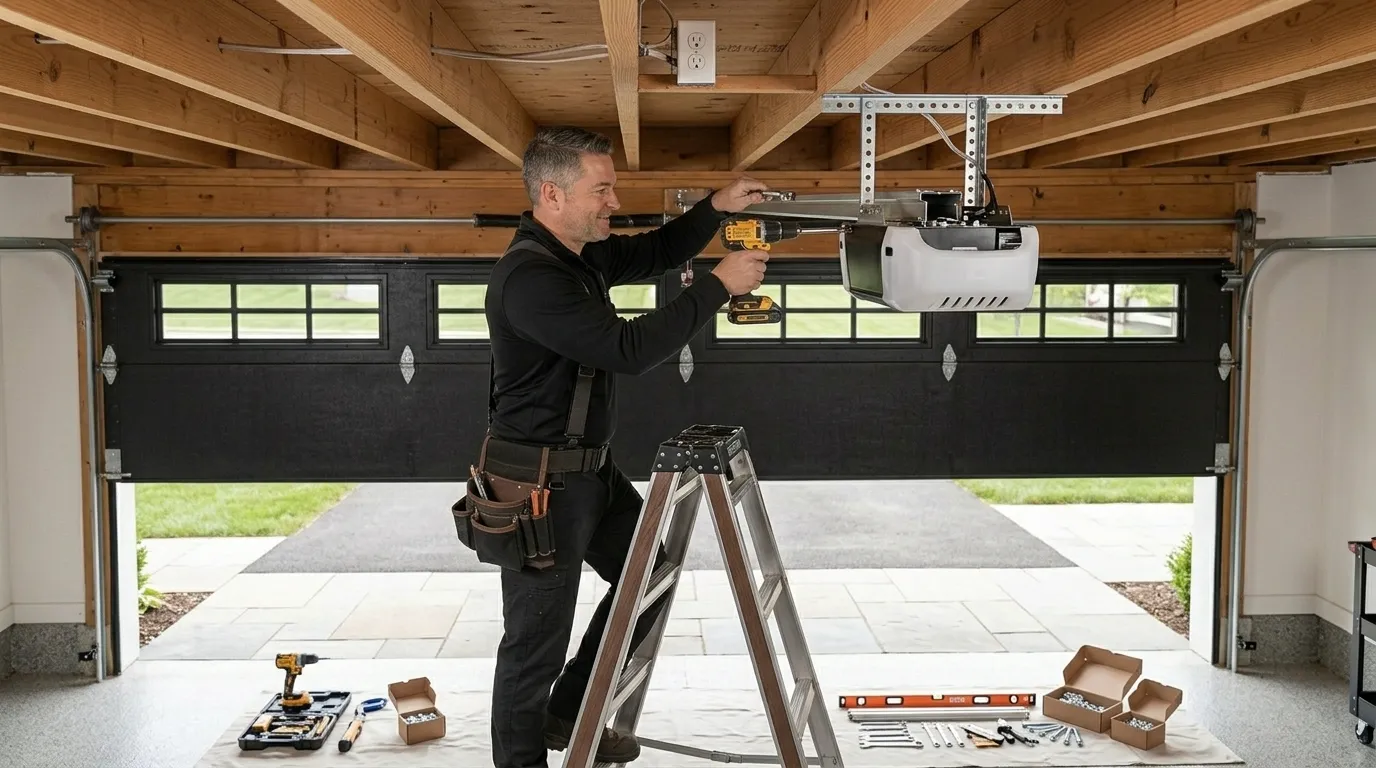
We can't quote a number without seeing the door, and anyone who does over the phone is guessing. What drives the cost is what's actually wrong: a broken torsion spring on a double door costs more in parts than a single, worn rollers are cheap, a bent track from a car bump usually means a new section. What we can tell you is what changes the math locally. A big share of the houses we work on here went up between 1967 and 1992, median right around 1975, so we're often dealing with original openers and hardware that predate anything you'd find on a parts shelf today. That can mean a full hardware swap costs less in the long run than chasing down obsolete parts for a repair. With a median household income of $118,431 across the area, most owners we talk to choose the clean replacement over a patchwork fix once we lay out both options and what each buys them. We'll always give you the repair price and the replacement price side by side before we touch anything.tools
Doing Nothing For Now
Sometimes doing nothing is the right call, and we'll say so. A door that's a little slow or a little noisy but still opens and closes square isn't an emergency. What we watch for is the point where a symptom on a house from the 1967-1992 wave turns into a failure. A torsion spring on hardware that old doesn't send a warning text; it just lets go, usually on the day you're loading the car. Waiting on a spring that's visibly stretched or a cable that's fraying isn't saving money, it's postponing a job that gets more expensive once something else on the same track gets damaged in the process. On the other hand, a cosmetic dent or a slightly out-of-tune sensor can genuinely wait. The honest limit here: we don't push replacement on a door that's still doing its job. If the opener's original to a house built in the 70s and running fine, we're not going to tell you it needs to go just because of its age.
What the Weather Here Does to It
San Diego sits in a mild temperate band, and that matters more than most owners think. We don't get the freeze-thaw cycle that cracks slab foundations and shifts track brackets overnight, and we don't see torsion springs snap cold the way they do somewhere that swings from 20 to 60 degrees in a day. That takes a whole category of emergency call off the table here. But mild doesn't mean no wear. Steady, moderate temperatures mean lubricant on rollers and hinges dries out slowly rather than being stripped by extreme heat or cold, which means a lot of owners go years past when a track should've been re-lubed simply because nothing forced the issue. The failure mode here tends to be slow stiffening and quiet wear rather than a sudden weather-driven break. That's actually good news for planning a service call around your schedule instead of an emergency, but it also means problems can sit unnoticed longer before they show up as a door that won't close square.
The Situation
We cover a wide stretch of the area, from Serra Mesa a mile south and Kearny Mesa a mile north-northwest out through places like Tierrasanta, Clairemont Mesa, Linda Vista, Mission Valley, and Allied Gardens, and further out to La Mesa, Lemon Grove, Casa de Oro-Mount Helix, National City, and Lakeside. Across those 21 named areas the housing is overwhelmingly 1960s and 70s construction, and that consistency is actually useful for us: it means we can usually predict what kind of spring, track, and opener setup we're walking into before we open the truck. With roughly 48,883 owner-occupied houses among the area's 136,422 households, a lot of original garage hardware is still in service, quietly aging alongside the houses it came with. That's the backdrop for most calls we take, whether it's a first-time repair on a door that's been running since the Ford administration or a full replacement for an owner who's done waiting on it.
How it works
From “it’s stuck” to “it’s fixed”
1
Tell us what’s wrong
Describe the symptom - won’t open, loud bang, opener runs but the door won’t move.
2
On-site diagnosis
A technician tests the door under power and by hand and finds what actually failed.
3
Clear, up-front plan
You get the fix that’s needed and what drives the cost - before any work starts.
4
Repaired & tested
The repair is done, the door is set true and tested, and the work area left clean.
Serving San Diego, CA - tell us what your door’s doing and we’ll take it from there.
Do you give a price over the phone before seeing the door?
Not a firm one. We can talk through likely ranges based on what you describe, but spring type, opener age, and track condition all move the number, and we won't lock in a price until we've actually looked at the door. What we will do is walk you through repair versus replacement options on site before any work starts.
Is it normal for a garage door opener from the 1970s to still be running?
Yes, and we see it often given how much of the local housing stock dates to that era. Original hardware from the 1967-1992 build wave can still function, but parts for it are hard to source, so once something fails, replacement is often more practical than a repair.
Does San Diego's climate cause garage door problems the way cold winters do elsewhere?
Not in the same way. The mild temperate climate here means we don't see the sudden cold-snap spring failures or freeze-thaw slab cracking that cause emergency calls in harsher climates. Wear here tends to be gradual, from lubricant drying out slowly, rather than sudden weather-triggered breaks.
How do I know if my door needs a repair or a full replacement?
It depends on what's actually failing and how old the hardware is. If it's an isolated part on a newer setup, repair usually makes sense. If it's original hardware from a 1970s-era house that's already had multiple failures, replacement is often the more cost-effective route, and we'll lay out both numbers before deciding.
Ready to get your garage door sorted?
Tell us what it’s doing and where you are in San Diego - we’ll take it from there.