Installing Garage Doors on San Diego's 1970s Housing Stock
Garage door installation for San Diego homes built between 1967 and 1992, matched to original framing, mild coastal climate, and modern insulated options.
A lot of what we get called out for isn't a broken part so much as a door that was never right for the house. Most of the tract housing around Serra Mesa, Kearny Mesa, Tierrasanta, and the other neighborhoods we cover went up between 1967 and 1992, with the median build year sitting around 1975. Those openings were framed for the single-layer steel or hollow-core wood doors that were standard then, on tracks and torsion setups sized for that weight, not for the heavier insulated sandwich doors homeowners want now. Drop a heavier door onto old jamb hardware without resizing the spring and you get a door that's hard to lift by hand and hard on the opener motor. On the older wood doors, decades of sun exposure warp the panels enough that they never sat flush, even new. And because San Diego's climate is mild rather than harsh, a lot of these original doors just kept limping along instead of failing outright and forcing a replacement, so the mismatch between old framing and new expectations shows up gradually, as noise, drag, and a door that never closes evenly.
How We Fix It
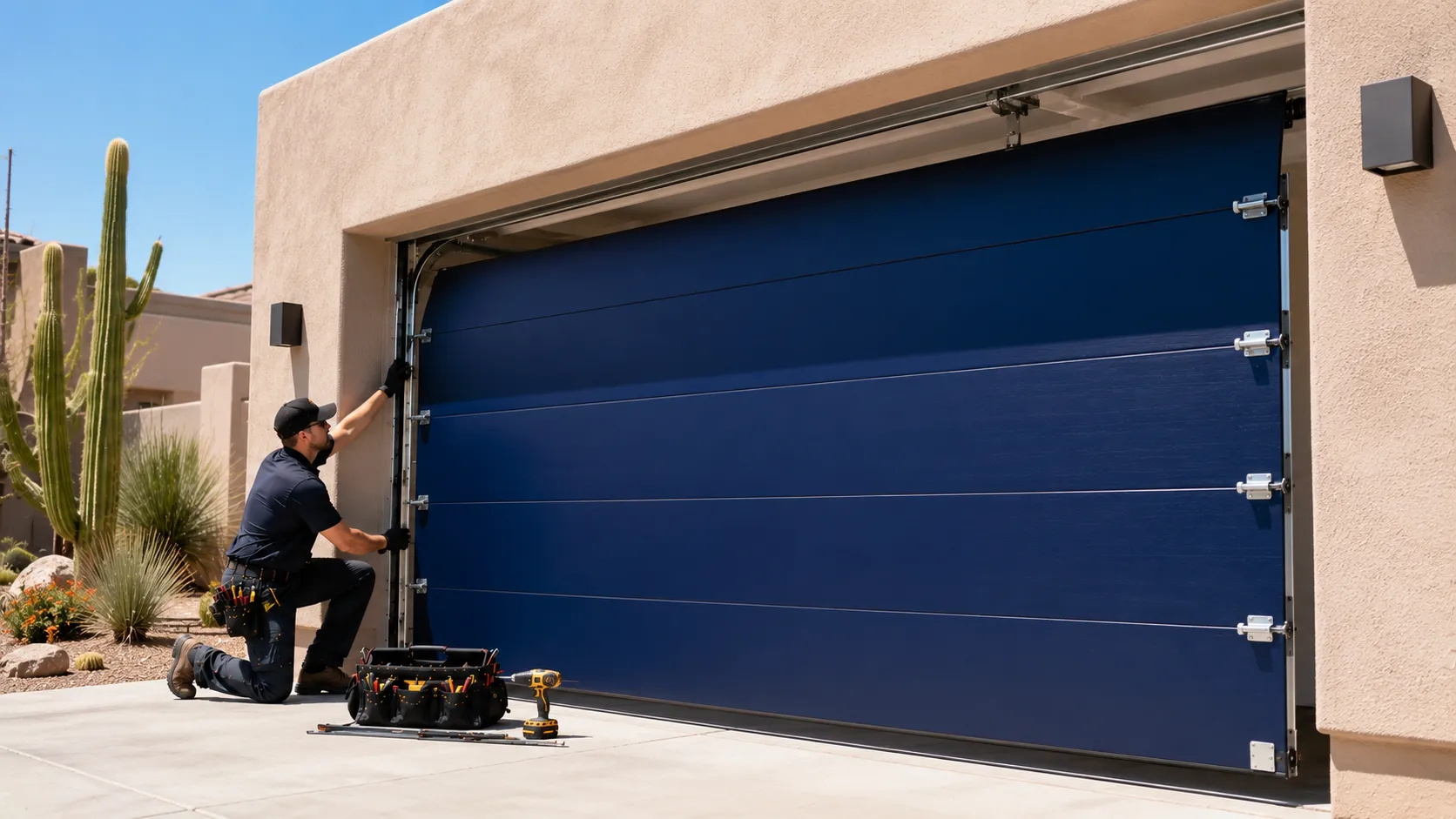
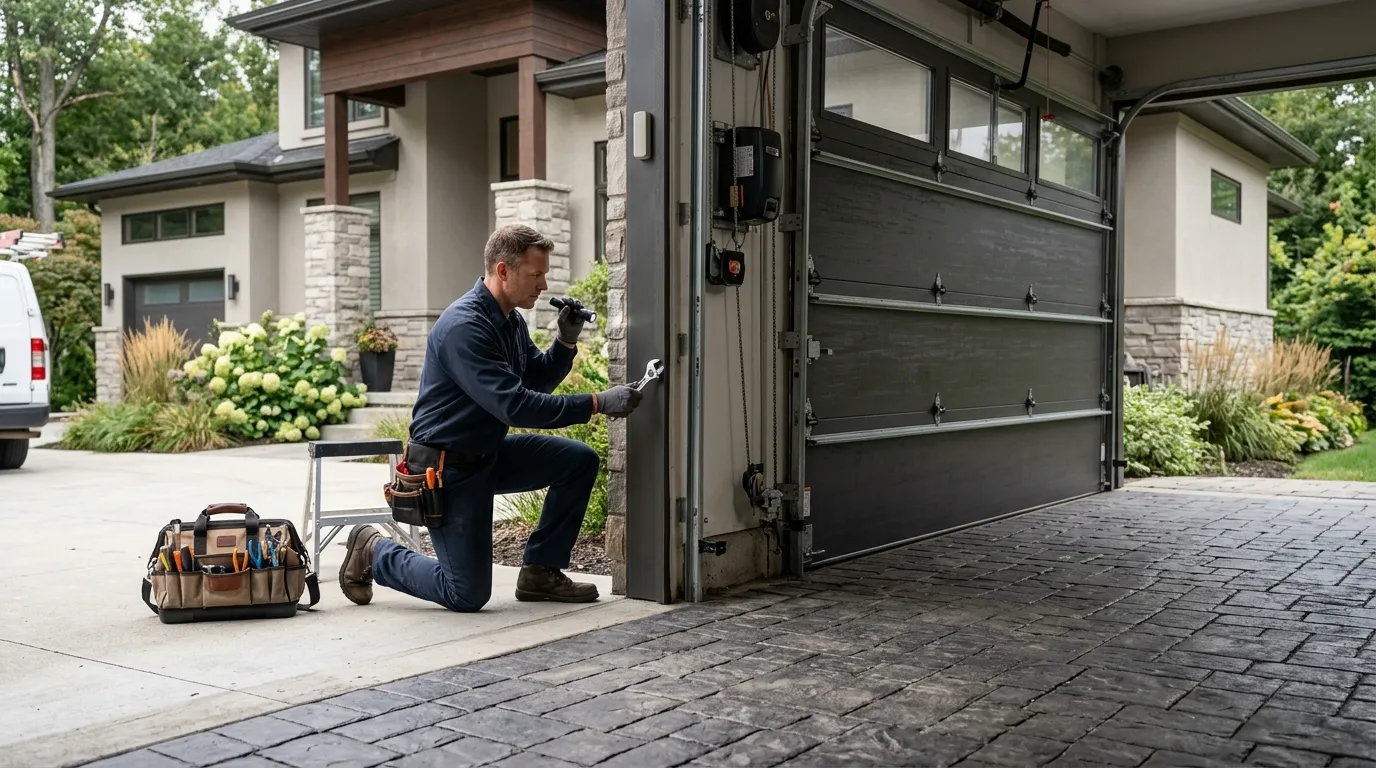
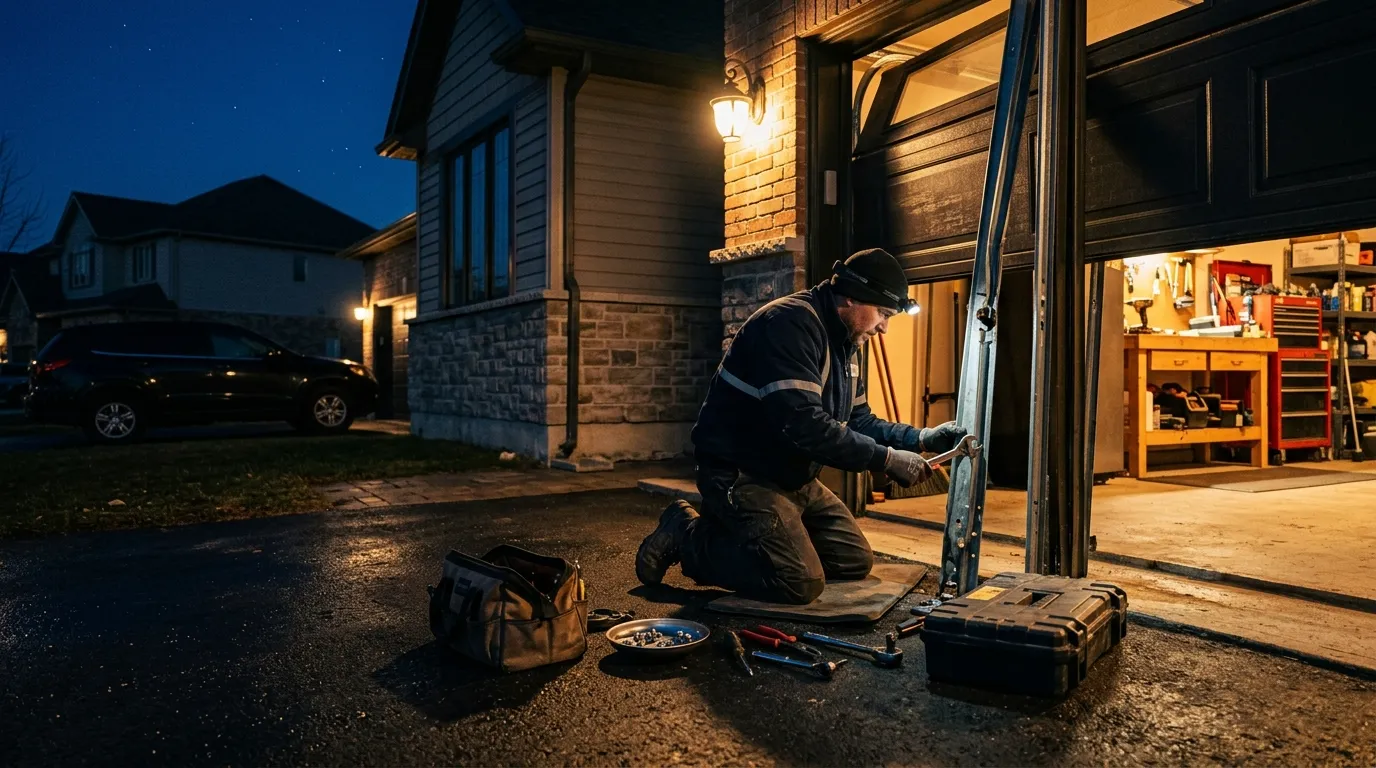
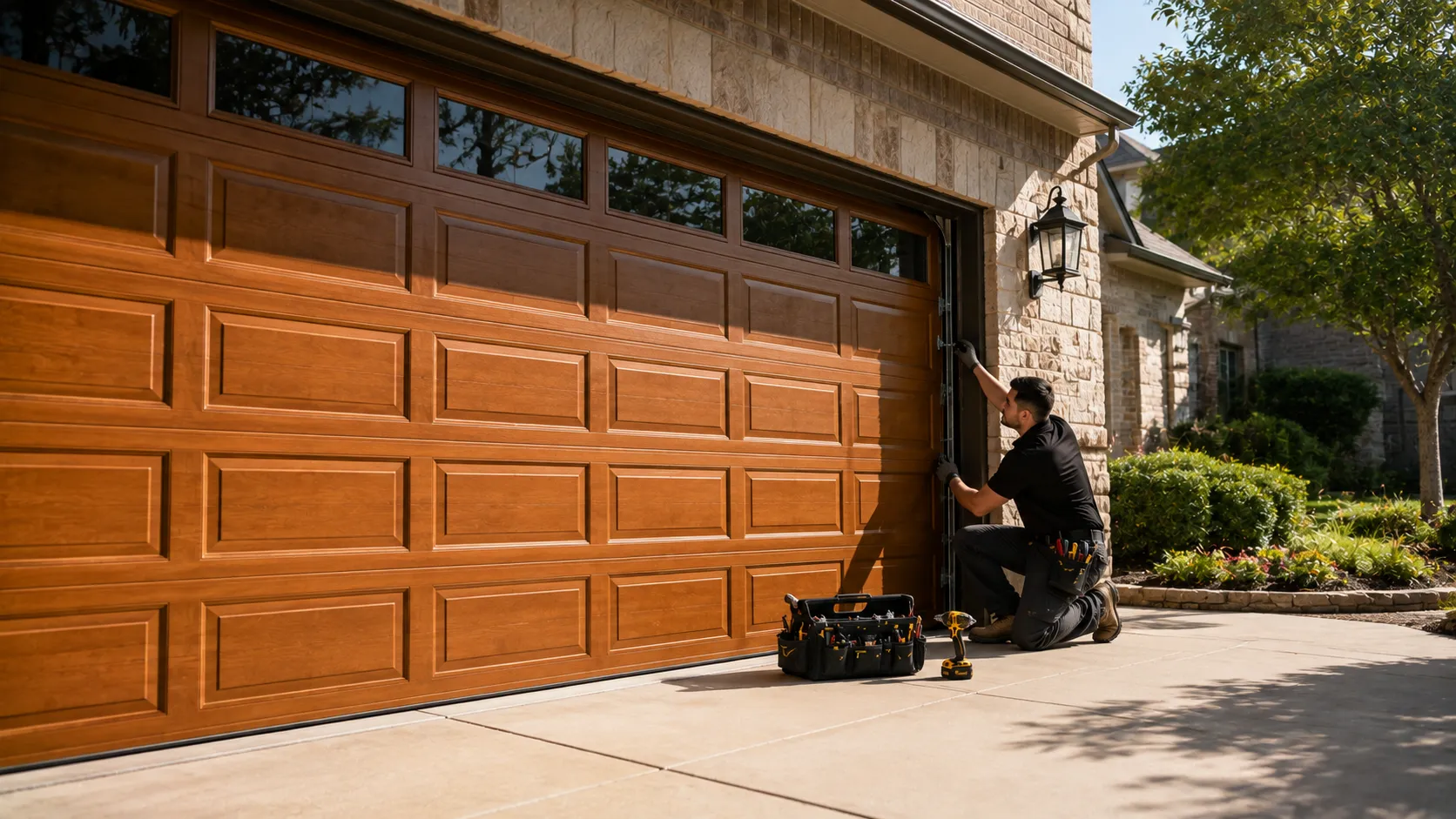
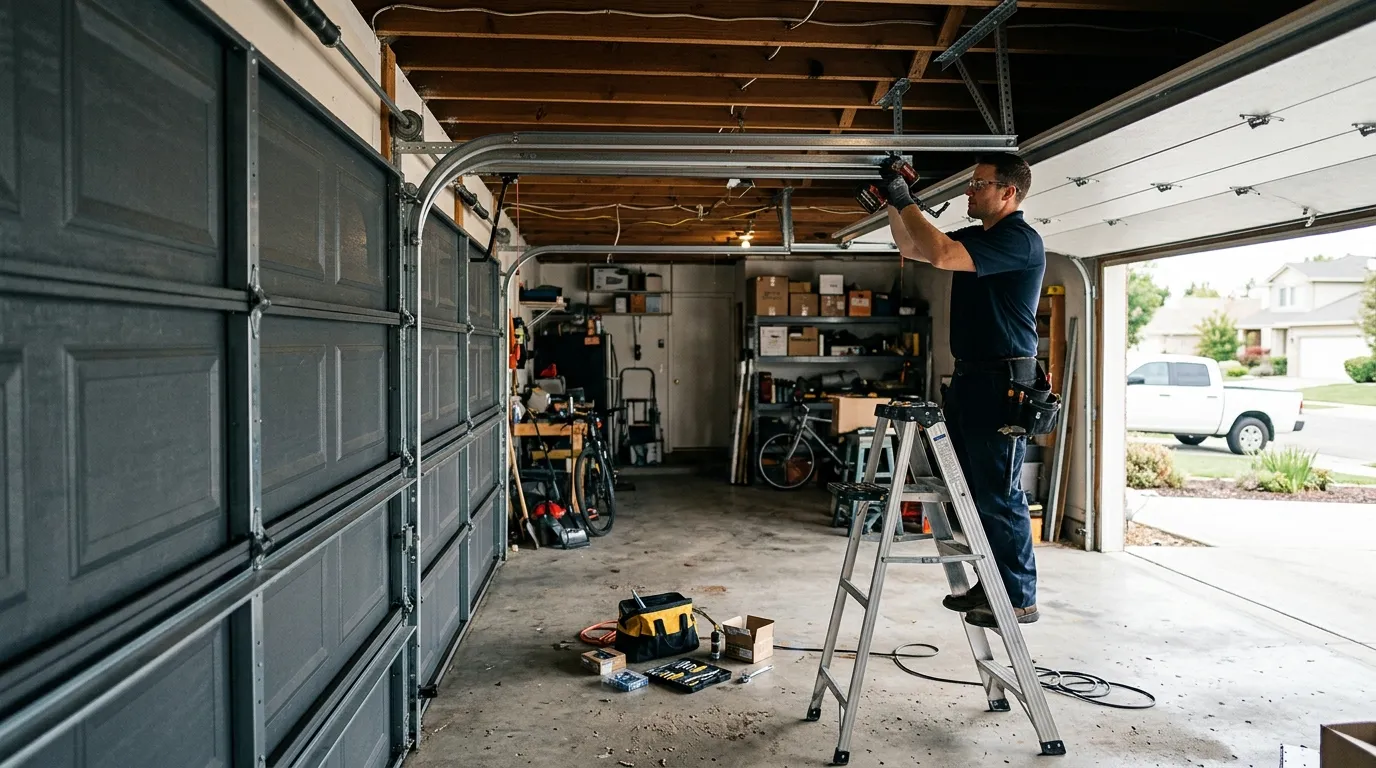
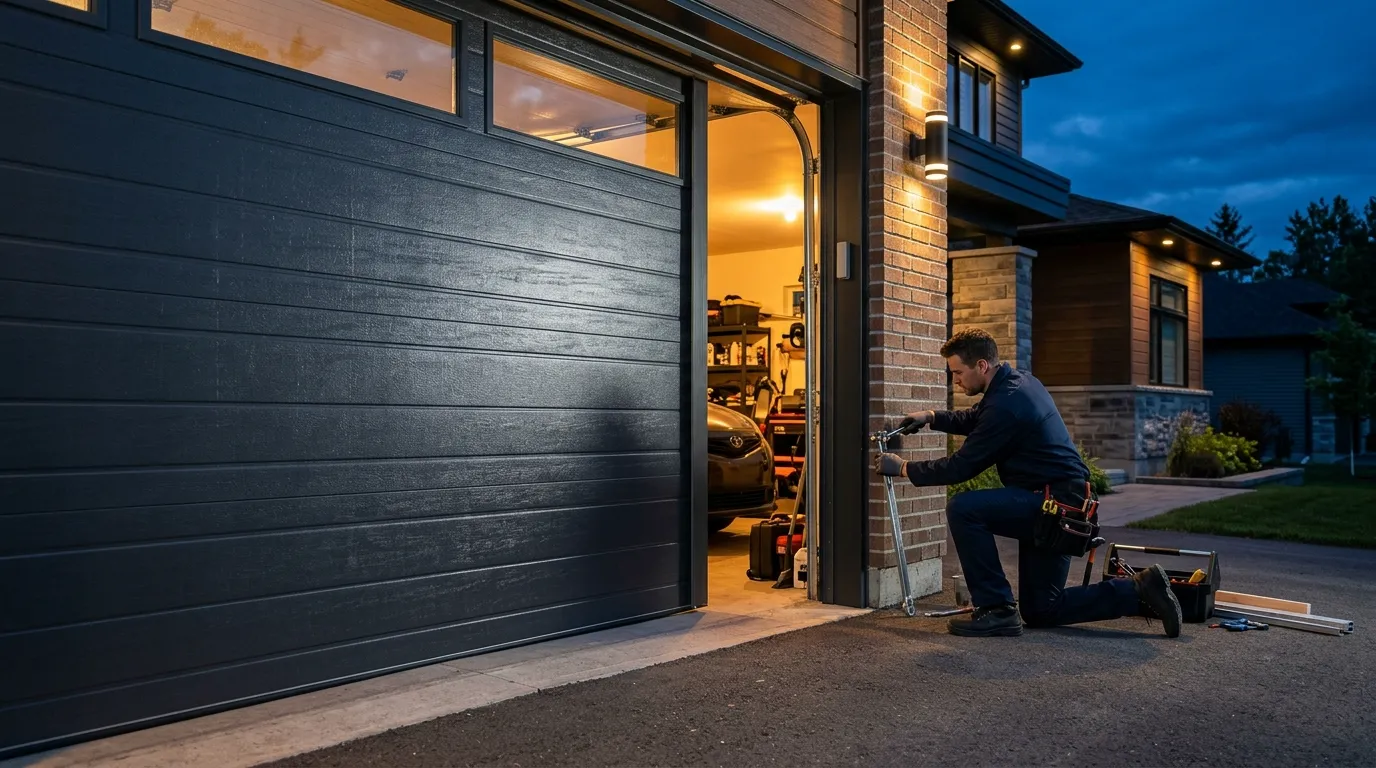
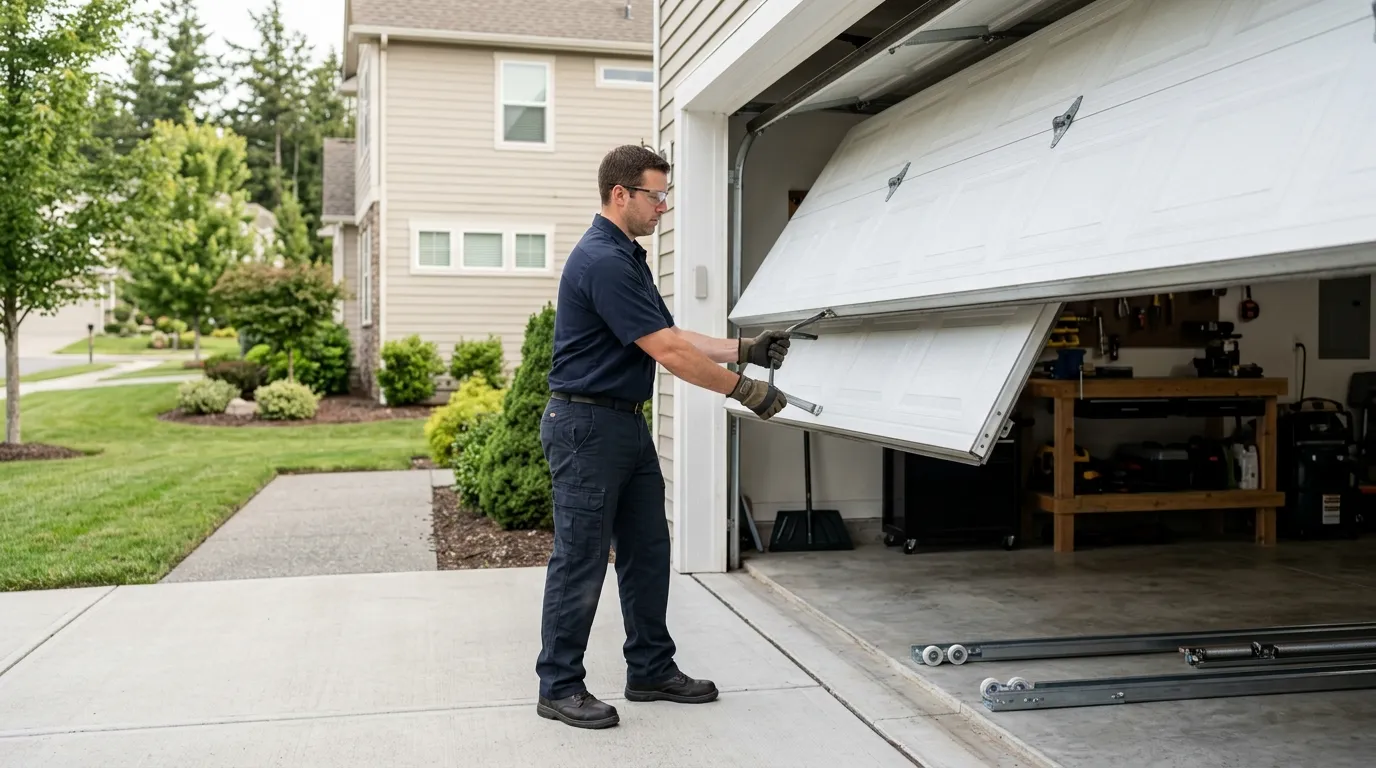
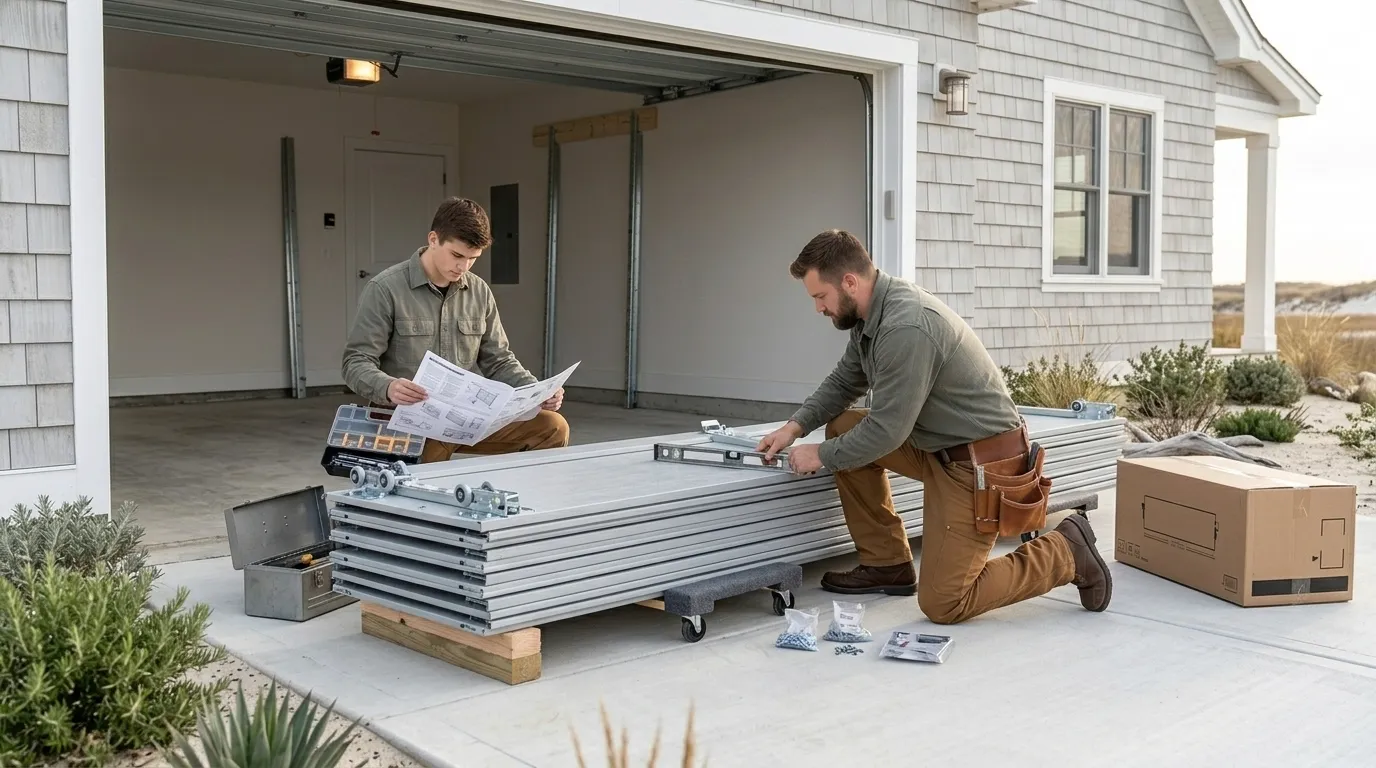
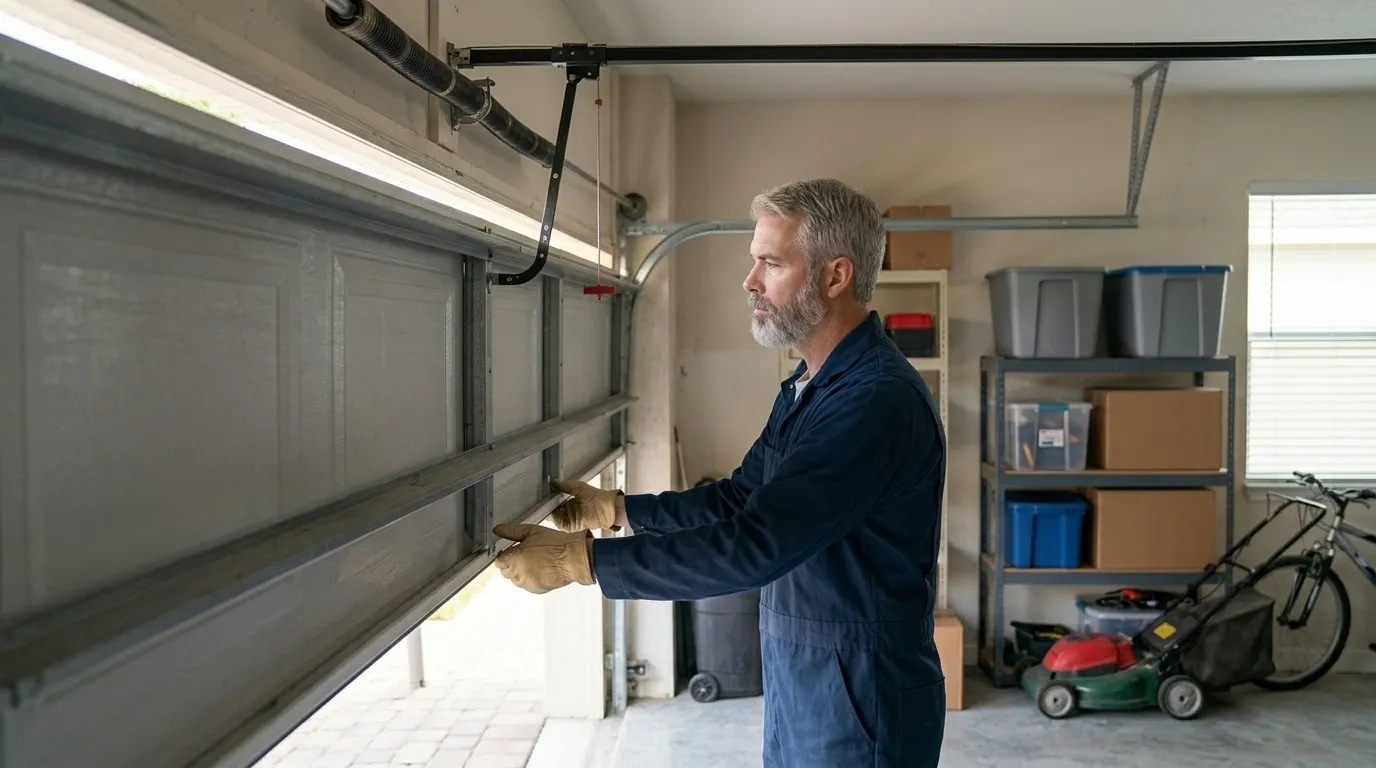
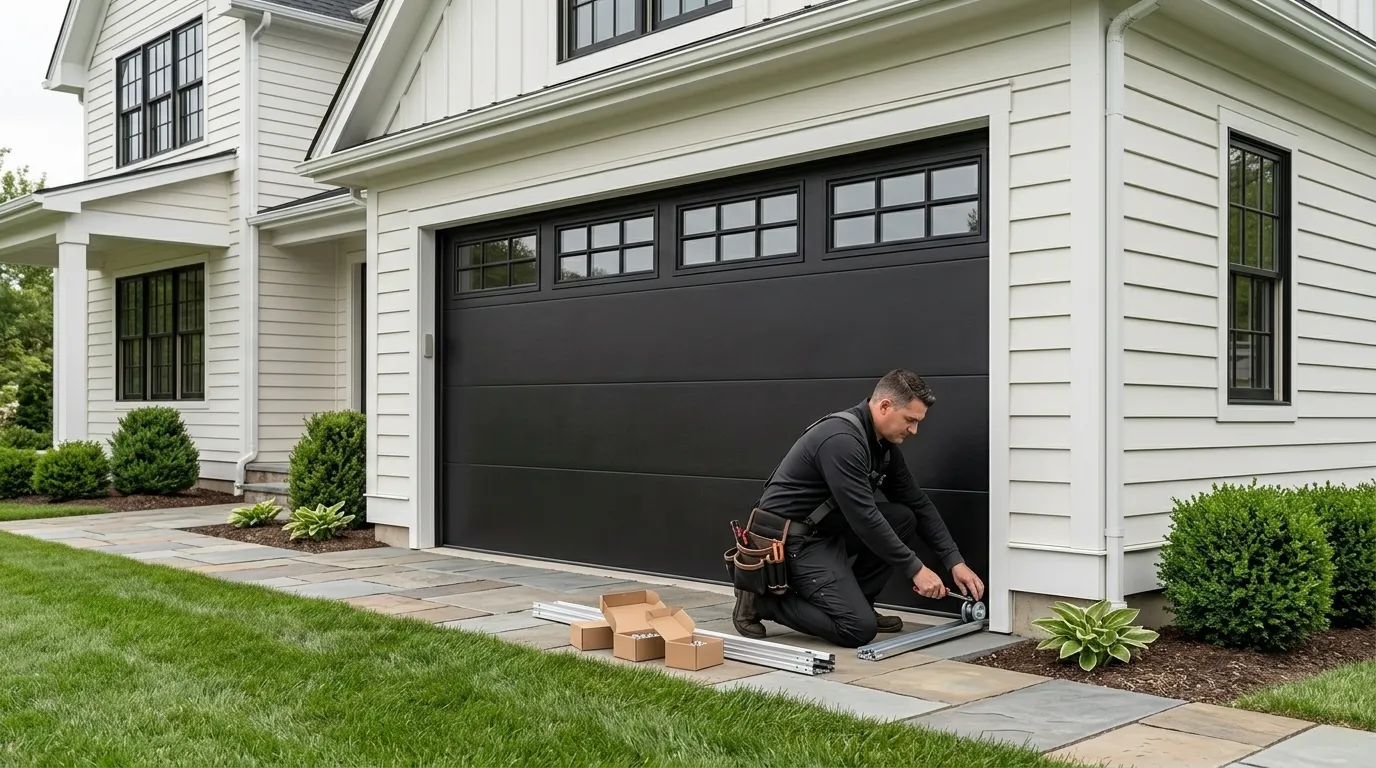
We start at the framing, not the door. On houses from the 1967-1992 era we check the jamb and header dimensions before ordering anything, because a lot of these openings are slightly out of square after fifty-plus years of settling, and a door hung without accounting for that will bind on one side within a year. We size the torsion spring and track to the actual door weight, not to whatever was there before, which matters more now that most homeowners are choosing insulated steel over the old single-layer panels. If the opening needs new jamb wood or the header has sagged, that's carpentry work outside a door install, and we say so up front rather than hanging a door on a frame that isn't ready for it - that's the honest limit of what a same-day install covers. Where the framing is sound, which is the case in most of these houses, we can usually get a full door and opener changeover done in a day, matched to the era of the house rather than a generic stock size.
How It Shows Up
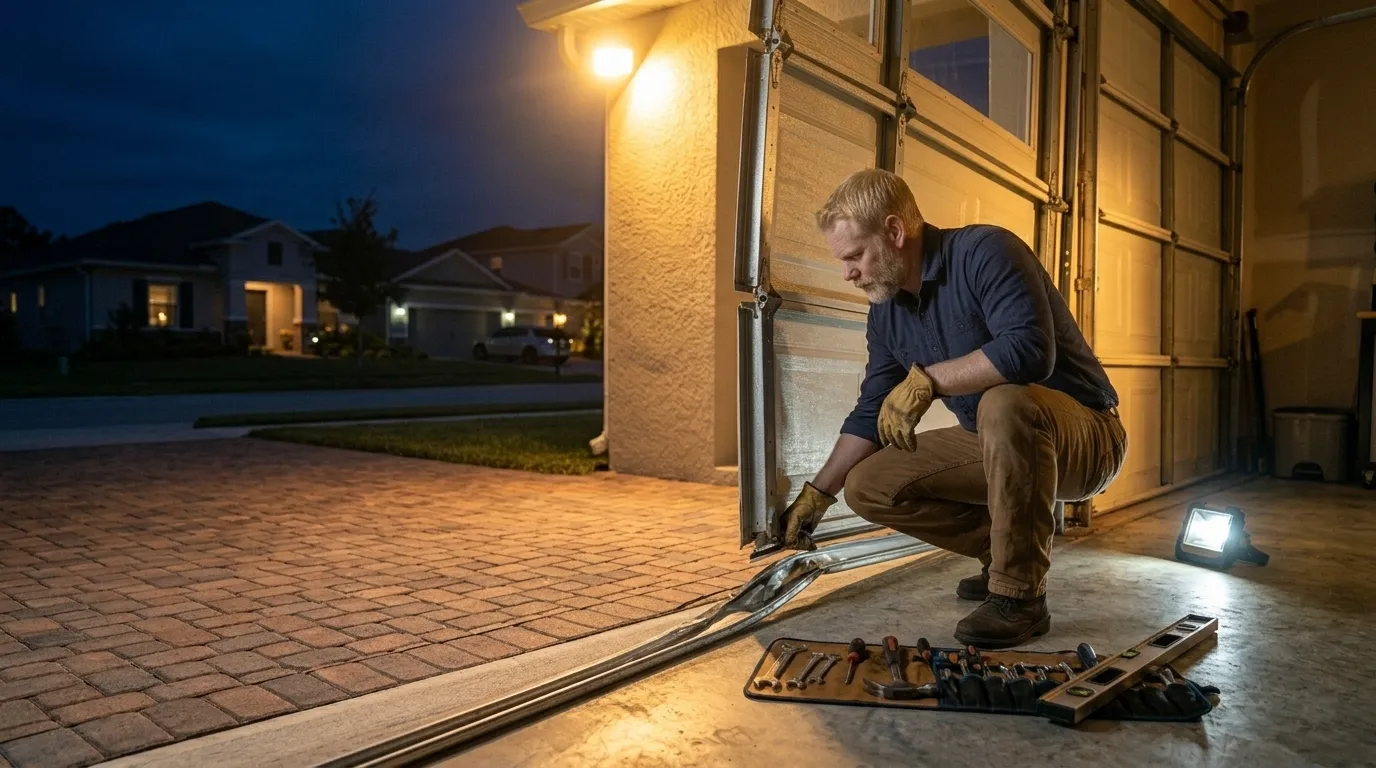
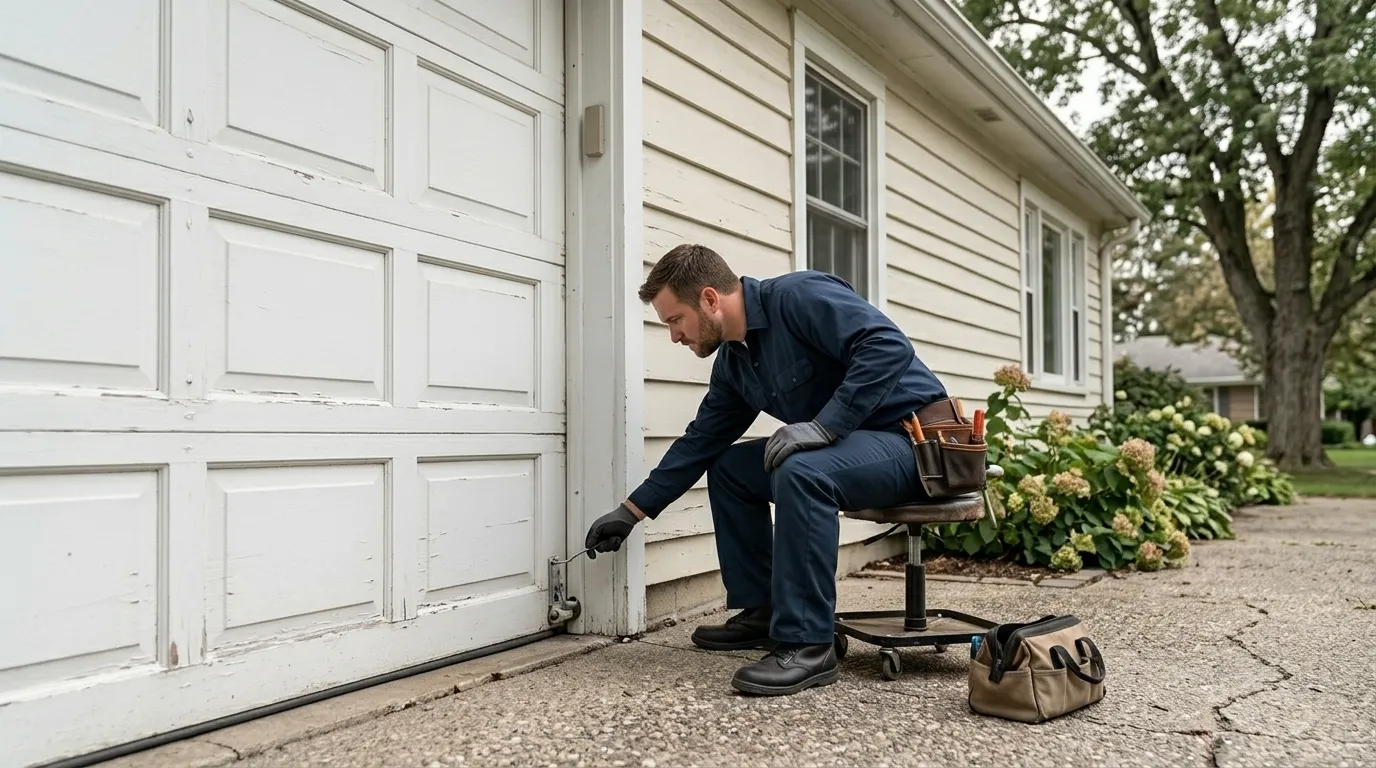
The most common complaint we hear is a door that closes with a visible gap along one side, or one that needs a shove to seat all the way - both signs the door and the opening have drifted apart over the decades. Homeowners in the owner-occupied houses that make up a big share of this area's roughly 48,883 owner-occupied units also notice it as a jump in the summer cooling bill, since a single-layer 1970s-era door with no insulation lets heat straight through the garage wall into the house. Others notice it as noise: original steel doors dent easily and the dents throw the roller path out of alignment, so the door starts rattling on the way up. None of this is dangerous on its own, but a door that's fighting its opener motor day after day is a door that's headed for a spring or cable failure, usually at the worst time.
Why It Happens Here
This is a housing-stock problem more than a weather problem. Across the 21 named areas we work in - from Clairemont Mesa and Linda Vista out to Lakeside and Rancho San Diego - construction is overwhelmingly 1960s and 70s, and San Diego's mild temperate climate means these original doors and openers didn't get forced out by freeze-thaw cracking or extreme heat the way they would somewhere with harsher winters. That's kept a lot of original hardware in service decades past what you'd see elsewhere. With a median household income of $118,431 across the service area, plenty of these owners are past the point of patching an old door and are opting for full replacement with an insulated, better-sealed unit instead of another repair. Across the area's 136,422 households, that adds up to a steady stream of installs on openings that were never built for what's going into them now, which is exactly the gap we size and frame for on every job.
How it works
From “it’s stuck” to “it’s fixed”
1
Tell us what’s wrong
Describe the symptom - won’t open, loud bang, opener runs but the door won’t move.
2
On-site diagnosis
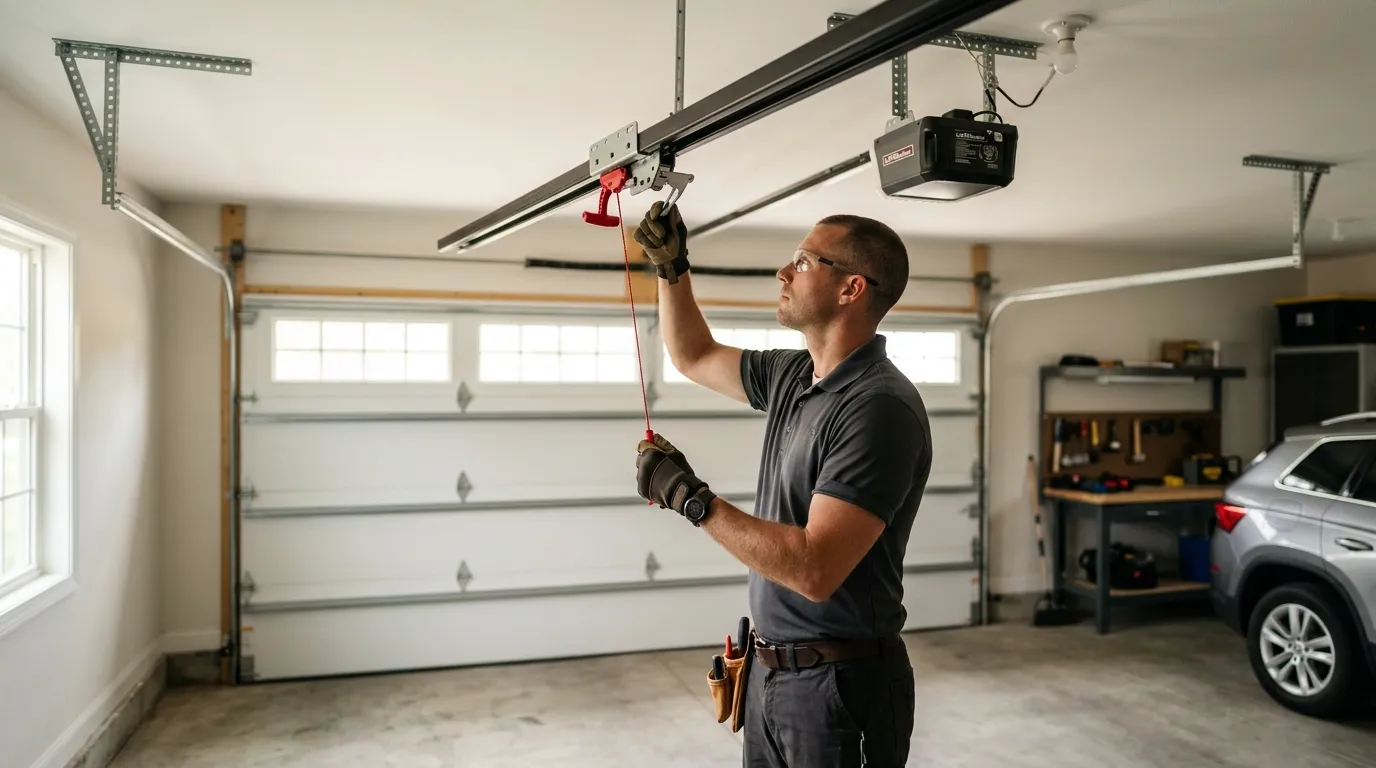
A technician tests the door under power and by hand and finds what actually failed.
3
Clear, up-front plan
You get the fix that’s needed and what drives the cost - before any work starts.
4
Repaired & tested
The repair is done, the door is set true and tested, and the work area left clean.
Serving San Diego, CA - tell us what your door’s doing and we’ll take it from there.
Will a new insulated garage door fit my original 1970s opening?
Usually, but we check first. Most openings from that era were framed for a lighter single-layer door, so we measure the jamb and header before ordering and resize the torsion spring for the new door's actual weight. If the framing has settled out of square, that gets addressed before the door goes in, not after.
Why does my old garage door feel heavier than it used to?
It's likely still running on the original spring, which was sized for a lighter door decades ago. If panels have been replaced or the door has picked up moisture weight over the years, the opener and spring are straining to lift more than they were built for.
Do you handle the carpentry if my door frame has sagged?
No - framing repair is outside a door installation and we'll flag it rather than hang a new door on a frame that isn't square. Once that carpentry work is done, we can come back and complete the install.
How long does a full door and opener install take?
Where the opening and framing are sound, which covers most of the 1967-1992 stock in this area, a full door and opener changeover usually finishes in a day.
Ready to get your garage door sorted?
Tell us what it’s doing and where you are in San Diego - we’ll take it from there.