When an Older Garage Door in San Diego Still Makes Sense to Fix
San Diego homes built between 1967 and 1992 often run original garage door hardware. Here's how to tell if a repair still makes sense or if it's time to replace it.
We're not going to put a number here that doesn't match what's actually on your door, so we won't guess at a flat price for a job we haven't seen. What we can tell you is what drives the cost on a house from this era. Most of San Diego's older stock went up between 1967 and 1992, with a median build year of 1975 - so a lot of doors still running original torsion springs, original track brackets, and hardware sized to specs nobody stamps out anymore. Matching that hardware, versus swapping the whole section for a current door and opener, is the real fork in the road, and it's one an inspection settles, not a phone quote.
Here's the honest limitation: if your door is a custom width or an odd panel height from that era, parts lead time runs longer than a stock size, and that changes the math toward replacement even when the repair itself is simple. We'd rather tell you that up front than quote a number we can't hold.
Doing Nothing For Now
A door that's been cycling since the Nixon or Carter years and still opens fine isn't broken - until the spring that's been doing that work for close to fifty years finally lets go, usually on the coldest morning it's asked to do anything extra. With 48,883 owner-occupied houses among San Diego's 136,422 households, a lot of these original doors are still on the same torsion springs they left the factory with, and springs don't send a warning shot. They just go.
Waiting isn't reckless if you know what you're waiting on. A door with worn rollers and a stiff track that still tracks straight can run another year of careful use. A door with a spring you can't remember ever being replaced, on a house built before 1992, is closer to the end of its cycle count than the middle. That's the difference between deferring a job and gambling on one.
What the Weather Here Does to It
San Diego sits in a mild temperate band, and that actually works in your door's favor compared to most of the country. There's no freeze-thaw cycle cracking the seal at the bottom panel, no monsoon humidity swelling wood doors shut in their tracks, no hard freeze snapping a cable that got brittle overnight. The wear you see here comes from cycle count and age, not from the climate fighting the hardware.
That's actually the argument for fixing rather than replacing more often than not. A door that's been sheltered from real weather extremes for its whole life, even one built in the 1975 median year for this area, often has a track and frame in better shape than the same-age door somewhere with real winters. What fails first here is the moving parts - springs, rollers, cables - worn by opening and closing thousands of times, not by the elements attacking the material. Replace those and the door underneath is often still sound.
The Situation
San Diego's older housing runs mostly 1960s and 70s builds across 21 named areas, close in - Serra Mesa a mile south, Kearny Mesa a mile northwest, Tierrasanta two miles east, Clairemont Mesa and Linda Vista a few miles west and southwest, Normal Heights and University Heights a few miles south. Doors in these areas came in on a narrower range of builder-grade hardware than what's sold today, which is exactly why matching parts on an original door sometimes takes longer than the repair itself.
Farther out - La Mesa, Lemon Grove, Casa de Oro-Mount Helix, National City, and the rest out to Jamul and Harbison Canyon - you see the same 1967-1992 window, same hardware era, same decision every owner eventually faces. With a median household income of $118,431 across the service area, most owners here can afford to replace outright when a door's past saving. The question isn't whether you can afford the fix or the replacement - it's which one actually solves the problem in front of you.
How it works
From “it’s stuck” to “it’s fixed”
1
Tell us what’s wrong
Describe the symptom - won’t open, loud bang, opener runs but the door won’t move.
2
On-site diagnosis
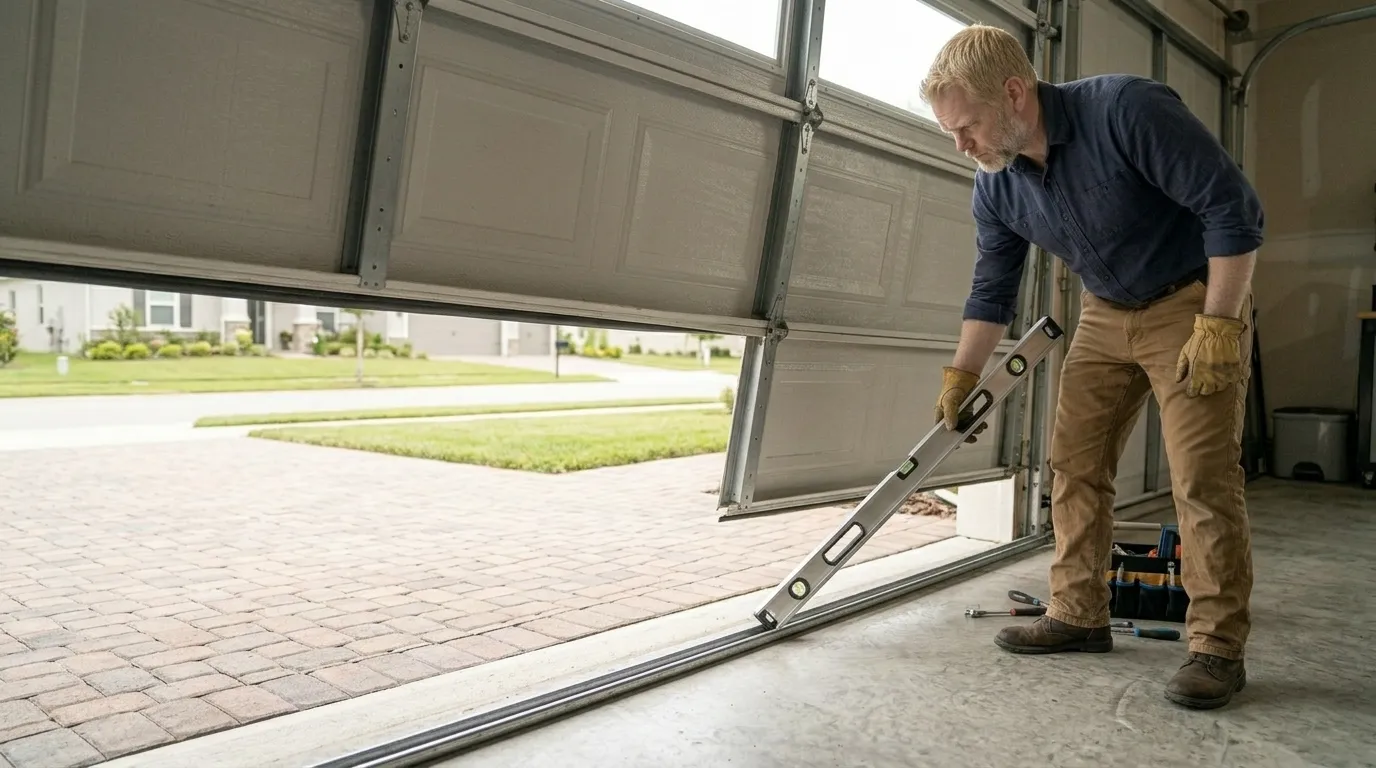
A technician tests the door under power and by hand and finds what actually failed.
3
Clear, up-front plan
You get the fix that’s needed and what drives the cost - before any work starts.
4
Repaired & tested
The repair is done, the door is set true and tested, and the work area left clean.
Serving San Diego, CA - tell us what your door’s doing and we’ll take it from there.
How do I know if my garage door is original to the house?
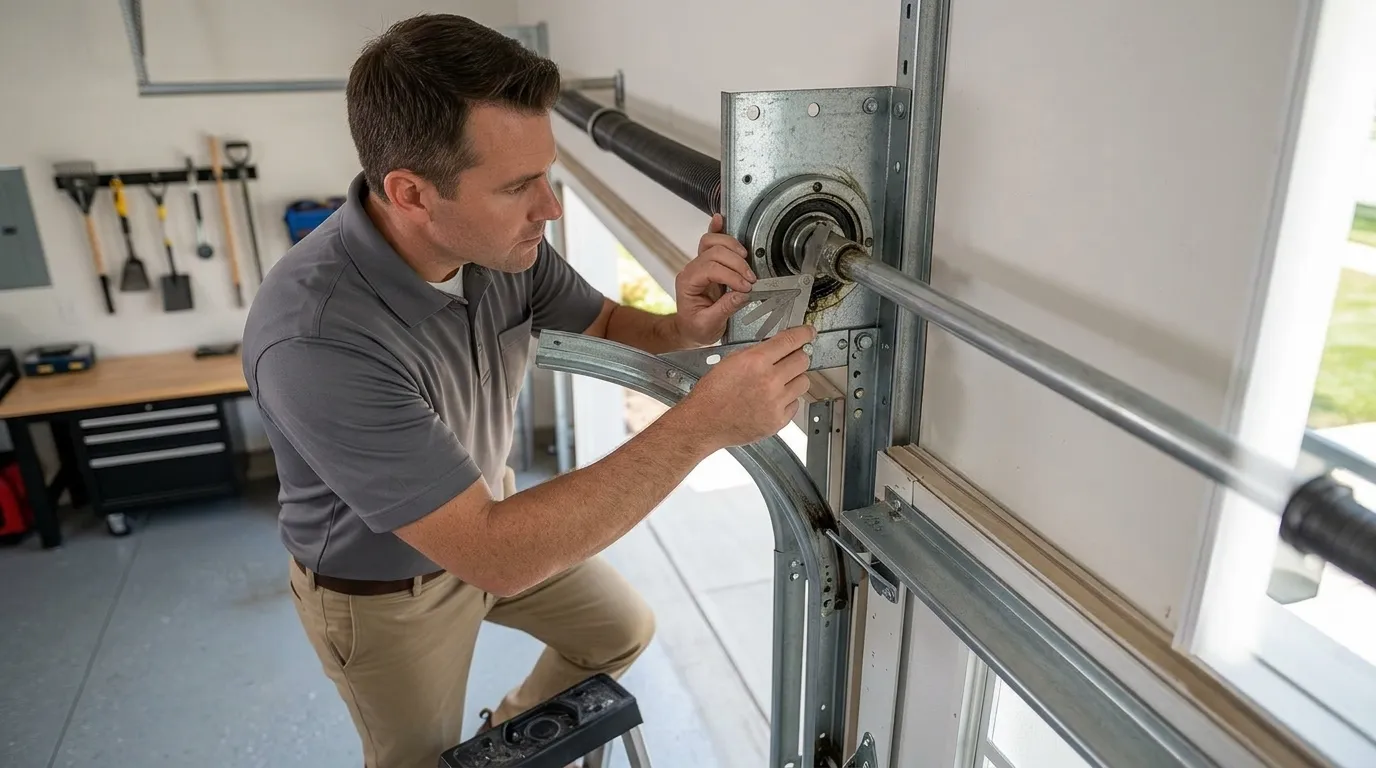
If your house was built in the 1967-1992 window common to this area and the door has never been swapped, check the spring and end bearing plates for a manufacture stamp or date code. No stamp at all, or hardware that looks hand-fitted rather than factory-uniform, usually means original equipment from that build era.
Does San Diego's climate shorten a garage door's life?
Not the way it does elsewhere. The mild temperate conditions here don't stress doors with freeze-thaw cracking or humidity swelling. Wear on doors in this area comes mostly from age and cycle count, not weather, which is part of why an older door here can still be a fair repair candidate.
Is it worth fixing a door on a house built in the 1970s?
Often yes, if the track and frame are square and the panels aren't rusted or dented through. The parts most likely to fail on a house from that median 1975 build year are springs, rollers, and cables - all replaceable without touching the door itself, provided the hardware size is still available.
When does replacement make more sense than repair on an older door?
When the door is a nonstandard width or panel height common to older custom builds, and the part you need has a long lead time. At that point, paying for a stock replacement door often costs less in total than waiting weeks for a matched part.
Ready to get your garage door sorted?
Tell us what it’s doing and where you are in San Diego - we’ll take it from there.