Serving San Diego, CA & nearby
(619) 350-3792
San Diego, CA

Garage Door Service for Rancho San Diego

Garage door repair and install for Rancho San Diego's 7,792 households, most in homes built after 1985. We travel from San Diego, 13 miles away, for openers, springs, and panels.

Garage Door Service for Rancho San Diego
San Diego, CA
8 services
6 service areas
Diagnosis first, then the fix

What It Costs

Rancho San Diego is a smaller pocket than most of the service area - about 7,792 households, not the tens of thousands you'd find closer to the coast. That size matters for pricing conversations, because it means fewer duplicate housing tracts and more variation door to door: a spring job on a house built in 1985 costs different money than the same job on a 1968 tract house, because the hardware sizes changed. We don't post flat prices here because a torsion spring swap on a standard 7-foot door isn't the same quote as a heavier insulated door on a taller opening, and we won't guess at your door over the phone. What we can tell you is that homes built around the area's 1985 median tend to run wider openers and heavier springs than the older stock elsewhere in the service area, and that shows up in the parts cost, not just labor.

We quote after we've looked at the door, the spring size, and the opener model. If you want a ballpark before we drive out, tell us the year the house was built and whether the opener is chain or belt - that alone narrows things down more than you'd think.

Doing It Yourself

A lot of Rancho San Diego is 1980s and later construction, which means garage doors here are more likely to run torsion springs on a standard bracket than the older side-mount setups you'll find in the earlier tracts closer to the city. That's actually the harder spring to DIY safely - torsion springs are under more consistent tension and a slipped winding bar does real damage to a hand or a face. We're not going to walk you through winding one over the phone.

What you can safely handle: lubricating rollers and hinges, checking that the photo-eye sensors near the floor are aligned and clean, tightening loose bolts on the track brackets, and testing the auto-reverse by laying a 2x4 under the door and running it down. If the door reverses before touching the wood, or doesn't reverse at all, stop using the opener until someone looks at it. Springs, cables, and anything involving the torsion bar itself - leave that alone. The honest limit here is that we don't do phone-diagnosed spring work; it's the one repair where a wrong guess breaks something worse.

How Long You Are Without the Door

We come from San Diego, about 13 miles out, so factor drive time into how you plan your day around a repair here. Once we're on site, most single-spring and cable jobs on a standard residential door wrap up in one visit - parts for common torsion springs and standard openers are things we carry, not things we order.

Where it stretches out: a full door replacement, a broken panel that needs a matched replacement panel, or an opener model that's been discontinued. Panel matching in particular can mean a lead time measured in days, not hours, because we're not going to install a mismatched panel just to close the gap faster. San Diego's mild temperate climate means we're not racing a storm to get your door closed the way a contractor in a harsher climate might be, so if a part has to be ordered, waiting a couple of days with the door secured isn't the emergency it would be somewhere with real winter.

How We Fix It

We diagnose the door in front of us rather than assuming the fix from a phone call. On the newer stock common in Rancho San Diego - houses going up through the 1980s and into the early '90s - we're usually dealing with torsion springs on a standard bracket, steel rollers, and openers that are either aging chain-drive units or early belt-drive models nearing the end of their service life. That's a different set of common failures than the older 1960s tract stock elsewhere in the service area, where side-mount springs and original steel doors are more common.

On site, we check the spring, cables, rollers, track alignment, and the opener's force and travel settings before we touch anything. If the fix is a spring, we replace it with a matched spring rated for your door's weight and cycle count - not a generic size. If the opener's the problem, we tell you honestly whether it's worth repairing or whether a 1980s-era chain drive has just reached the end of its run and replacement is the better use of your money.

How to Book

Call and tell us the year the house was built if you know it, whether the door is single or double, and what it's doing - won't open, opens partway, makes noise, opener runs but door doesn't move. That gets us most of the way to knowing what parts to bring on the truck from San Diego, which cuts down on a second trip. We book the visit, drive the 13 miles out, and diagnose on site before any work starts, so you're not committing to a repair before we've actually opened up the door and looked at the spring or the opener board.

How It Shows Up

In a service area this size - 7,792 households in Rancho San Diego against a wider area with well over 136,000 - the failures we see aren't random. They cluster around the housing stock. Here, with a median build year around 1985, the calls tend to be aging torsion springs reaching the end of their rated cycle count, opener circuit boards from the chain-drive era failing, and steel rollers that have worn oval after twenty-plus years of use. We don't see the older side-mount spring failures as often here that we'd see in the 1960s tracts closer to the city.

Mild coastal climate means we're not fixing rust-seized track hardware or storm-warped panels the way a contractor in a harsher climate would be. The more common issue is just mechanical fatigue - parts that have simply run their cycle count and need replacing before they fail at a bad moment, like a spring letting go while the door is halfway up.
How it works

From “it’s stuck” to “it’s fixed”

1
Tell us what’s wrong - San Diego garage door service

Tell us what’s wrong

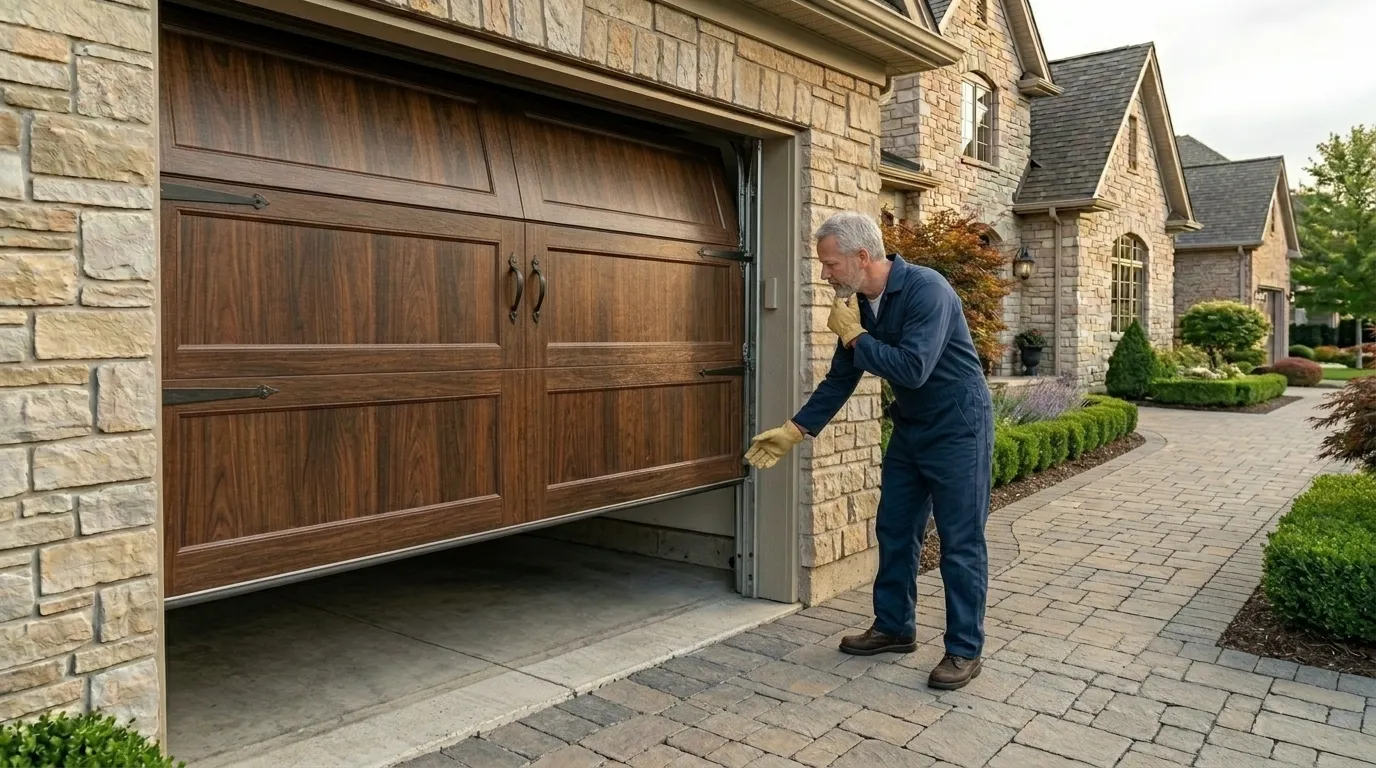
Describe the symptom - won’t open, loud bang, opener runs but the door won’t move.

2
On-site diagnosis - San Diego garage door service

On-site diagnosis

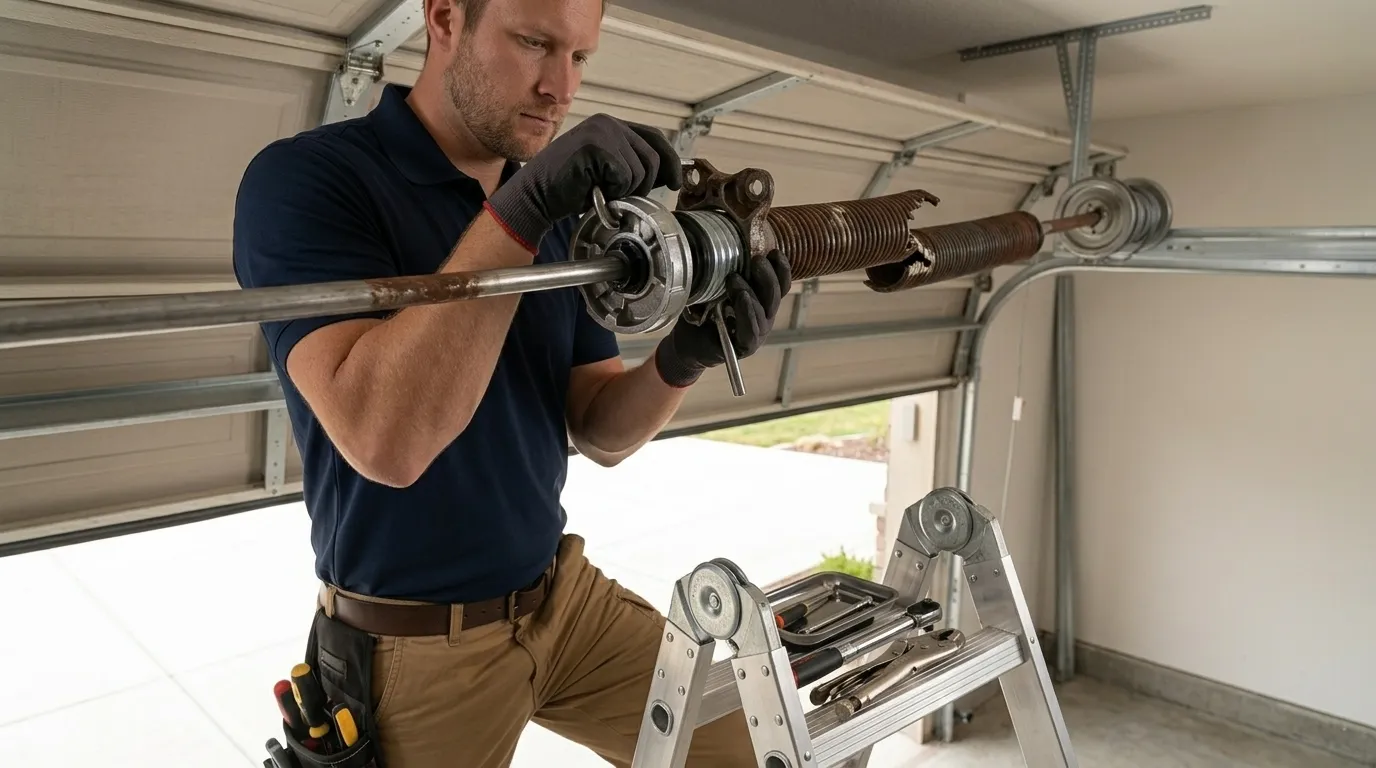
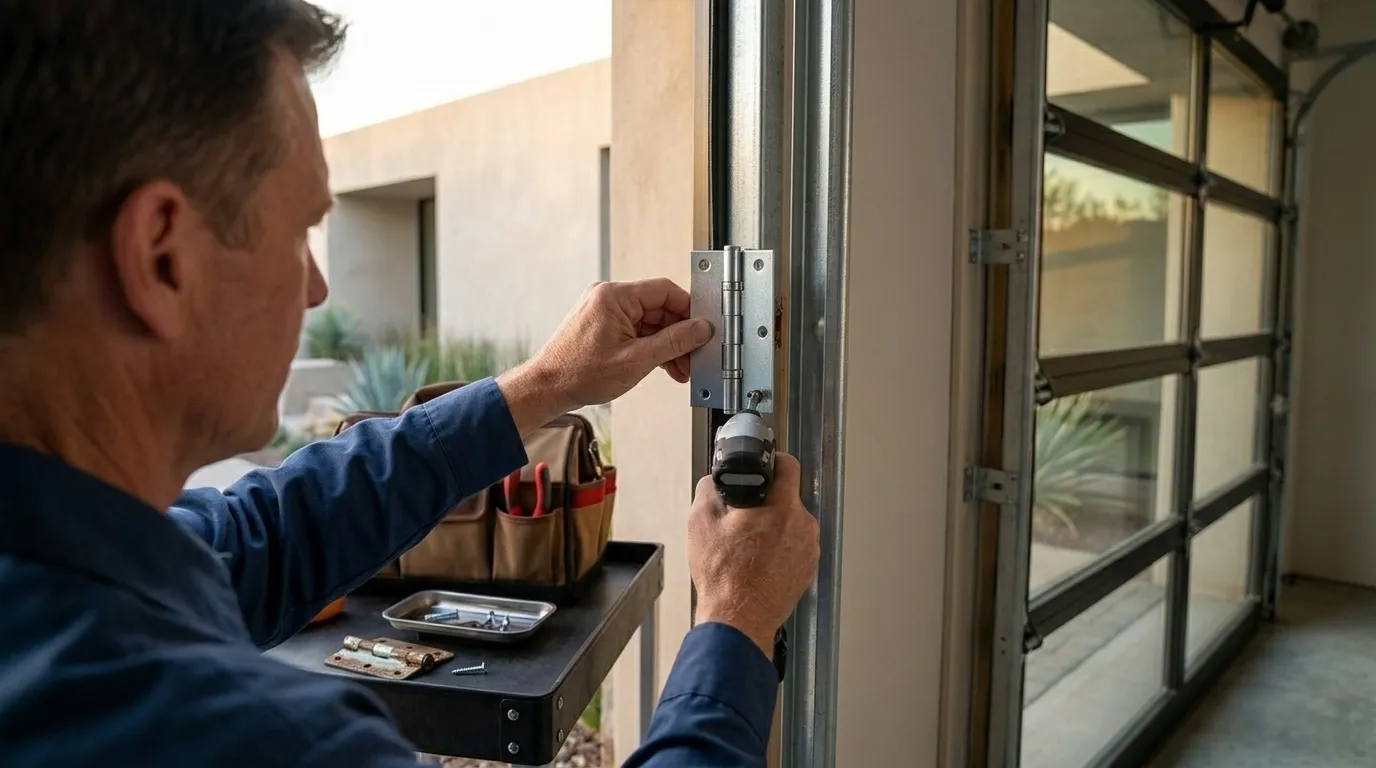
A technician tests the door under power and by hand and finds what actually failed.

3
Clear, up-front plan - San Diego garage door service

Clear, up-front plan

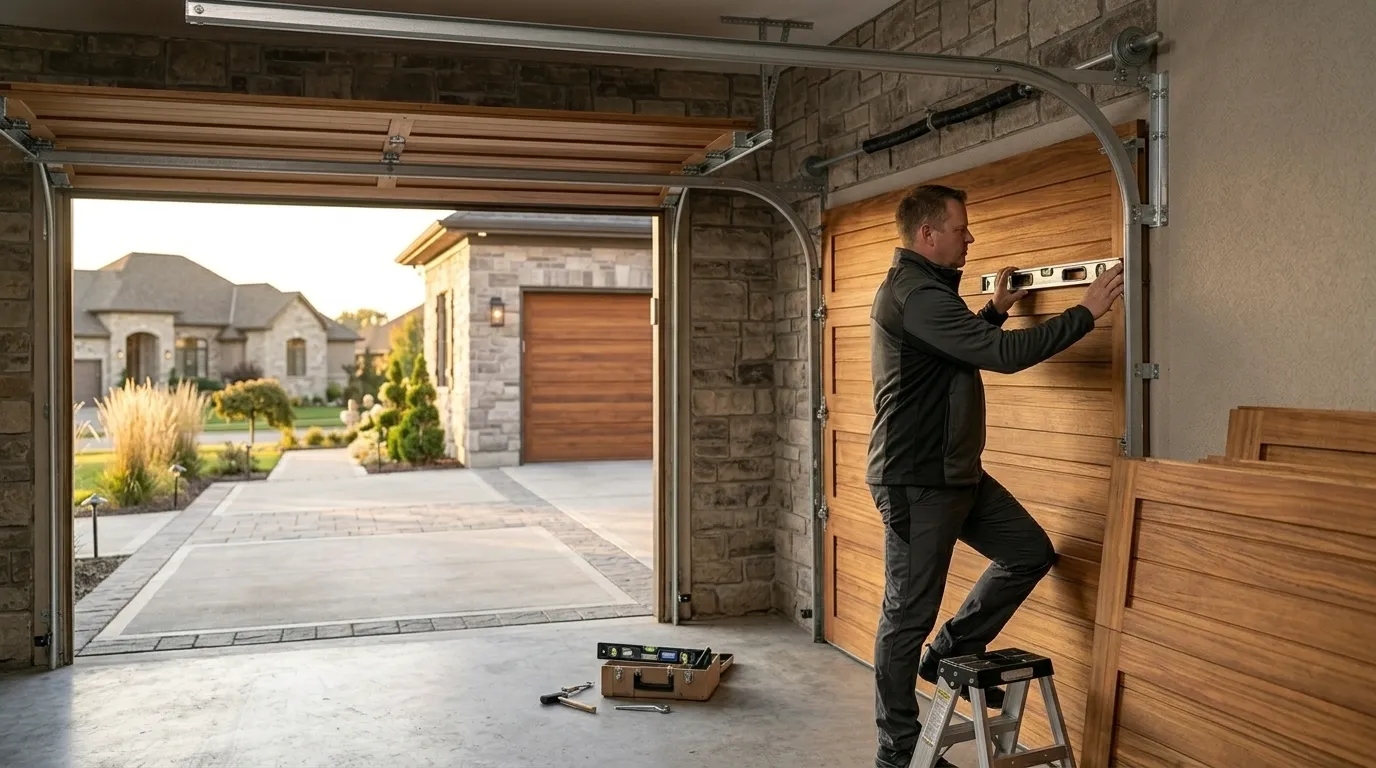
You get the fix that’s needed and what drives the cost - before any work starts.

4
Repaired & tested - San Diego garage door service

Repaired & tested

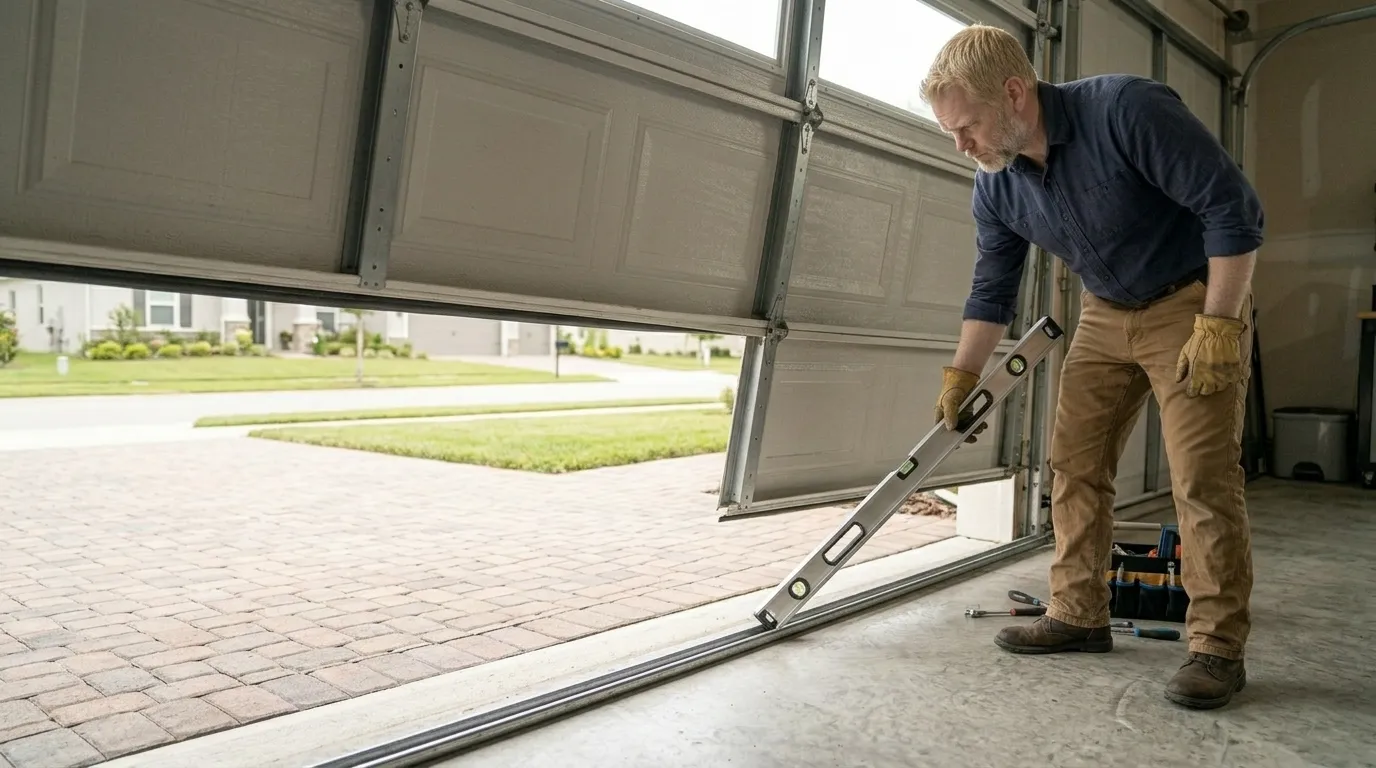
The repair is done, the door is set true and tested, and the work area left clean.

Serving San Diego, CA - tell us what your door’s doing and we’ll take it from there.

How we work

What to expect

Diagnosis firstEvery visit starts by finding what actually failed - not a pre-written parts list.
The right part for the doorSprings and openers matched to the door’s weight and age, so the fix holds up.
Straight answersWhen a repair makes more sense than a replacement - or the reverse - you hear it plainly.
Clean, careful workTension released safely, hardware set true, the door tested under power before we leave.
1,404,452Residents in San Diego
8Garage door services
6Neighborhoods & suburbs
CAServing San Diego, CA
Questions

Frequently asked

Straight answers about garage door repair in San Diego. Still unsure? Ask us directly.

Do you have a branch in Rancho San Diego?

No, we work out of San Diego and drive out to Rancho San Diego, about 13 miles. We don't have a local depot or storefront here, but we carry common torsion spring sizes and standard opener parts on the truck so most jobs on the newer housing stock in this area don't need a second visit.

Why does my opener from the 1980s keep failing?

A lot of Rancho San Diego was built as the area's median year, 1985, and openers from that era are chain-drive units well past a normal service life. Circuit boards and motor windings degrade over decades regardless of use. If yours is original to the house, repair is often not worth it compared to replacing the unit.

Is spring replacement here different from other parts of the service area?

The bracket and mounting style differ. Rancho San Diego's newer stock, built mostly after the mid-1970s into the 1980s, tends to run standard torsion springs on a center bracket rather than the older side-mounted extension springs common in the 1960s tracts closer to San Diego. The spring itself still needs matching to your door's weight and cycle rating.

Ready to get your garage door sorted?

Tell us what it’s doing and where you are in San Diego - we’ll take it from there.

Request a QuoteCall