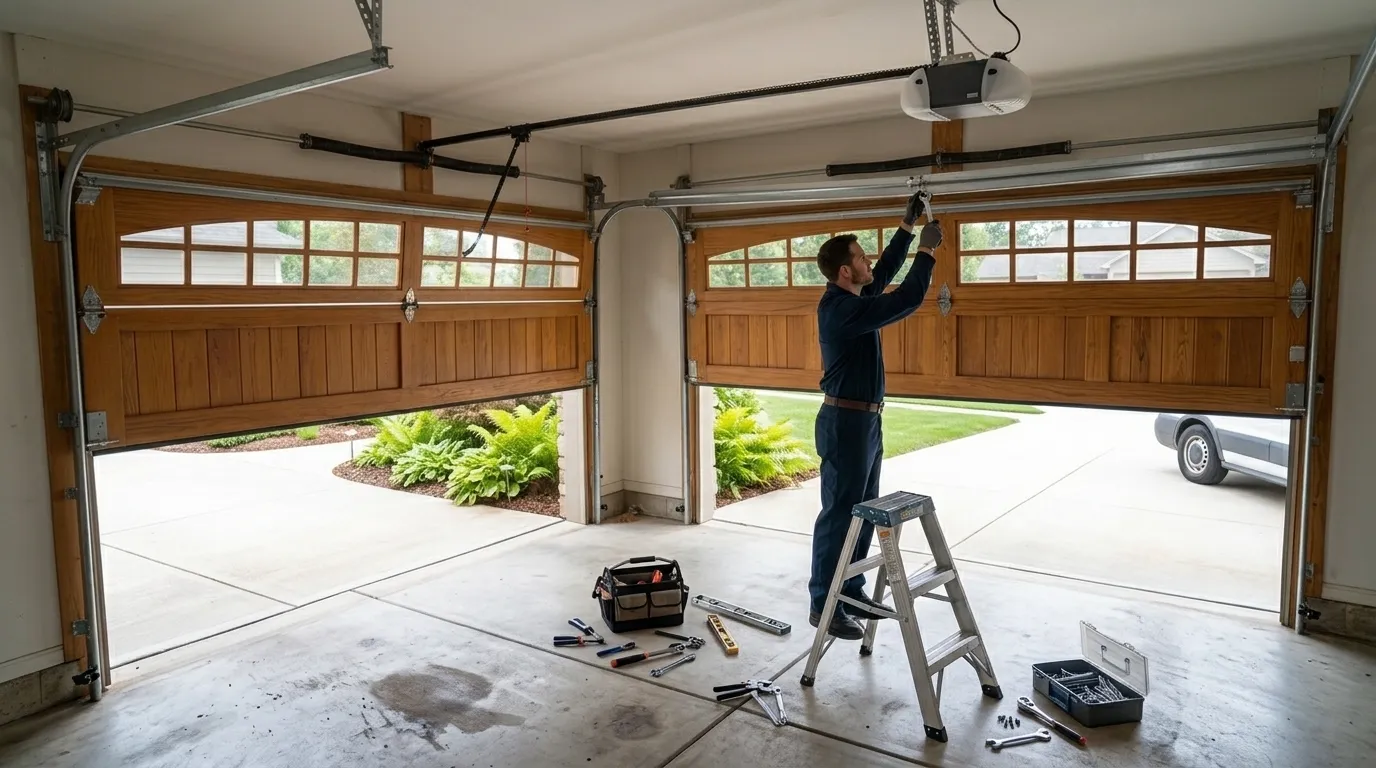
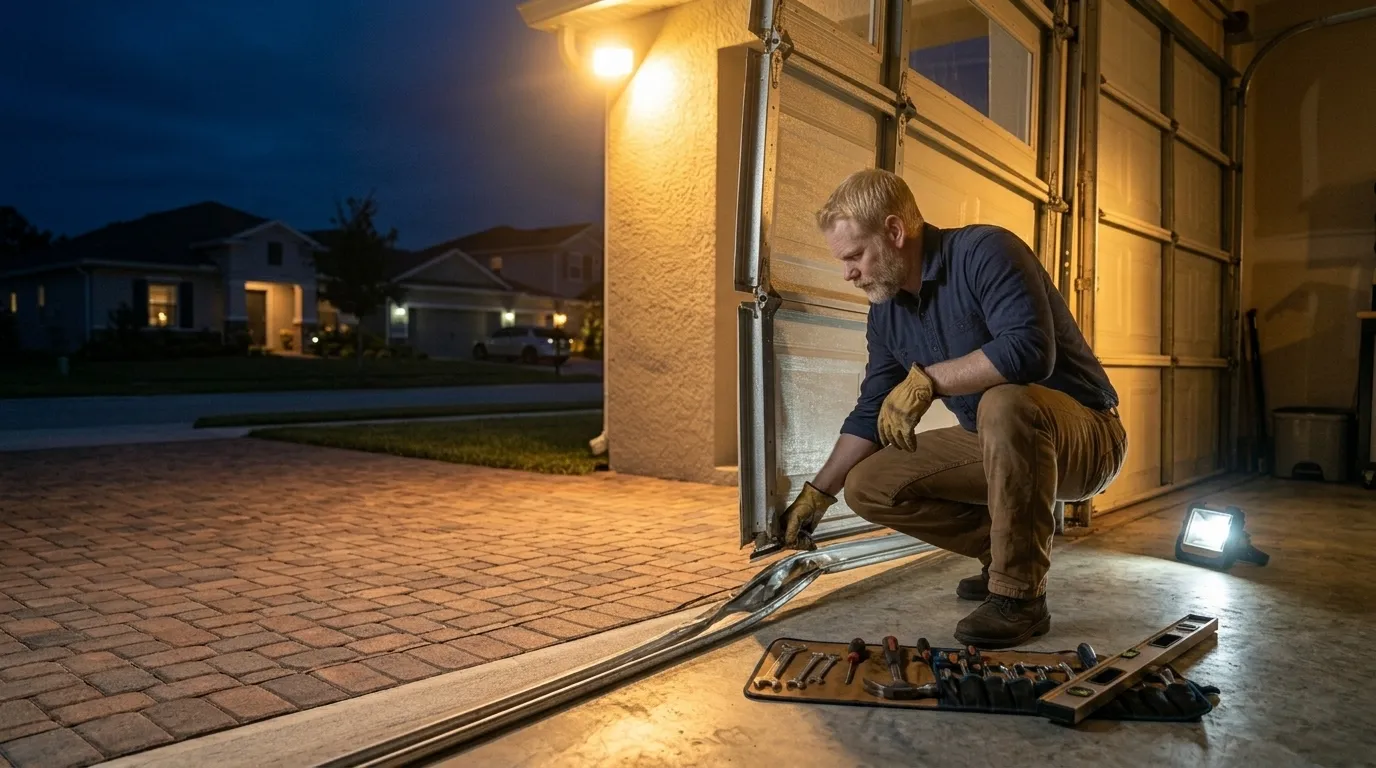
The garage doors failing on calls out to Casa de Oro-Mount Helix aren't the same doors failing across the rest of the service area. The median home here went up around 1969, which puts most garages a few years ahead of the broader 1975 median for the region - and those extra years matter. A door hung in 1969 is more likely to be an early steel sectional or even a heavier one-piece slab, often still running on the original extension springs bolted along the horizontal track rather than a torsion bar over the header. Extension springs from that era don't have the safety cables that became standard later, and after five decades of cycling they're due, if they haven't already let go.
On top of the spring question, the tracks and rollers on houses this age were built for lighter panel weight than a lot of the insulated replacement doors owners install today. Swap in a heavier door and leave the old track hardware in place, and you get a door that binds, drifts off the roller path, or strains the opener within a year or two. The mild coastal-influenced climate here doesn't rust hardware the way a wetter region would, so a lot of this original steel looks fine on the outside while the spring steel underneath has already fatigued past its rated cycle count.
How to Book
We run out of San Diego, about 10 miles from Casa de Oro-Mount Helix, so a call here goes on the same schedule as the rest of the service area rather than a separate local dispatch. Tell us what the door is doing - won't open, opener runs but the door doesn't move, one side hangs lower than the other - and we bring the parts that match a late-1960s build rather than guessing on-site. Because this isn't a walk-in shop with a storefront in town, booking ahead by phone or through the site gets you a firmer window than a same-day drop-in request. We don't keep a branch here, so there's no local counter to swing by; every job starts with the call.
What It Costs
We don't publish flat prices for spring and opener work because the two most common jobs out here - replacing original extension springs and swapping worn track rollers - vary with door weight and how much of the old hardware has to come out along with it. A single busted spring on a lighter one-piece door costs less to put right than a full torsion conversion on a heavier insulated replacement. What we can tell you is that Casa de Oro-Mount Helix households sit at a median income of $123,037, well above the wider region's $118,431, and we see more owners choosing full hardware upgrades rather than patching a fifty-year-old spring system one more time. That's a judgment call, not a sales pitch - sometimes the original hardware still has life in it and a spring swap is the right move.
How Long You Are Without the Door
Most spring and roller jobs on a house this age finish in one visit once we're on-site - it's a bolted repair, not a rebuild. What can stretch things out is parts. If your door still has its original 1969-era track hardware and it's cracked or bent rather than just worn, matching or adapting that hardware sometimes means a return trip rather than a same-visit fix, since some of those older profiles aren't sitting on a standard shelf. We'll tell you upfront on the call if that's likely so you're not stuck guessing whether you'll have a working door that night or not. A full door replacement, if that's the better call for a badly strained opener and track, takes longer than a repair simply because the new door has to be ordered first.
How it works
From “it’s stuck” to “it’s fixed”
1
Tell us what’s wrong
Describe the symptom - won’t open, loud bang, opener runs but the door won’t move.
2
On-site diagnosis
A technician tests the door under power and by hand and finds what actually failed.
3
Clear, up-front plan
You get the fix that’s needed and what drives the cost - before any work starts.
4
Repaired & tested
The repair is done, the door is set true and tested, and the work area left clean.
Serving San Diego, CA - tell us what your door’s doing and we’ll take it from there.
Are garage doors in Casa de Oro-Mount Helix different from newer parts of San Diego?
Often, yes. The median home here was built around 1969, a few years ahead of the wider region's 1975 median, so you're more likely to find original extension-spring setups without safety cables, plus track and roller hardware sized for lighter, uninsulated doors than what's common in newer construction.
Do you have a local office in Casa de Oro-Mount Helix?
No. We work out of San Diego, about 10 miles away, and travel out for every job rather than running a branch location in the neighborhood. Booking is by phone or through the site, same as the rest of the service area.
Should I replace my old spring or the whole door?
Depends on the door. If the panels and track are sound and it's just the spring that's failed, a spring swap is usually the right call. If the track hardware is also worn or the door is undersized for what the household needs now, a full replacement can make more sense long-term - we'll tell you which on the visit, not before.
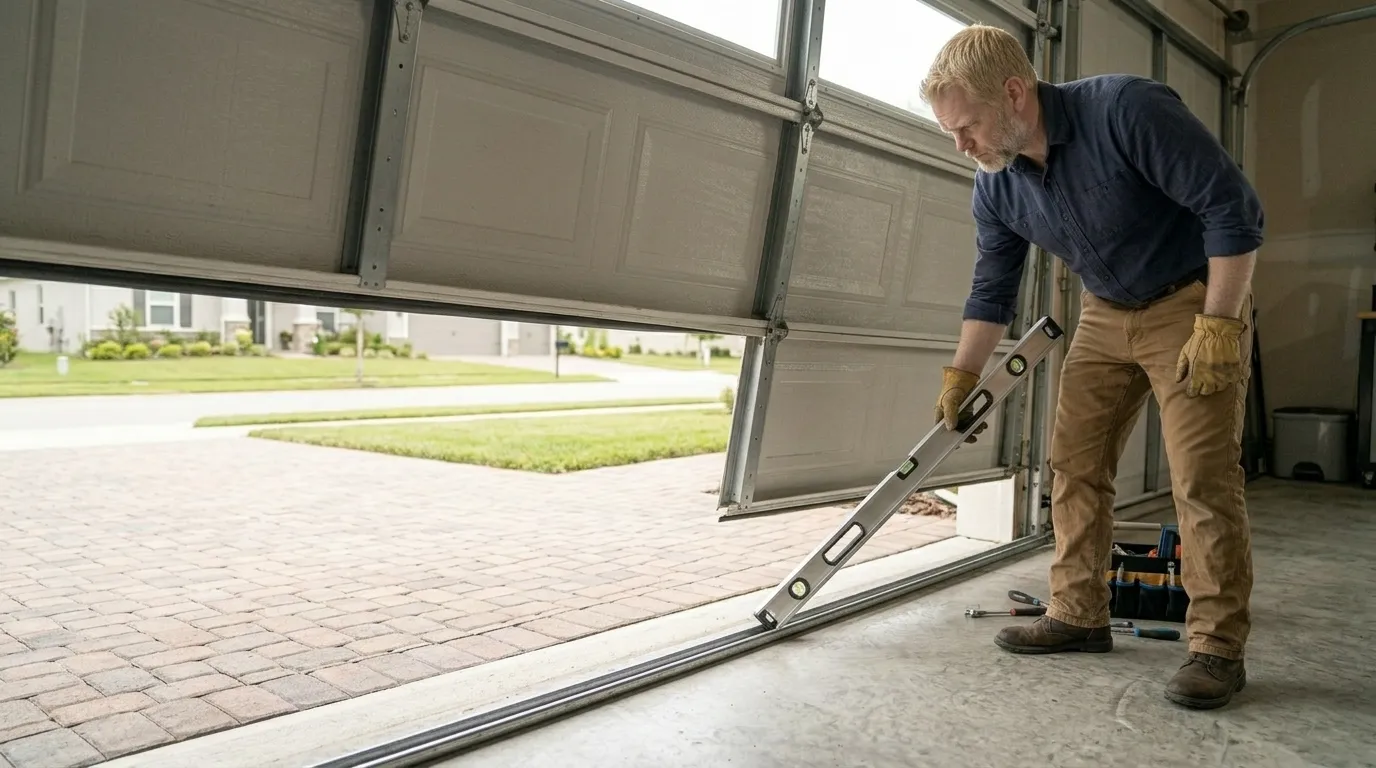
Why does my door bind or drift on one side?
On a lot of houses from this era, that's a roller and track issue - the original hardware was sized for a lighter door, and either wear or a heavier replacement panel has pushed it past what the track was built to carry. It's a common fault on 1969-vintage garages specifically.
Ready to get your garage door sorted?
Tell us what it’s doing and where you are in San Diego - we’ll take it from there.