Off-Track Garage Door Repair for Bonita's 1970s Doors
Bonita homes built mostly in the mid-1970s carry steel sectional doors on aging track hardware. Here's how off-track failures show up and what fixing them costs.
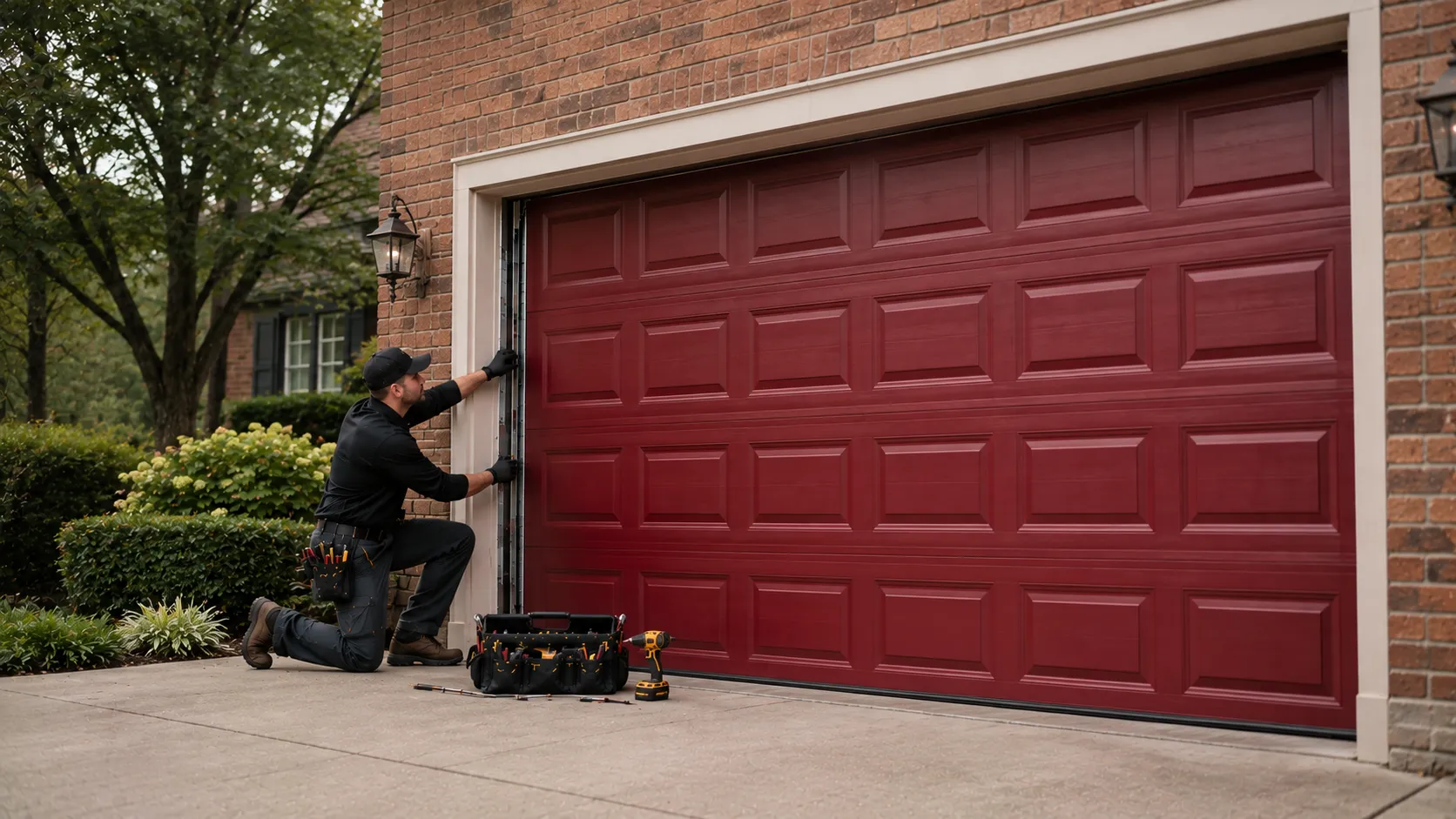
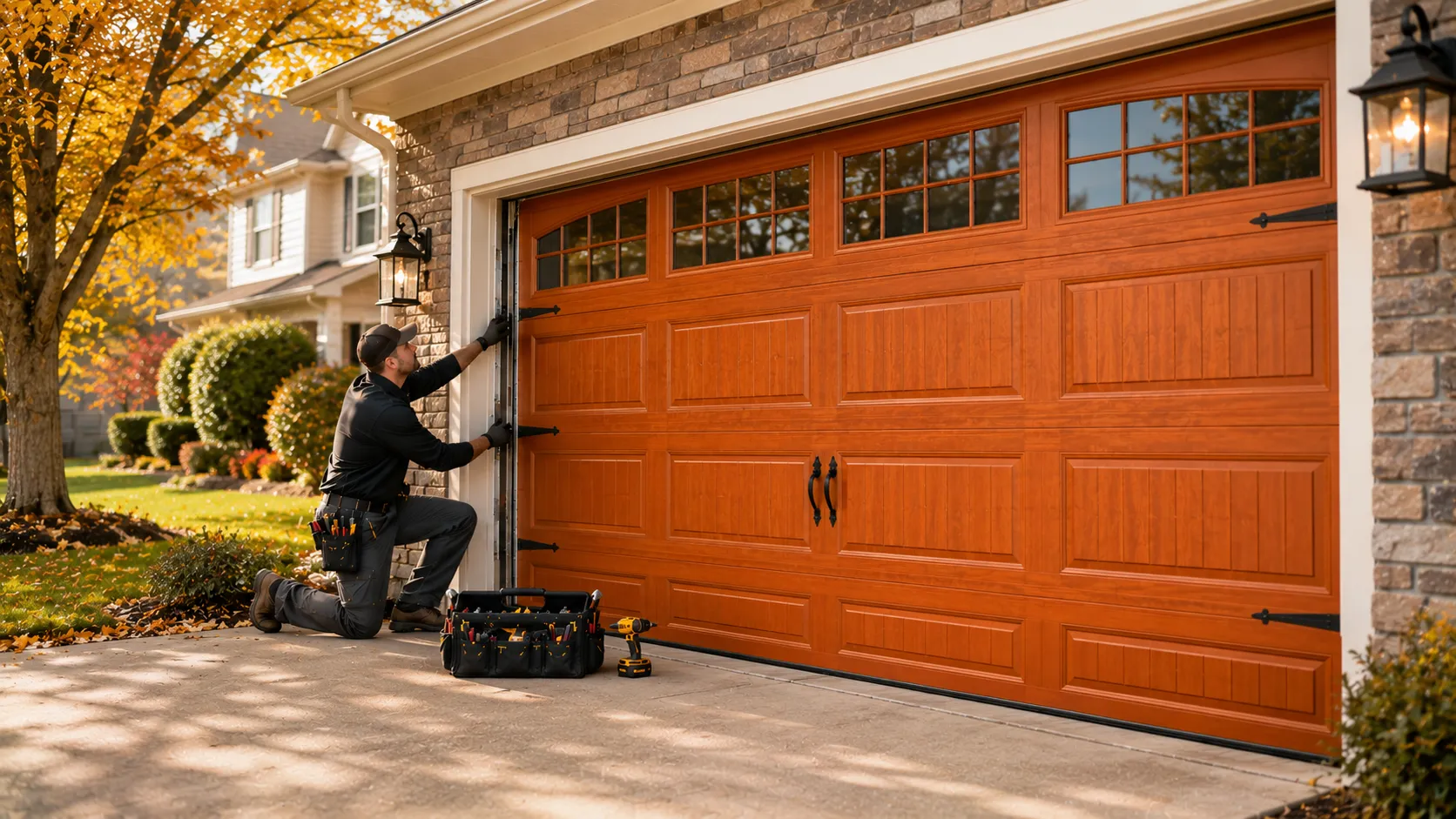
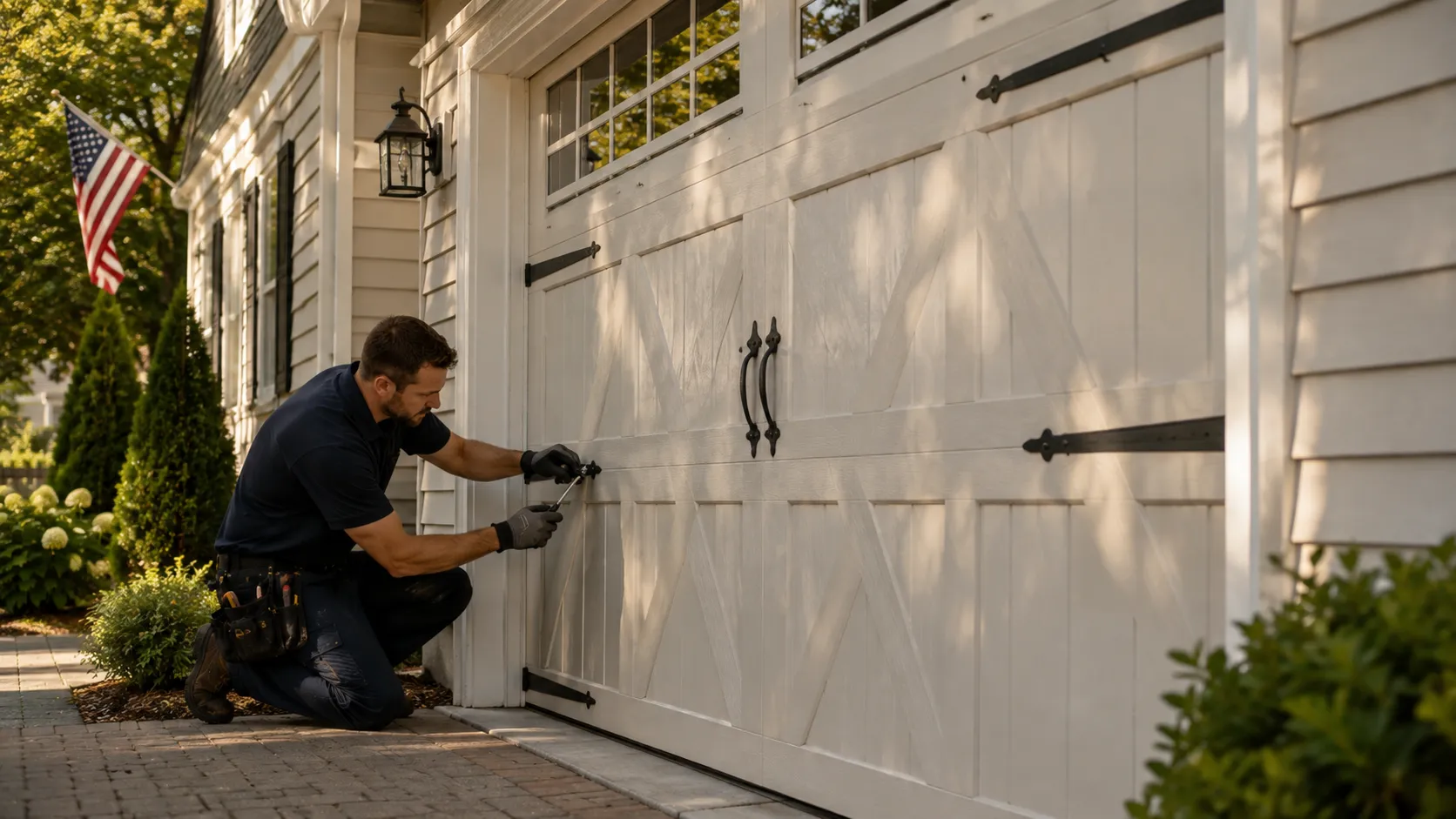
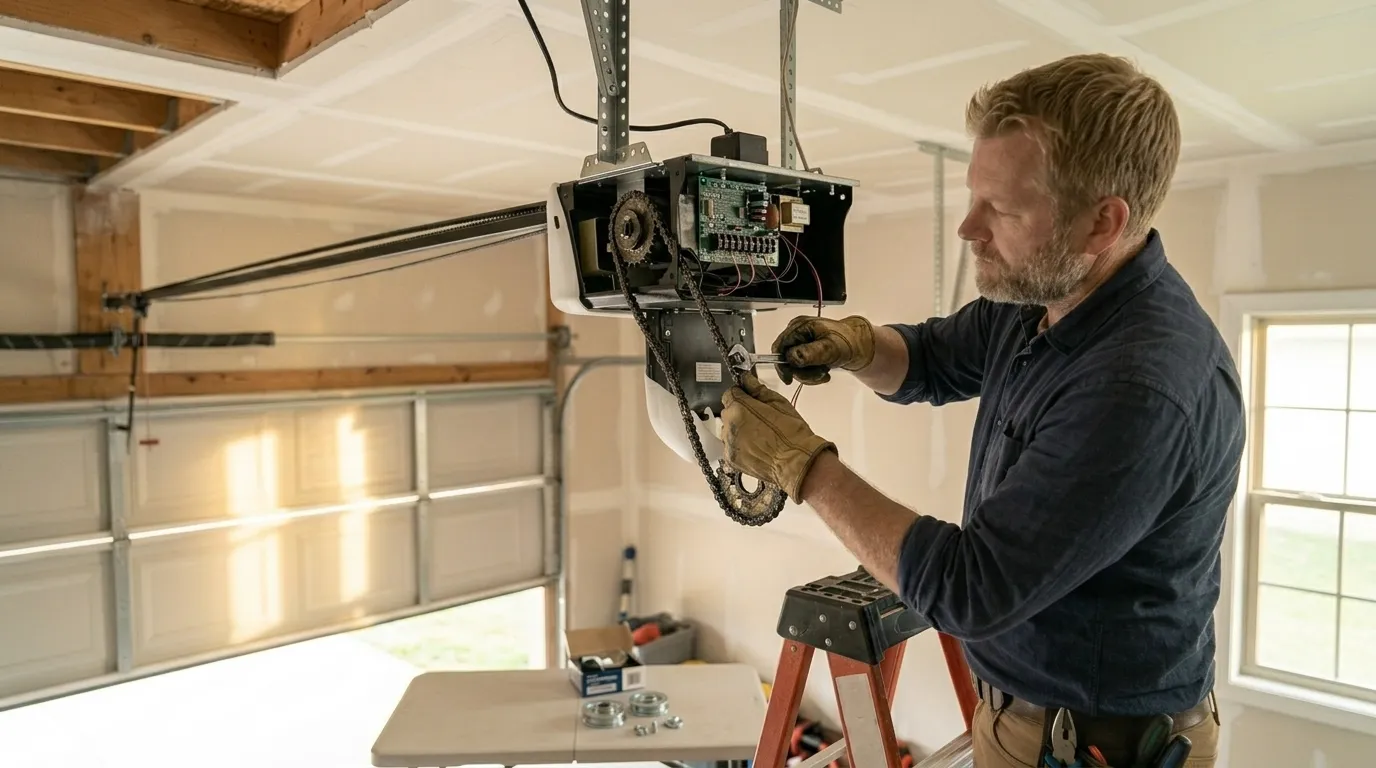
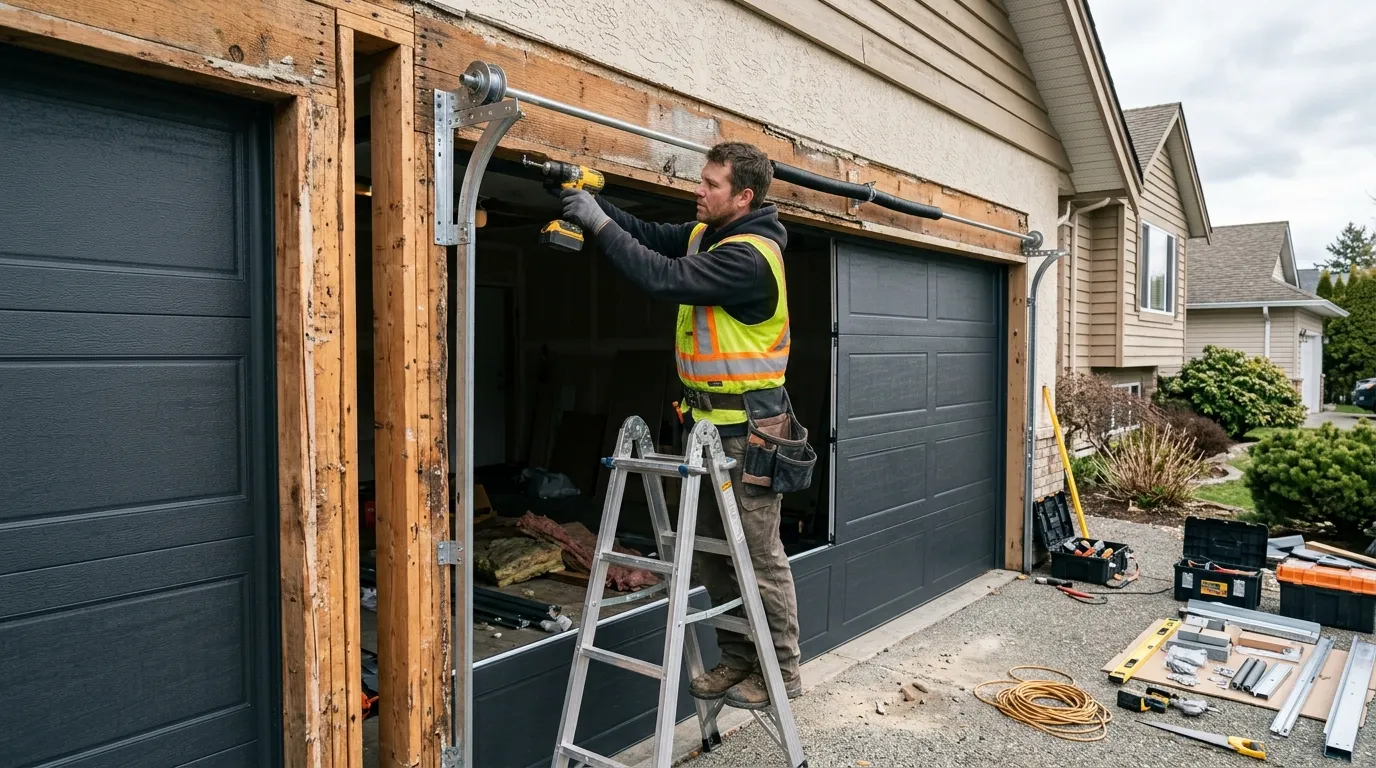
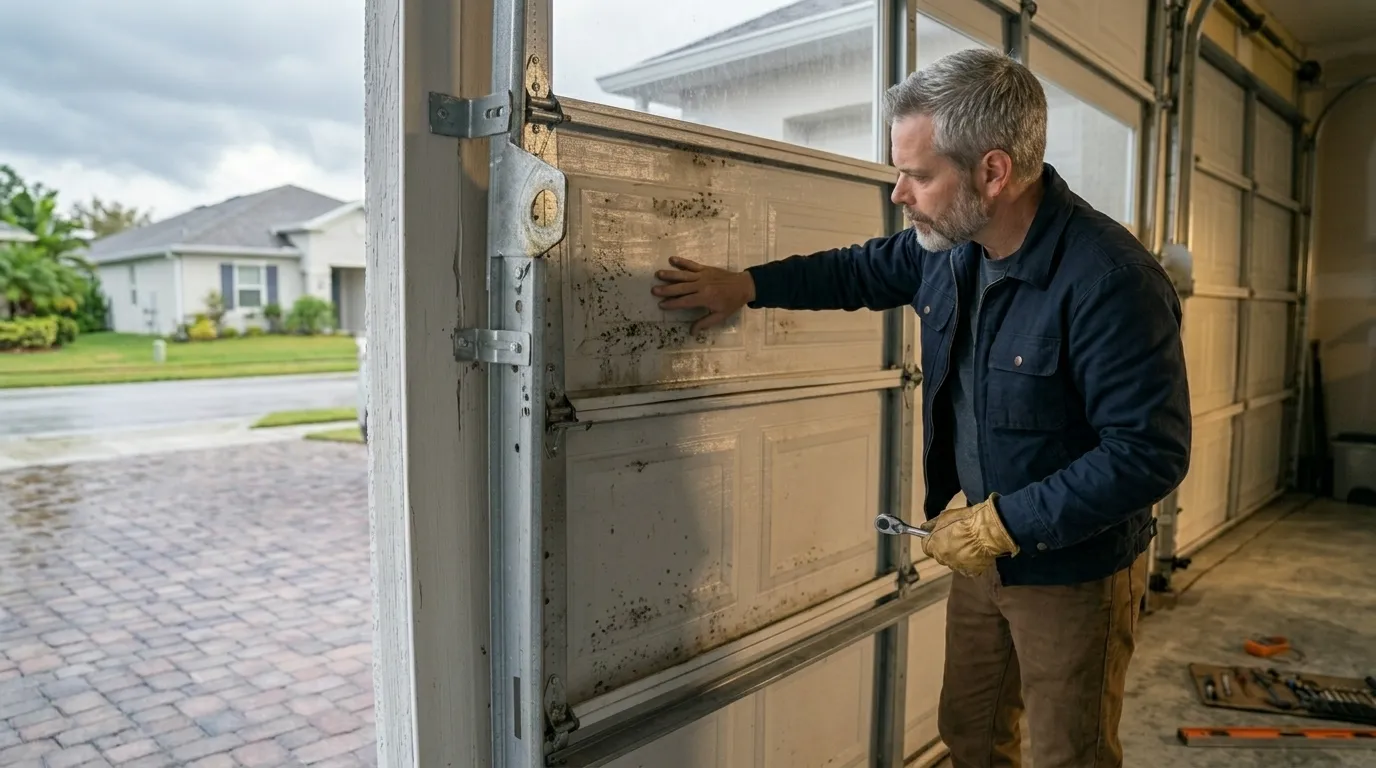
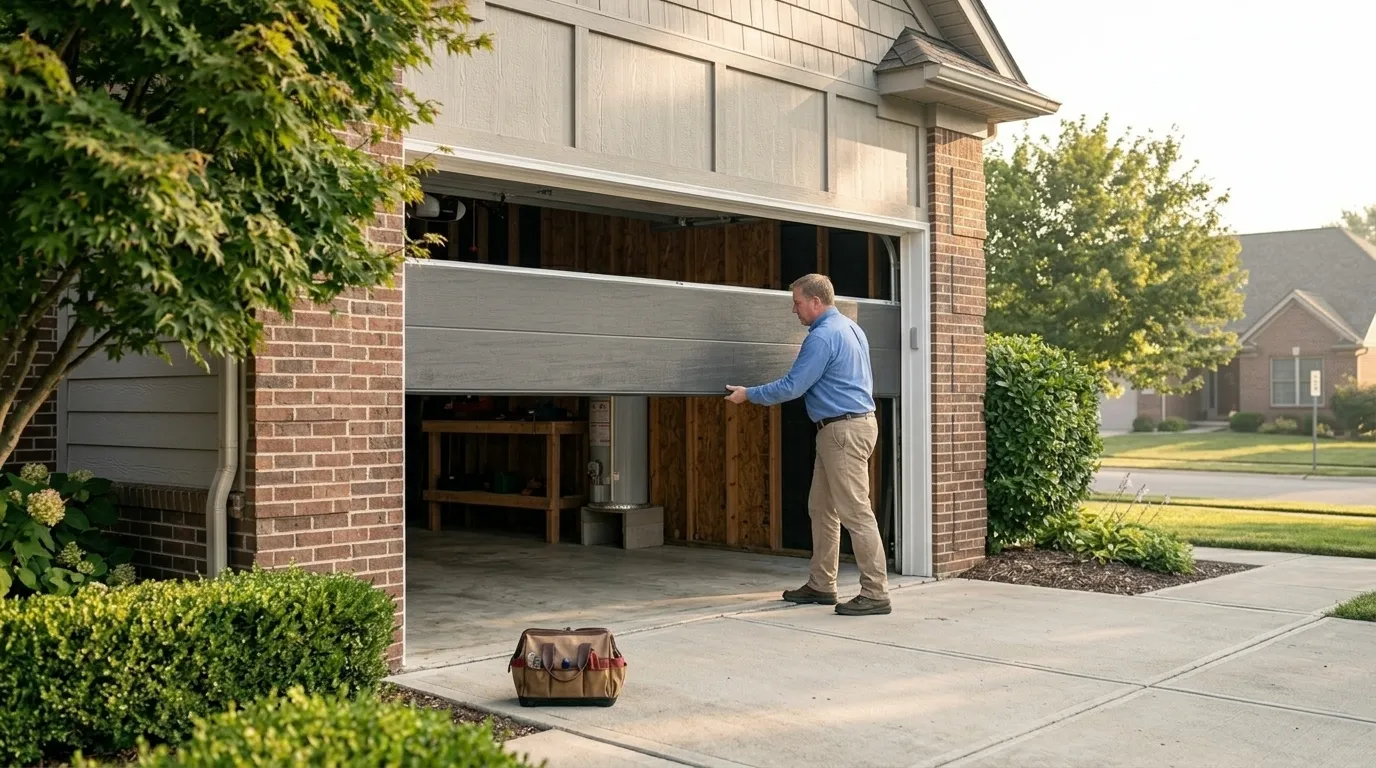
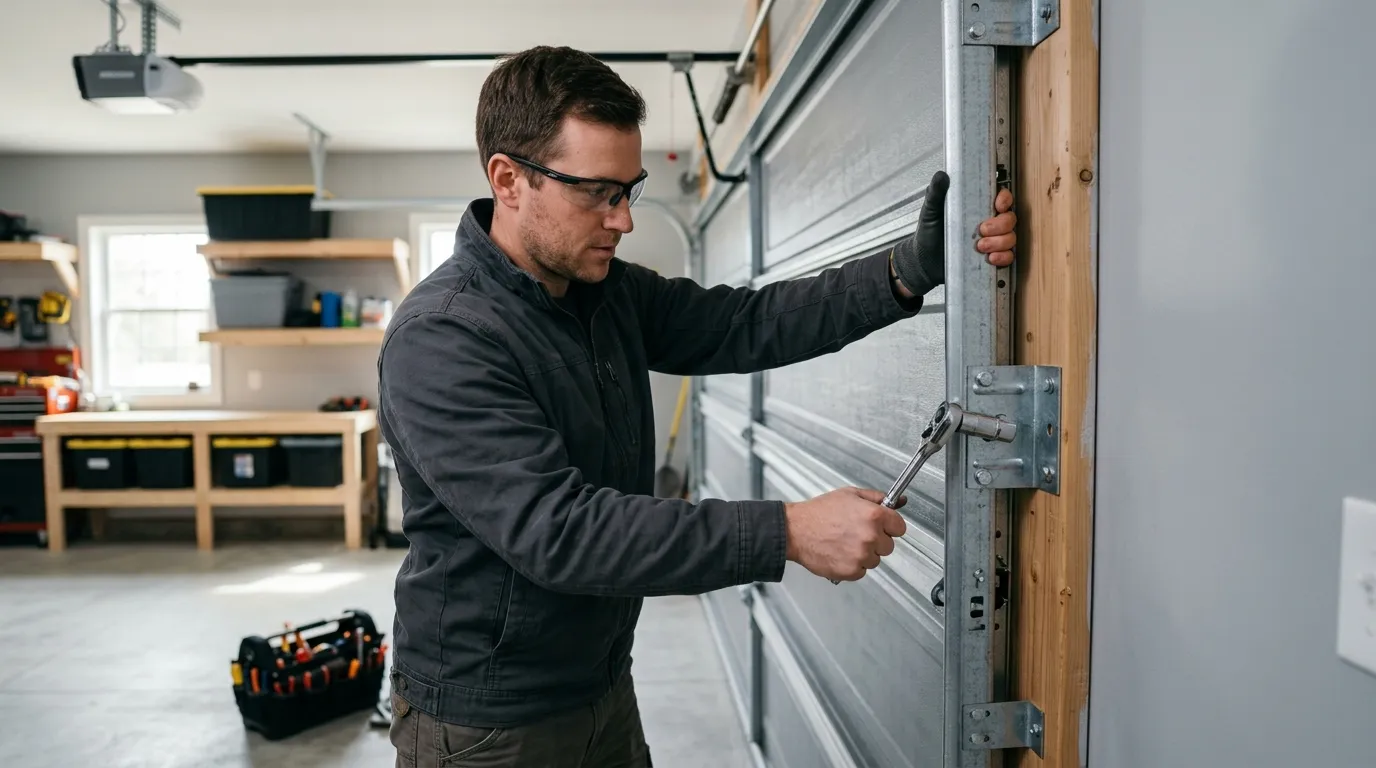
A door built when most of Bonita went up - around 1975 - is a steel sectional door, usually 16 feet wide for a two-car opening, hung on galvanized track that was standard for that era. That track was bent to a tighter radius than what's common now, and after decades of use the mounting brackets that hold it to the framing work loose a fraction of a turn at a time. When a roller finally jumps the rail, the fix starts with getting the door back on a level surface before anything else - we don't force a panel back into track under tension, because that's how you bend the track further or crack an aging panel. Once the door is supported, the job is inspecting every bracket, roller, and hinge along both tracks, since a door this old rarely fails at just one point. Some of these doors still run original rollers, which are usually the actual point of failure - not the track itself. We replace what's worn and re-set the track alignment to spec, checking plumb and the gap between roller and rail at several points along the run, not just where it jumped. If the track itself is bent rather than just loose, that section gets swapped rather than hammered straight, since a hammered rail will walk out of alignment again within a year.
What It Costs
We don't quote a price without seeing the door, but a straightforward off-track call - rollers, brackets, and a track realignment - costs less than a call where the track itself is bent or a panel took damage coming off the rail. Bonita's median household income runs close to $117,750, and most of the off-track jobs we see here are wear-and-tear failures on doors old enough to have outlived their original hardware, not accident damage. That matters for cost: a worn roller or a loose bracket is a parts-and-labor repair, while a bent track section or a cracked panel on a door from the 1970s often means replacing more than the track. We'll tell you which one you're looking at before we start, not after.
Doing It Yourself
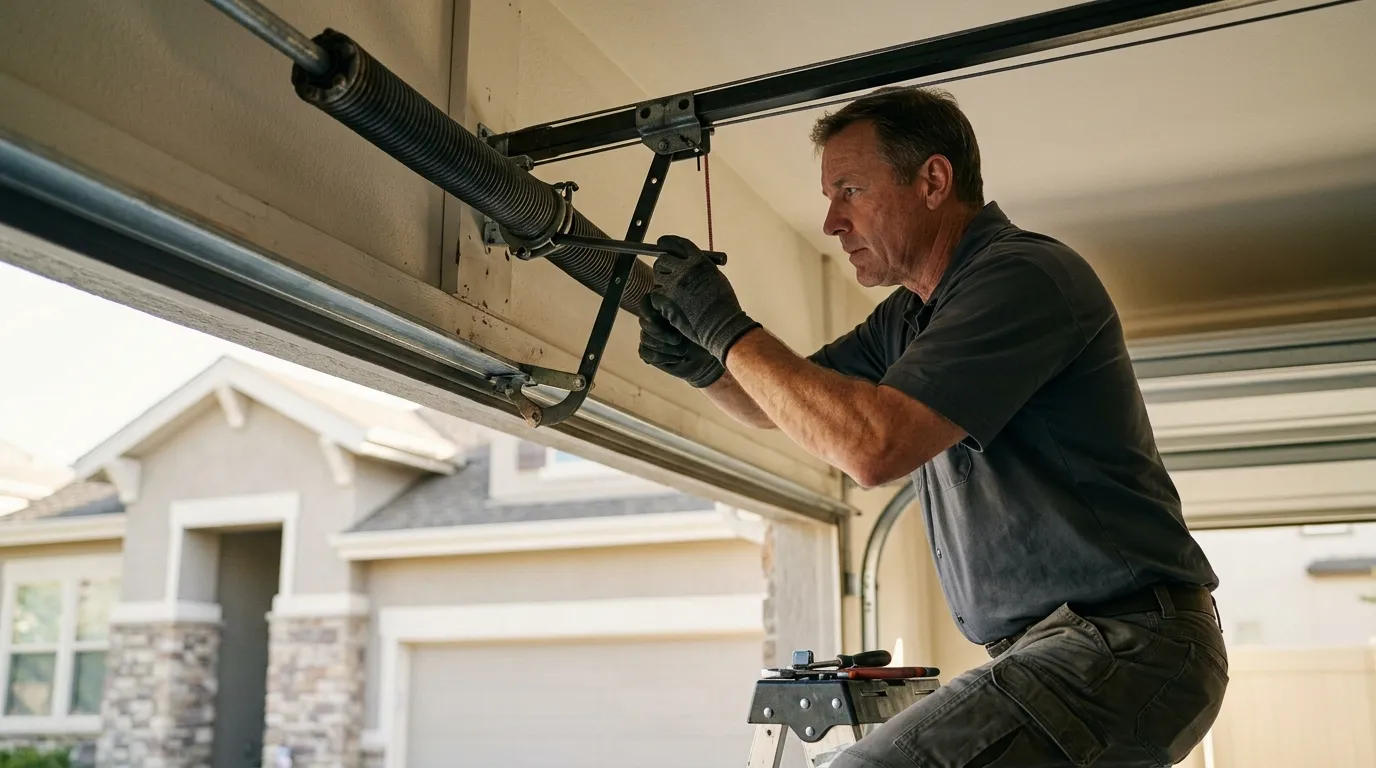
If the door jumped track but the panel isn't bent and the opener isn't straining against it, you can sometimes get it moving again enough to close by hand - but don't force it. A door that's part on and part off the rail is under spring tension in a way that isn't obvious from the garage floor, and a torsion spring on a door this size can do real damage if it lets go while someone's hands are on the track. The honest limit here: if your door came off track because a cable snapped or a spring broke rather than just a worn roller, this isn't a tighten-a-bolt job, and pushing on the panel to see if it'll go back in is how people get hurt. Cut power to the opener, don't try to drive the car in or out until it's fixed, and call it in rather than guessing at what's holding the door up.
How It Shows Up
In Bonita's climate - mild year-round, without the freeze-thaw cycles or heavy humidity swings that stress metal elsewhere - off-track failures here are almost always about age and wear, not weather. A door built around the same time as most of the neighborhood, roughly 1975, has had fifty years of roller cycles on hardware that wasn't designed to last that long. The pattern we see most is gradual: the door starts binding slightly before it fully leaves the track, making a grinding sound on one side as it opens or closes, then one day a roller finally pops loose entirely. Less common but not rare is a sudden jump - usually a snapped cable or a bracket that finally lets go after being loose for months. Either way, on a door this old, an off-track jump is often the sign that the whole roller-and-track system is due, not just the one spot that failed first.
How it works
From “it’s stuck” to “it’s fixed”
1
Tell us what’s wrong
Describe the symptom - won’t open, loud bang, opener runs but the door won’t move.
2
On-site diagnosis
A technician tests the door under power and by hand and finds what actually failed.
3
Clear, up-front plan
You get the fix that’s needed and what drives the cost - before any work starts.
4
Repaired & tested
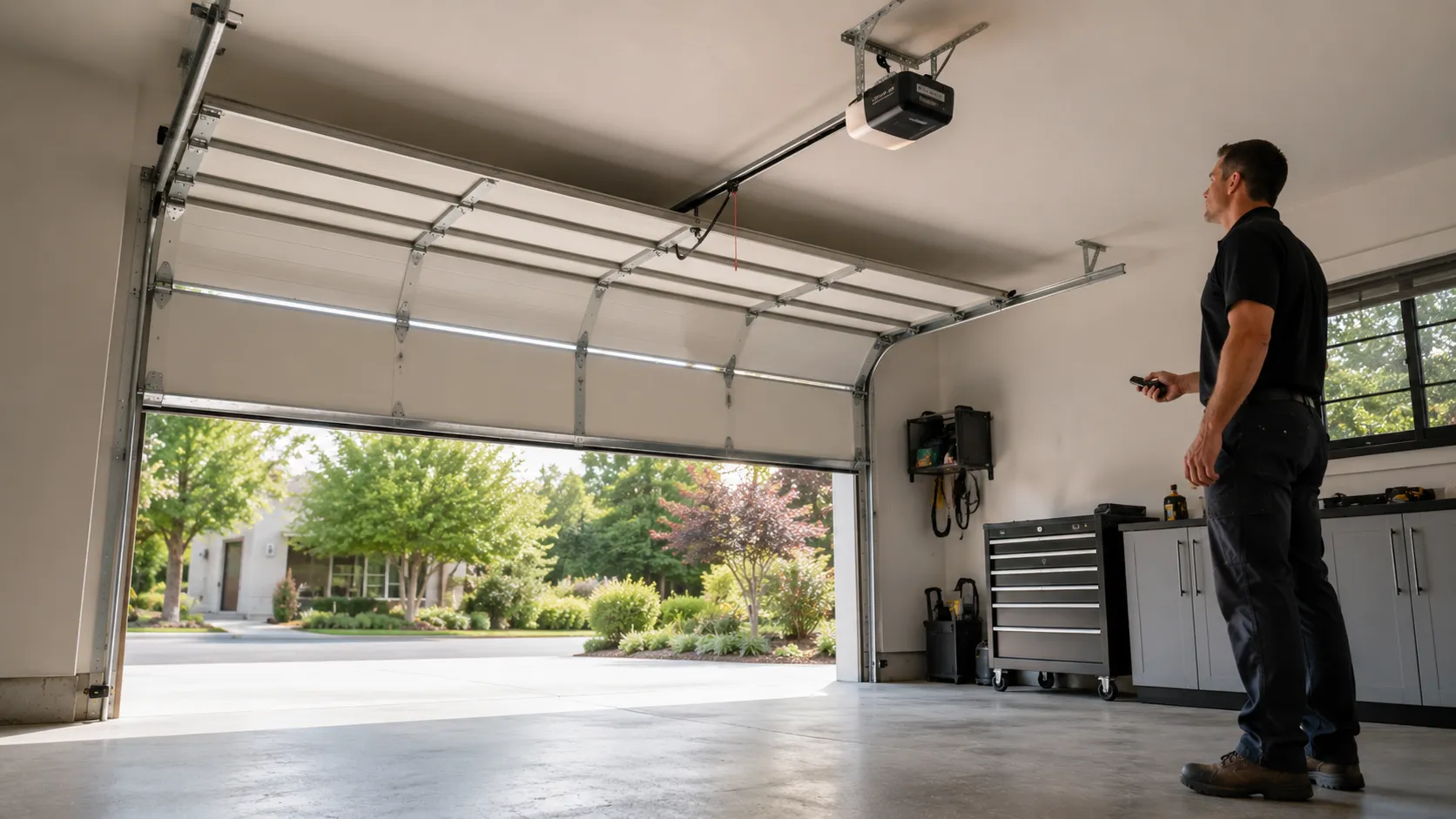
The repair is done, the door is set true and tested, and the work area left clean.
Serving San Diego, CA - tell us what your door’s doing and we’ll take it from there.
Why do older Bonita garage doors come off track more than newer ones?
Most houses in Bonita were built around 1975, and doors from that era ran on narrower steel track with rollers that weren't rated for the decades of cycles they've now seen. As brackets loosen and rollers wear, the door drifts out of alignment gradually until a roller finally jumps the rail.
Is it safe to drive with a door that's partly off track?
No. Don't move the car until it's fixed. A door that's part on and part off the rail is often still under spring tension, and forcing it further off the track - or trying to close it manually - risks the panel or the spring letting go while someone's near it.
Does San Diego weather affect off-track failures in Bonita?
Not much. Bonita sits in a mild temperate band without the freeze-thaw stress that damages hardware elsewhere, so most off-track failures here trace back to age and wear on original 1970s-era rollers and brackets rather than weather.
Ready to get your garage door sorted?
Tell us what it’s doing and where you are in San Diego - we’ll take it from there.